
Let me start with a confession: I find most of these fish genuinely hard to look away from. I know the title says “ugliest,” and yes, some of them look like they were designed by someone who had never seen a fish before and was working from a very bad description. But after years of diving, I’ve come to believe that calling an animal ugly is really just admitting that you don’t understand what it’s for yet.
Every strange feature on every fish in this list exists for a reason. The blobfish’s gelatinous body makes perfect sense at 1,000 meters of depth. The goblin shark’s protruding jaw is a precision hunting tool. The hagfish’s slime is one of the most effective defense mechanisms in the ocean. Evolution is not trying to win a beauty contest. It’s trying to solve problems, and some of those solutions look absolutely terrible to human eyes.
So here are ten of the ugliest fish in the world – ranked in no particular order, described with all the admiration they deserve, and accompanied by the facts that make each of them genuinely remarkable despite (or because of) their appearance.
Blobfish (Psychrolutes marcidus) – The Official World’s Ugliest Animal
We start with the champion. In 2013, the blobfish was voted the world’s ugliest animal by the public poll of the Ugly Animal Preservation Society, beating out competition from the proboscis monkey, the naked mole rat, and several other strong contenders.
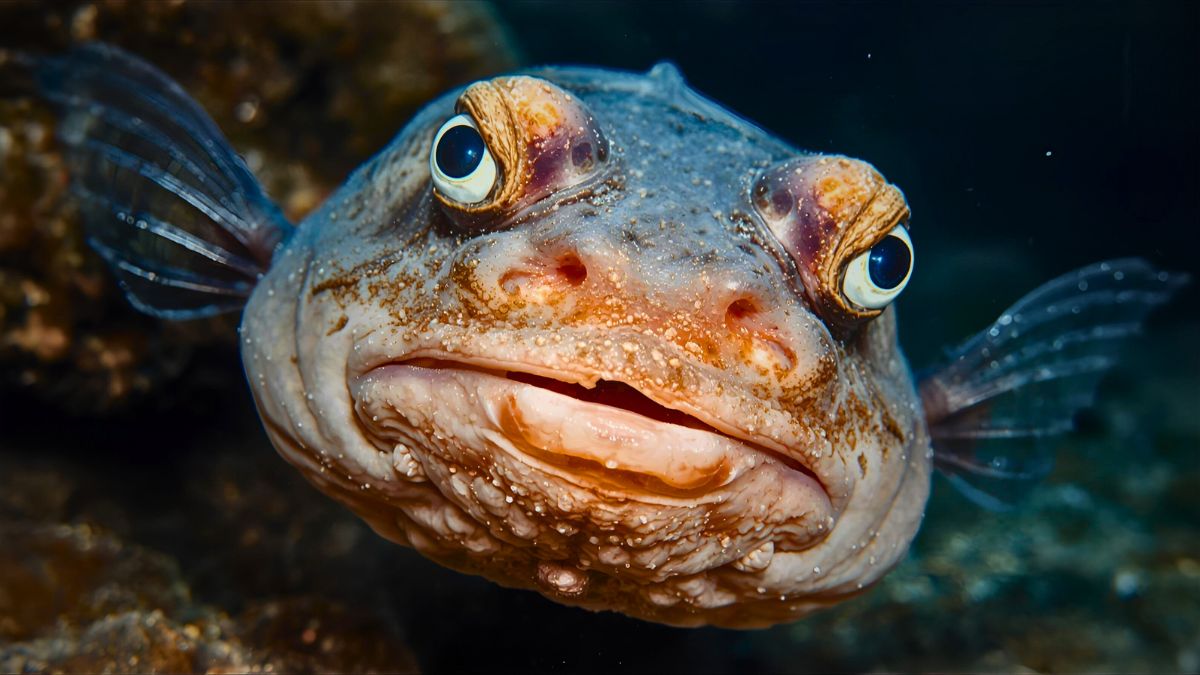
It has held the title ever since, and the famous photo of a drooping, melting, apparently-depressed blob of a fish has become one of the most shared images on the internet.
Here is the thing: that photo is a lie. Or at least, it’s not the whole truth.
What does a Blobfish look like?
The blobfish lives at depths of 600 to 1,200 meters below the surface, off the coasts of Australia, Tasmania, and New Zealand. At those depths, the pressure is approximately 80 to 120 times higher than at the surface.
The blobfish’s body is adapted to that pressure: its flesh is a gelatinous material slightly less dense than water, which allows it to maintain buoyancy without a swim bladder (which would be crushed at that depth). Under normal conditions, in its own environment, the blobfish looks like a fairly ordinary bottom-dwelling fish.
Did you know? The blobfish is under real conservation pressure. It is frequently caught as bycatch in deep-sea trawling nets targeting other species and is considered at risk. The Ugly Animal Preservation Society chose it deliberately: the campaign was designed to draw attention to endangered species that don’t get sympathy because they aren’t cute.
What happened to the fish in that viral photo was that it was pulled up in a deep-sea trawling net, brought from extreme pressure to the surface in minutes, and the rapid decompression caused its tissues to expand and collapse.
Marine researcher Russell Arnott from the University of Bath explained it clearly: the first photo was taken at 900 meters depth. The second, the famous one, was taken after the fish was hauled to the surface by fishermen. The difference in pressure destroyed it.
So the blobfish didn’t lose a beauty contest. It survived something no human could survive, and then got photographed at its worst moment. That’s a different story entirely.
Goblin Shark (Mitsukurina owstoni) – The Living Fossil
The goblin shark has not changed significantly in 125 million years. Let that sit for a moment. When dinosaurs were walking around, this animal looked exactly like it does now. Evolution looked at the goblin shark and said: fine, we’re done here.
It lives in deep water, usually below 200 meters and sometimes as deep as 1,300 meters, in temperate and tropical oceans worldwide. Its most distinctive feature is the long, flattened snout that extends well beyond its jaw, making it look permanently startled and vaguely hostile. But the snout is packed with electroreceptors that detect the electrical fields of prey in the dark depths where the goblin shark hunts.
What does a Goblin Shark look like?
The jaw is the truly remarkable part. Rather than biting like most sharks, the goblin shark uses a slingshot mechanism: its jaw can project forward at high speed to snatch prey, then retract back under the snout. It’s a hunting tool that looks alarming and works perfectly.
Its skin is translucent, which gives the living animal a pinkish color as the blood vessels show through. Combined with the protruding snout and slingshot jaw, the overall effect is something that looks like it was specifically designed to appear in nightmares.
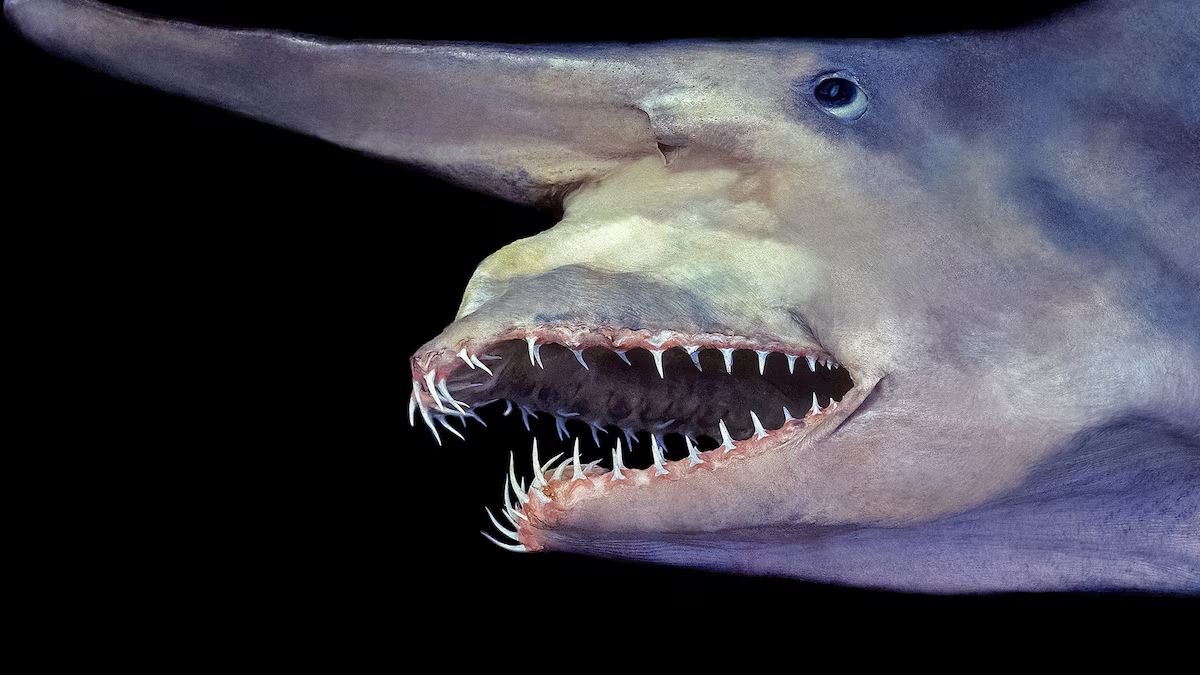
Goblin sharks are extremely rarely encountered. A few live specimens have been brought to public aquariums, but they lived for very short periods – one at Tokai University survived a week, another at Tokyo Sea Life Park survived two days. Whatever they need to survive, we haven’t figured out how to provide it. Which means almost everything we know about them comes from dead specimens hauled up by fishing boats.
Anglerfish (Lophiiformes) – The Monster with a Built-In Fishing Rod
There are over 200 species of anglerfish, and most of them live in the deep ocean where sunlight never reaches. They range in size from a few centimeters to over a meter. What they share is the lure: a modified dorsal fin spine that projects forward over the mouth and emits bioluminescent light, attracting prey in pitch-black water. The prey approaches the light and finds a mouth full of needle-like transparent teeth.
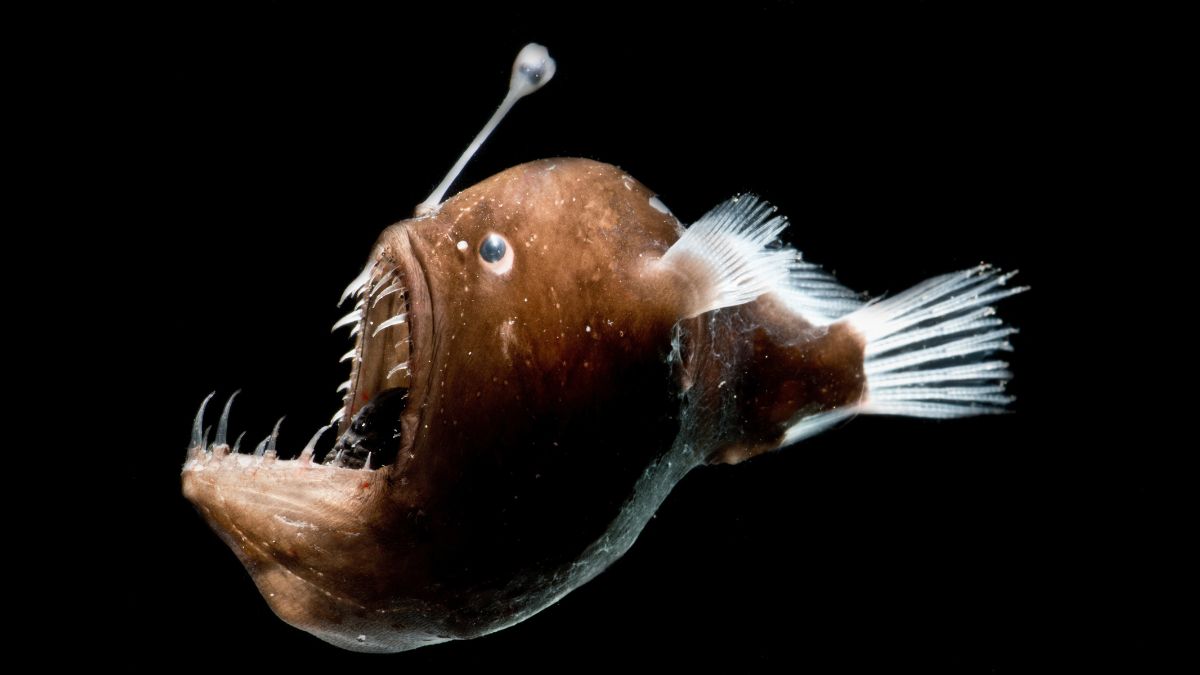
The anglerfish’s face is essentially a large head attached to a smaller body, with a crescent-shaped mouth, disproportionate teeth, and small eyes that seem designed to convey permanent menace. They are not winning any popularity contests.
What does Anglerfish look like?
But the truly extraordinary thing about anglerfish is their reproductive strategy, which is one of the strangest in the animal kingdom.
In deep-sea anglerfish species, the male is dramatically smaller than the female, often ten times smaller. When a male finds a female, he bites into her body and his tissues begin to fuse with hers. His immune system shuts down. His organs atrophy. His eyes degenerate. Over time, he becomes permanently attached to her, sharing her bloodstream, and existing solely as a sperm-producing appendage. A single female can carry multiple males fused to her body at once.
It is, by any measure, one of the most extreme reproductive strategies in nature. Beautiful, it is not.
Did you know? The anglerfish’s bioluminescent lure is not produced by the fish itself. The light comes from bacteria living inside the lure in a symbiotic relationship. The fish provides nutrients; the bacteria produce light. The anglerfish essentially outsourced its most important hunting tool to microorganisms.
Red-Lipped Batfish (Ogcocephalus darwini) – The Fish That Walks and Wears Lipstick
The red-lipped batfish is not so much ugly as it is deeply confused about what kind of animal it wants to be. It has a flattened, lumpy body, a pronounced snout, a beard, a mustache, and bright scarlet lips that look like they were applied by someone who was in a hurry. It lives near the Galapagos Islands and along the Pacific coast of Peru and Ecuador, and it has one more distinguishing feature: it does not really swim.
Instead of swimming, the red-lipped batfish walks along the ocean floor on its modified pectoral and pelvic fins, which function more like stubby legs than fins. It is not graceful. It looks like a fish that failed swimming class and decided to move on.
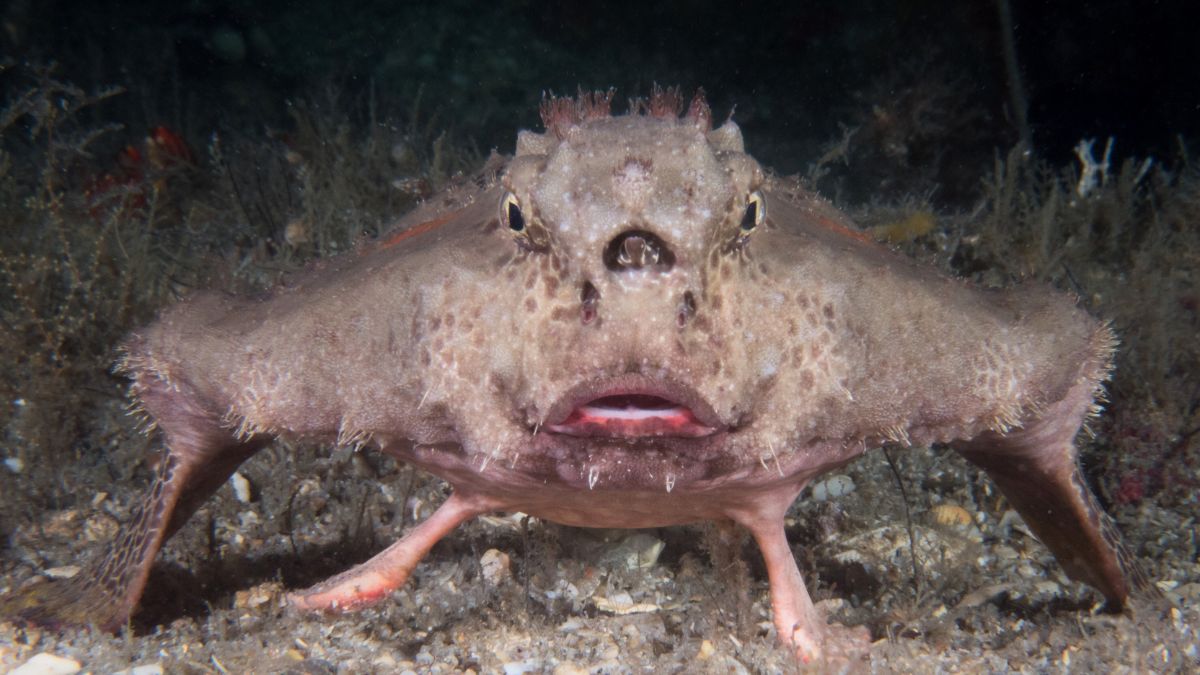
The red lips are believed to play a role in species recognition and mating – a way for red-lipped batfish to identify each other in a world full of fish that don’t look quite as dramatic. Whether this constitutes an evolutionary justification for the most elaborate fish makeup in the ocean is a philosophical question I’ll leave to you.
It also has a small lure on its snout, like the anglerfish, which it uses to attract prey. Once the lure brings something close enough, the batfish snaps it up. The walking, the lipstick, and the built-in fishing rod all in one animal is perhaps a bit much, but evolution rarely shows restraint when a system works.
Frilled Shark (Chlamydoselachus anguineus) – The Sea Serpent That Turned Out to Be Real
For most of human history, sailors reported sea serpents: long, sinuous, terrifying creatures moving through deep water. The frilled shark may be part of the explanation for those stories. It has an eel-like body that can reach two meters in length, six pairs of frill-like gills (most sharks have five pairs), and a mouth with 25 rows of needle-like, backward-curved teeth – 300 teeth in total.
It is considered a living fossil, largely unchanged in its basic form for over 80 million years. It inhabits the deep Atlantic and Pacific oceans, generally at depths of 120 to 1,570 meters, which is why most people have never seen one and why the ones that have been observed are mostly captured accidentally in fishing nets.
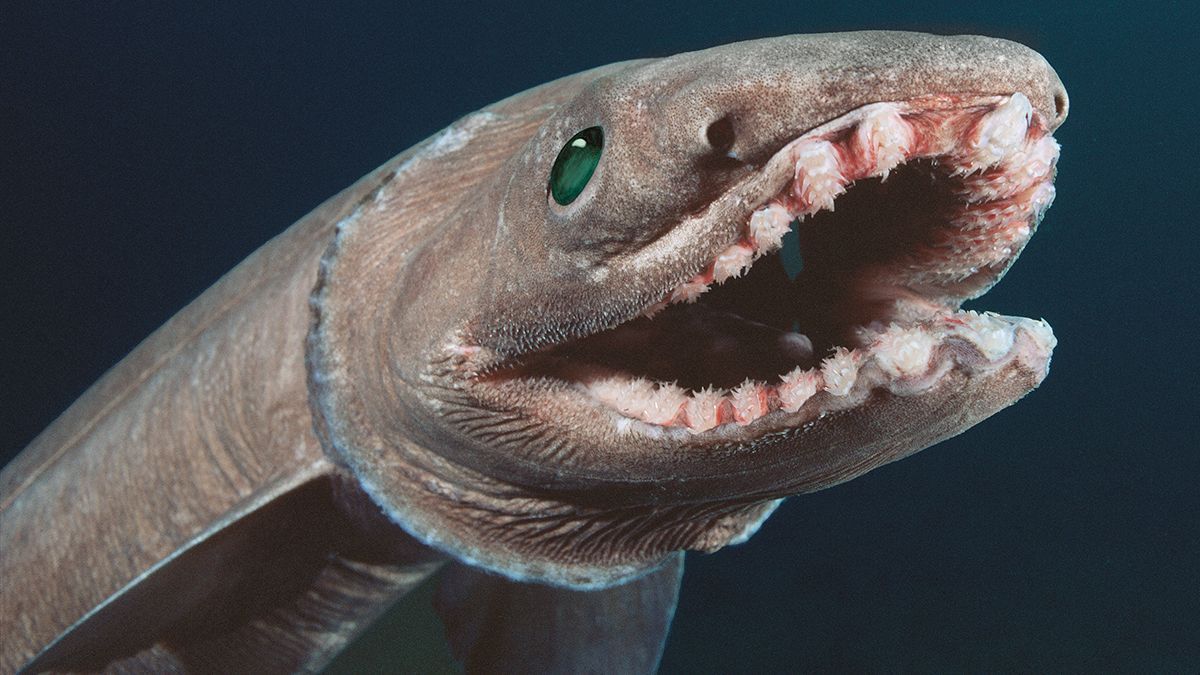
The frilled shark moves through the water the way an eel does, bending its body and lunging forward to catch prey. Its backward-curved teeth make escape nearly impossible once something is in its mouth. It can swallow prey up to half its own body length whole.
It’s rarely encountered, poorly understood, and looks like it belongs in a different geological era. Which, in a sense, it does.
Hagfish (Myxini) – The Slime Machine
The hagfish is not technically a fish, since it lacks a jaw and a proper vertebral column. But it has always been grouped with fish by common usage, and it belongs on any honest list of the ocean’s most visually challenging inhabitants.
It looks like a pale, eyeless eel. It lives in cold, deep water on the ocean floor, where it feeds primarily on dead and decaying animals. When prey is available, the hagfish will burrow directly into the carcass and digest it from the inside. This is not endearing.
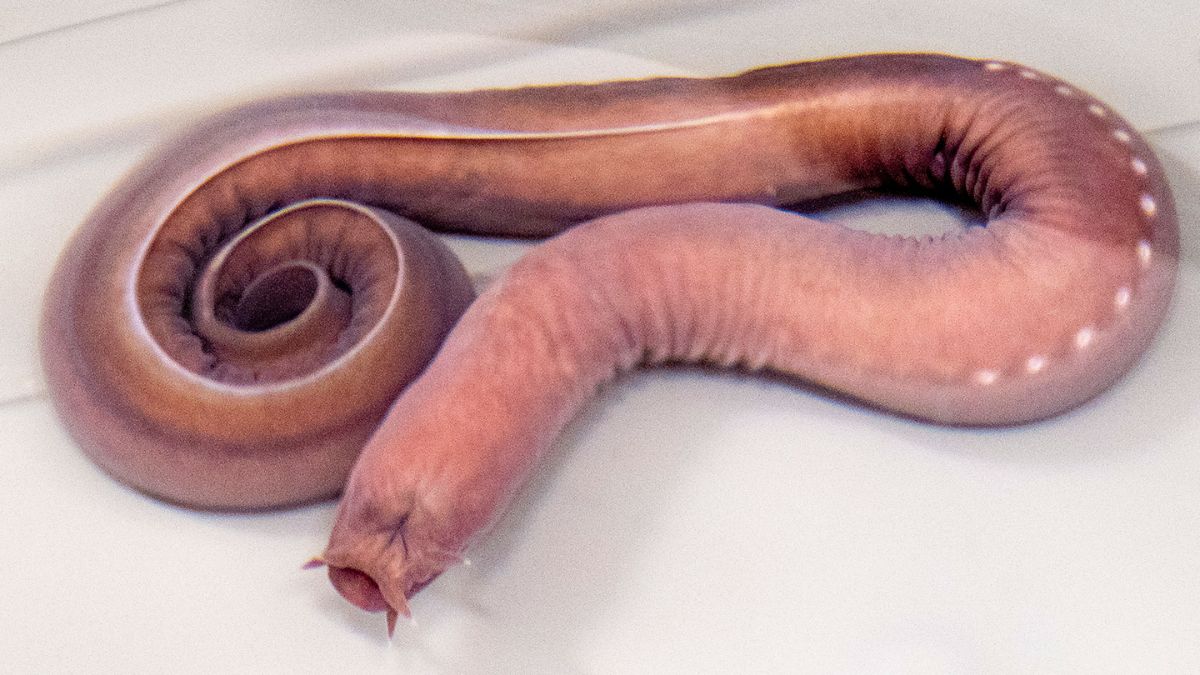
Its defense mechanism, however, is genuinely spectacular. When threatened, the hagfish releases a substance from glands along its body that expands into a thick, fibrous slime on contact with seawater. A single hagfish can fill a bucket with slime in seconds. The slime clogs the gills of attacking fish, forcing them to abandon the attack. The hagfish then ties itself into a knot, slides the knot along its own body to scrape off the slime, and continues its day.
Researchers are studying hagfish slime seriously: its fiber structure is stronger than nylon by weight, and it may have applications in the development of new materials. The hagfish, it turns out, has been ahead of materials science by several hundred million years.
Fun fact: Hagfish slime is not like normal mucus. It consists of two components: mucin proteins and protein threads up to 15 centimeters long. When the threads and mucins mix with seawater, they form a gel with properties unlike any other biological material. A single hagfish can produce enough slime to incapacitate a much larger predator in under a second.
Wolffish (Anarhichas lupus) – Teeth That Could Crack a Crab Shell
The wolffish looks like something designed by a committee that could not agree on what a fish should look like. It has a large, broad head, small eyes, and a mouth full of large conical teeth at the front and flat crushing teeth further back, all of which are visible even when its mouth is closed. The overall expression is one of permanent irritation.
It lives in cold waters of the North Atlantic, typically at depths of 100 to 500 meters, where it feeds on hard-shelled prey: sea urchins, crabs, mollusks, and starfish. The flat crushing teeth at the back of its jaw are specifically designed to crack open shells that most other fish cannot penetrate. The wolffish effectively fills a niche that would otherwise be empty.
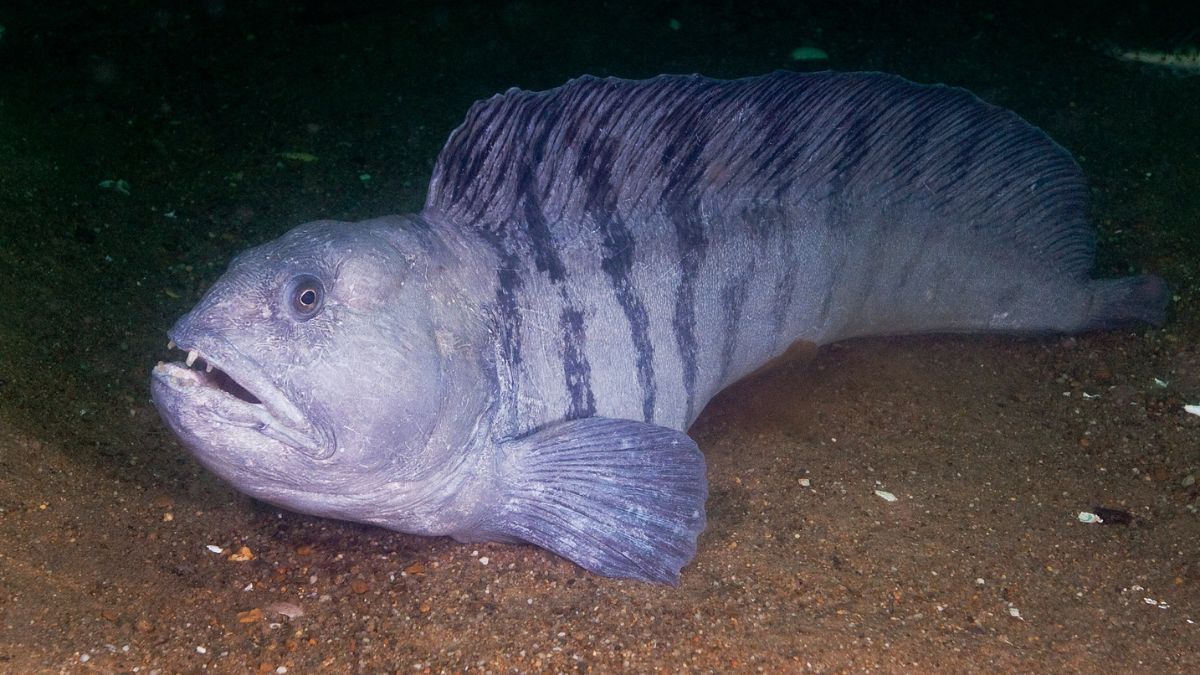
Despite its appearance, the wolffish is not aggressive toward humans and is considered relatively docile for its size. It is also one of the few fish species that forms bonded pairs and both parents guard their eggs for up to four months until hatching. For a fish that looks this intimidating, it turns out to be a devoted parent.
It is also considered a food fish in some regions, with a flavor that fans compare to lobster. The packaging is misleading, but the contents apparently deliver.
Frogfish (Antennariidae) – The Camouflage Artist Nobody Asked For
The frogfish is not ugly in the conventional sense. It is more deeply, fundamentally strange, which amounts to the same thing once you’ve stared at one long enough. There are over 45 species, and they are found in tropical and subtropical waters worldwide, including occasionally in Costa Rica’s Pacific reefs.
The frogfish can change not just its color but its texture, mimicking sponges, corals, rocks, and other organisms with enough accuracy to be nearly impossible to spot. It sits motionless on the reef waiting for prey to approach, then strikes with a speed that is difficult to believe: the frogfish’s strike takes approximately 6 milliseconds, making it one of the fastest movements in the animal kingdom.
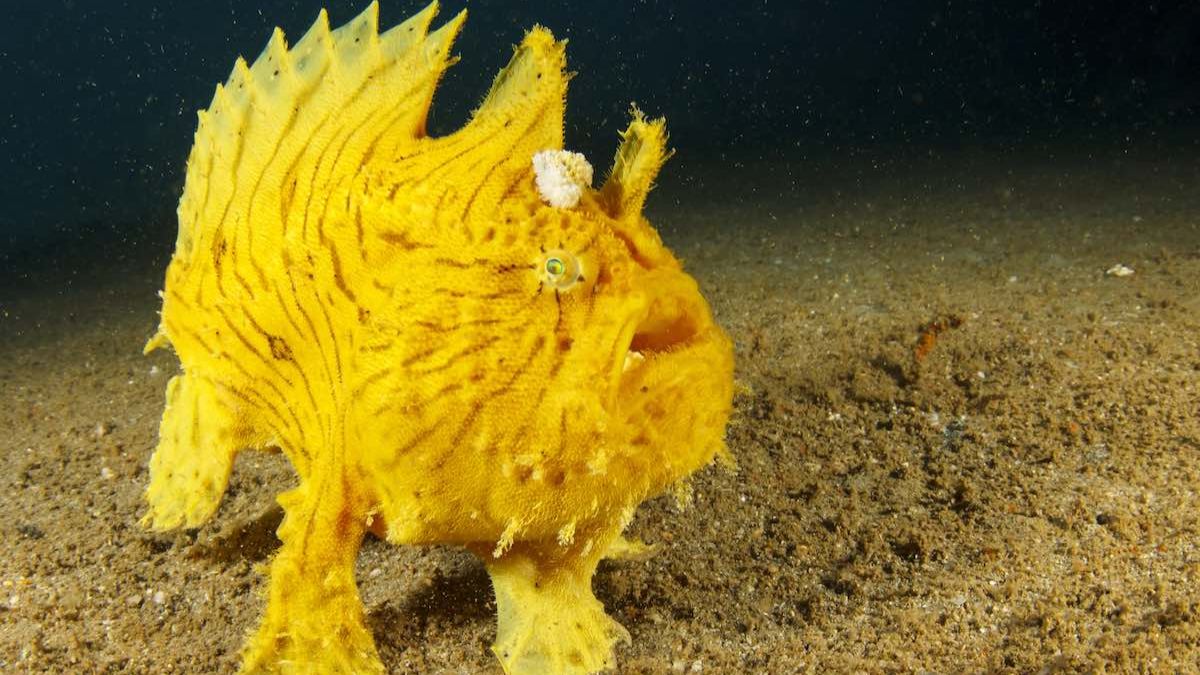
Like the anglerfish and the batfish, the frogfish has a lure – a modified dorsal fin spine that it waves to attract curious fish. When prey gets close enough, the frogfish opens its mouth and creates suction strong enough to pull the prey in before it has time to react. The frogfish can swallow prey up to twice its own body size.
It also walks on the seafloor using its pectoral fins as legs, moving in a manner that no fish should move. Watching one walk is genuinely unsettling the first time.
Monkfish (Lophius piscatorius) – Too Ugly to Look At, Too Good to Ignore
The monkfish deserves a special mention because it contains a twist that the other fish on this list do not. It is indisputably one of the ugliest fish in the Atlantic, with a massive flattened head that takes up roughly half its entire body, a mouth wider than its body is thick, and teeth pointing inward like a trap. Its eyes sit on top of its head and its skin is mottled and loose.
It lies on the ocean floor completely motionless, partially buried in sand or gravel, waiting for fish or crustaceans to approach. A small lure dangles from a modified spine above its mouth. When something gets close enough, the monkfish opens its enormous mouth and the resulting suction pulls the prey inside faster than it can escape.
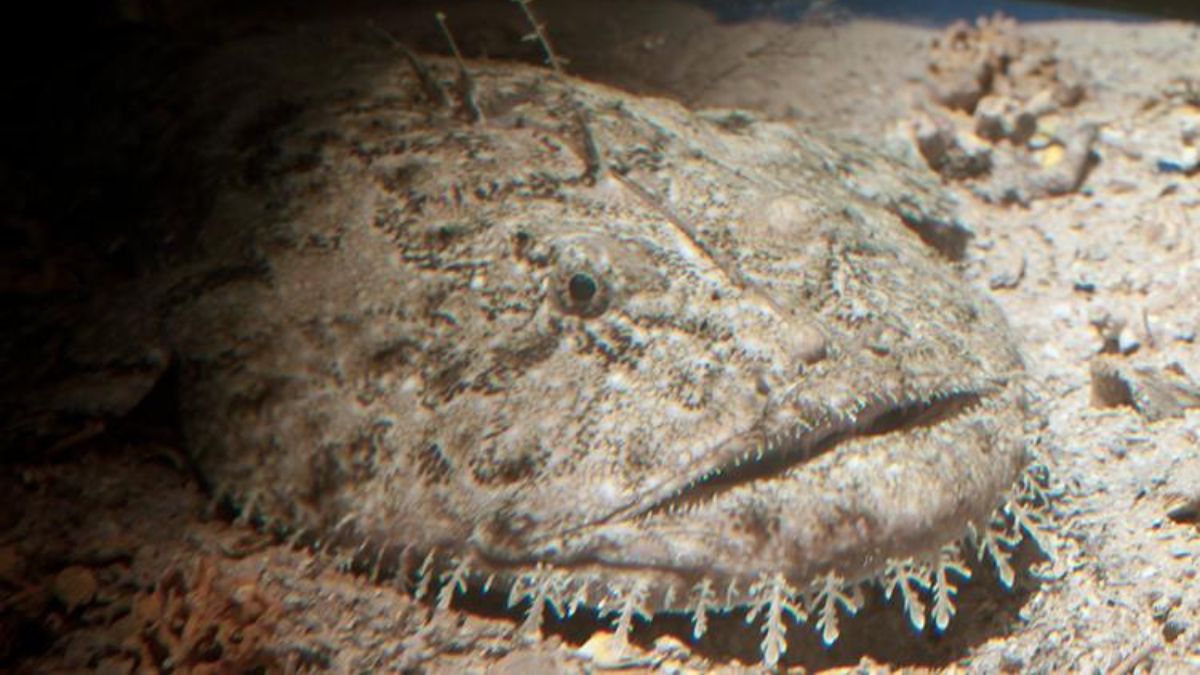
And then there is the twist: the monkfish is delicious. It has been called “poor man’s lobster” because its tail meat has a firm, sweet texture that genuinely resembles lobster at a fraction of the price. It now appears regularly in high-end restaurants across Europe. Fishmongers used to sell only the tail because the head was considered too alarming for customers to look at. These days, the whole fish is sold, reputation intact.
Beauty may be subjective, but apparently taste is not.
Stargazer (Uranoscopidae) – The Ambush Predator Hiding in Plain Sand
The stargazer might be the most dangerous fish on this list, which makes its ugly appearance the least of your concerns. It buries itself in sand or mud with only its eyes and upward-facing mouth visible. Its eyes are positioned on top of its head pointing upward, giving it permanent access to whatever is above it while the rest of its body is invisible.
When prey swims over it, the stargazer lunges upward and engulfs it. The mouth is so large relative to its body that it can swallow surprisingly large prey in a single strike.
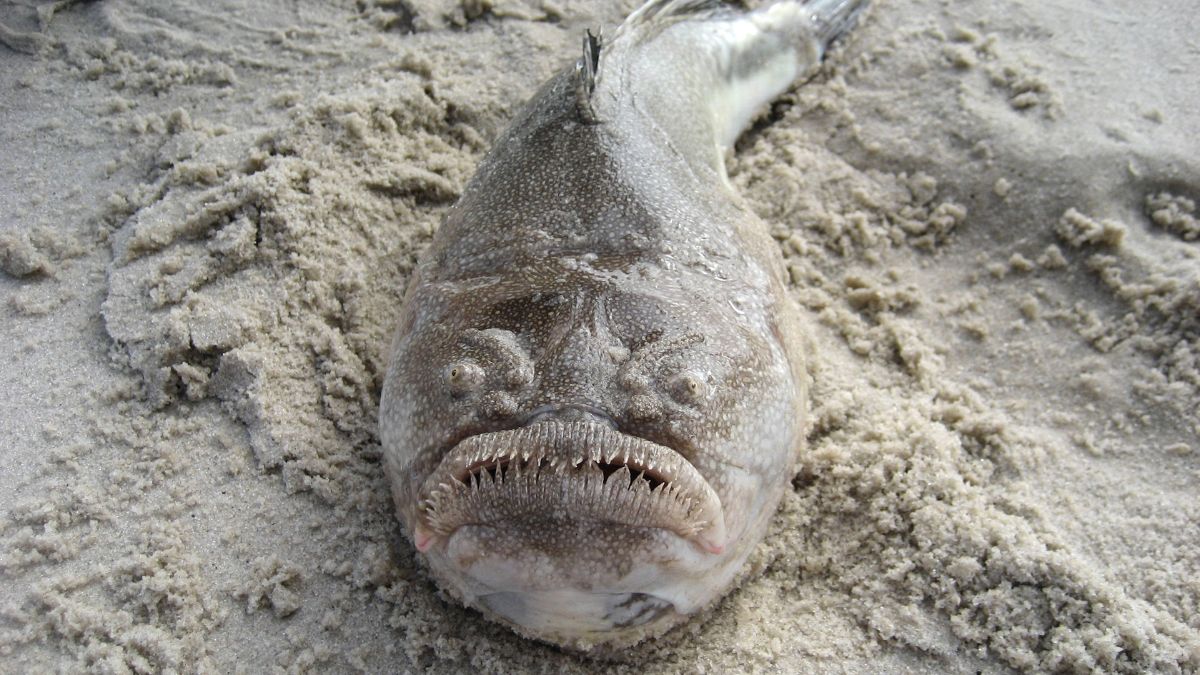
What makes the stargazer unusual even on this list is that it combines three separate threat mechanisms: some species have electric organs behind their eyes that can deliver a shock, they have venomous spines on their backs and shoulders, and their upward-facing mouths create a suction strike that is almost impossible to avoid once triggered. Venomous, electric, and a suction predator. In one animal. That hides in sand.
The permanent expression produced by the upward-facing mouth and forward-set eyes is one of absolute fury, which, given the above, seems appropriate.
Beauty Is Overrated – A Final Thought
The blobfish survived pressures that would crush a submarine hull. The goblin shark has been perfecting the same design for 125 million years. The hagfish invented high-performance fiber technology long before humans discovered nylon. The anglerfish created bioluminescence by partnering with bacteria in a system we still don’t fully understand.
None of these animals are ugly because evolution failed them. They are exactly what they need to be, and the features that look wrong to us are precisely the features that keep them alive in environments where almost nothing else can survive.
The first time you jump into the ocean with a tank on your back, you start to realize how much of the world exists completely independently of human aesthetic preferences. Down there, useful is beautiful. And by that standard, every fish on this list is remarkable.
| Fish | Depth | Superpower |
|---|---|---|
| Blobfish | 600-1,200m | Survives 120 atmospheres of pressure without a swim bladder |
| Goblin Shark | 200-1,300m | Slingshot jaw projects forward to snatch prey at speed |
| Anglerfish | 200-2,000m | Bioluminescent lure powered by symbiotic bacteria |
| Red-Lipped Batfish | 3-76m | Walks on modified fins instead of swimming |
| Frilled Shark | 120-1,570m | 300 backward-curved teeth; virtually unchanged for 80 million years |
| Hagfish | 25-1,000m | Produces slime stronger than nylon by weight in under a second |
| Wolffish | 100-500m | Jaw strong enough to crush sea urchin shells and crabs |
| Frogfish | 0-70m | Strikes in 6 milliseconds; changes color and texture to camouflage |
| Monkfish | 20-1,000m | Mouth-suction strike; tastes like lobster |
| Stargazer | 0-200m | Venomous, electric, and a suction predator simultaneously |
Frequently Asked Questions
What is officially the ugliest fish in the world?
The blobfish (Psychrolutes marcidus) was officially voted the world’s ugliest animal by the Ugly Animal Preservation Society in 2013. However, the famous photo that gave it this reputation was taken after the fish was hauled from depths of 900 meters to the surface, causing its tissues to collapse from the sudden pressure change. In its natural deep-sea environment, the blobfish looks considerably more ordinary.
Are ugly fish dangerous?
Some are. The stargazer is venomous, can generate electric shocks, and strikes prey with suction force – making it one of the more genuinely dangerous fish despite its small size. The goblin shark, anglerfish, and frilled shark are designed for efficient predation but have no history of attacking humans; they live at depths where human encounters are virtually impossible without specialized equipment. Most ugly fish are either harmless or dangerous only to the small prey they feed on.
Can you eat blobfish?
Technically yes, but there would be very little to eat. The blobfish’s body is mostly gelatinous material with very little actual muscle mass. It has no commercial value as a food fish, and given its deep-sea habitat and conservation concerns, there is no fishery targeting it. The blobfish you see in photos is also a physically damaged specimen brought from extreme depth, so the question is largely academic.
Where do most ugly deep-sea fish live?
Most of the fish on this list inhabit the mesopelagic and bathypelagic zones, roughly 200 to 2,000 meters below the surface. At these depths, pressure is extreme, temperatures are near freezing, and there is no sunlight. The unusual body structures, extreme adaptations, and alarming appearances of deep-sea fish are direct responses to these conditions. The deeper the fish, generally the more extreme its adaptations appear to surface-dwelling observers.
Are any of these fish found in Costa Rica?
Yes. Frogfish are present in Costa Rica’s Pacific reefs and are occasionally spotted during dives at Isla del Caño, though their camouflage makes them extremely easy to miss. Goblin sharks and frilled sharks inhabit deep Pacific waters and could theoretically occur in Costa Rican territory, though encounters are vanishingly rare. The red-lipped batfish lives along the Pacific coast of Central and South America, including waters close to Costa Rica.
Sources and References
- Wikipedia: Blobfish (Psychrolutes marcidus) — habitat, and the story behind the famous photo
- Wikipedia: Goblin Shark (Mitsukurina owstoni) — species overview, depth range, and feeding anatomy
- Wikipedia: Anglerfish (Lophiiformes) — reproductive strategy, bioluminescence, and species diversity
- Wikipedia: Hagfish (Myxini) — classification, slime mechanism, and deep-sea ecology
- National Geographic: What Blobfish Really Look Like — expert explanation of decompression damage
- Scientific Reports: Slingshot Feeding of the Goblin Shark — the goblin shark’s jaw mechanism
- Australian Museum: Goblin Shark — species profile and natural history
- The Ugly Animal Preservation Society — the organization behind the World’s Ugliest Animal contest