I still remember my first turtle encounter at Caño Island. I was about 40 feet down at Shark Cave when this massive Green turtle glided past me, maybe six feet away. It looked me straight in the eye, then continued munching on algae like I wasn’t even there.
That was 10 years ago. After thousands of dives and five PADI Elite Instructor awards, I know one thing for certain: every diver needs to experience diving with turtles at Isla del Caño.
Caño Island sits about 12 miles off the coast of Uvita in southern Costa Rica. It’s part of a protected biological reserve, which means the marine life here is healthy, abundant, and surprisingly comfortable around divers.
Three species of sea turtles call these waters home: Green turtles, Olive Ridleys, and Hawksbills. Each one has its own personality, favorite spots, and best viewing seasons.
In this guide, I’m sharing everything I’ve learned from a decade of diving these waters. This isn’t textbook knowledge. These are real observations from someone who dives Caño Island almost every week.
Why Is Caño Island One of the Best Places for Diving with Turtles?
I’ve dived all over Costa Rica. Caño Island is hands down the best place in the country for consistent turtle encounters.
First, it’s been a protected marine biological reserve since 1978. That’s almost 50 years for turtle populations to recover and thrive. The Costa Rican government takes this protection seriously with strict rules about boat anchoring, complete fishing prohibition, and specific guidelines for dive operators.
Second, nutrient-rich waters act like a natural buffet. The island sits where several ocean currents meet, bringing nutrients up from deeper water. This creates perfect conditions for seagrass beds and algae that Green turtles love. It also attracts the smaller fish and invertebrates that Olive Ridleys hunt.
Did you know? Caño Island’s turtle population has increased by an estimated 40% over the past decade thanks to strict conservation measures. I’ve personally witnessed juvenile turtles grow into adults over multiple years.
Third, turtles here are notably relaxed around divers. During a typical two-tank dive trip, you have a 90% chance of seeing at least one turtle, often more. The visibility ranges from 40 to 100 feet depending on season. Water temperature stays comfortable year-round between 78 and 84°F.
What really sets Caño Island apart is year-round turtle presence. Unlike nesting beaches where turtles only appear during specific seasons, Caño Island is a feeding ground. Turtles live, feed, and rest here throughout the entire year.
What Types of Sea Turtles Can You See at Caño Island?
Three species frequent these waters. Each has distinct behaviors, preferred habitats, and times when they’re most commonly seen. Let me break down each species for you.
Green Sea Turtles (Chelonia mydas) – The Gentle Giants
Green turtles are by far the most common species at Caño Island. On a typical day, 70% of turtle sightings are Greens.
They’re called Green turtles not because of their shell color (actually olive to brown), but because of the greenish color of their fat from their herbivorous diet.
Adults typically measure 3 to 4 feet long and weigh 200 to 400 pounds. Look at the head first when identifying them underwater. It’s rounded with a blunt, non-hooked beak. The shell has four pairs of costal scutes and only one pair of prefrontal scales between the eyes.
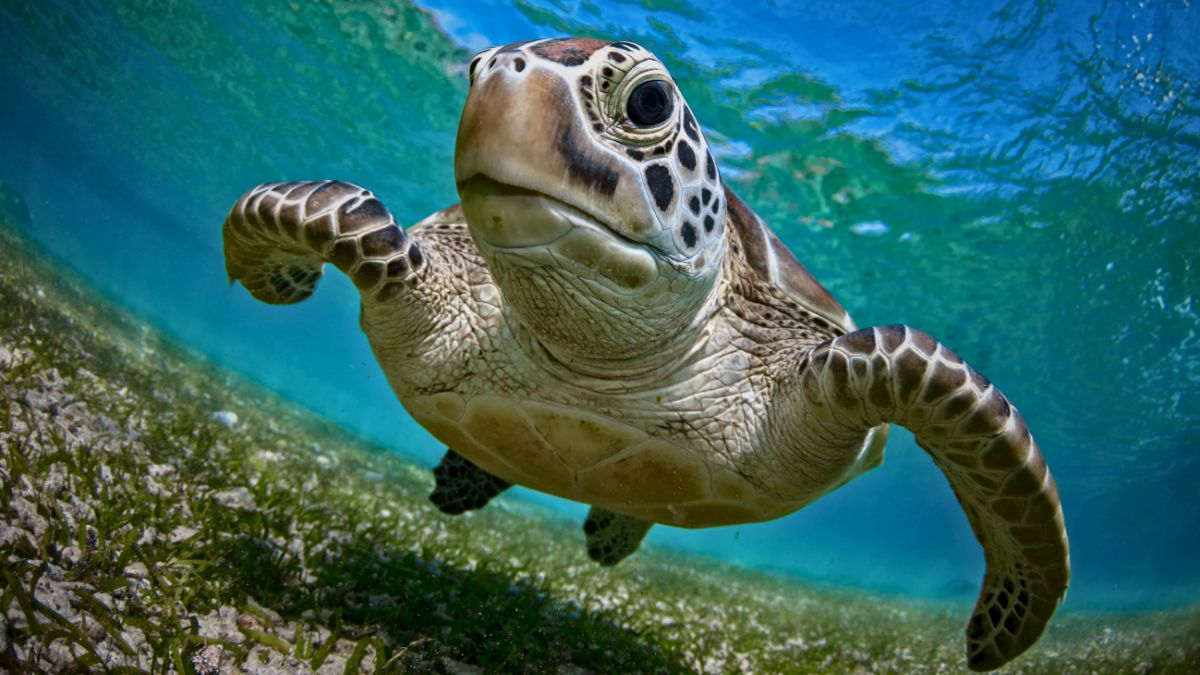
Green turtles are herbivores. They feed entirely on seagrass and algae. At Caño Island, you’ll often see them grazing on algae growing on rocks and dead coral.
They use their beaks to scrape surfaces, and you can actually see chunks floating away as they eat.
I’ve noticed that Green turtles are most active in the morning, especially between 8 AM and 11 AM. They feed during these hours, then find resting spots in the afternoon. The best dive sites for Green turtles are Shark Cave, Coral Garden, and the shallower sections of Bajo del Diablo.
One Green turtle I’ve been seeing for years has a distinctive notch in her shell. I first spotted her in 2017 when she was maybe 2 feet long. Now she’s a full-sized adult, probably close to 4 feet.
Seeing the same individual grow over years reminds me these aren’t just vacation encounters. They’re residents with their own territories.
Did you know? Green sea turtles can hold their breath for up to five hours when resting, though they typically surface every 20-30 minutes while active.
Olive Ridley Turtles (Lepidochelys olivacea) – Open Water Wanderers
Olive Ridleys are trickier to encounter because they spend most time in open water rather than on reefs. We see them on maybe 30% of dive trips, often during boat rides rather than during dives.
These turtles are smaller, typically 2 to 2.5 feet long and weighing 80 to 100 pounds. Their most distinctive feature is the heart-shaped carapace, wider in front and tapering toward the back.
The head is triangular with a slightly hooked beak adapted for hunting crabs, shrimp, jellyfish, and small fish.
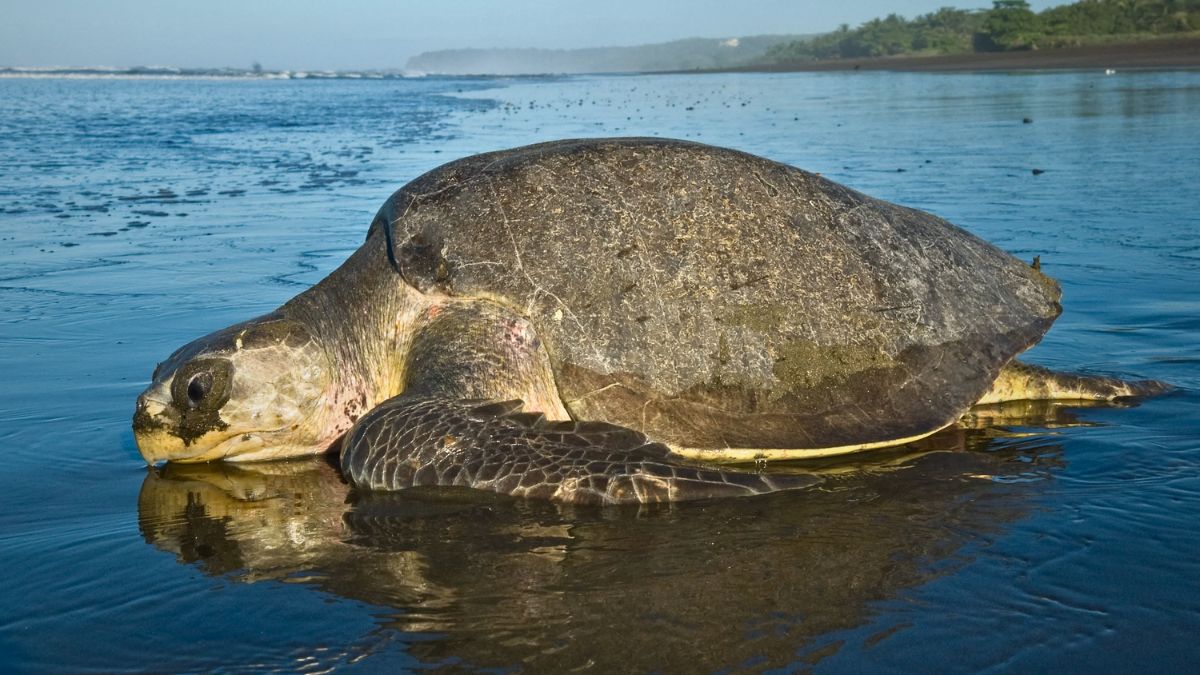
Olive Ridleys are pelagic feeders. They hunt in open water rather than grazing on reefs. This is why you’re more likely to see them during surface intervals or boat transits.
On the rare occasions I see them during dives, it’s usually at deeper sites like Bajo del Diablo. They’re passing through the blue water hunting for prey.
Hawksbill Turtles (Eretmochelys imbricata) – Reef Specialists
Hawksbills are the least common but my personal favorite. They’re critically endangered globally, which makes every sighting special. We see Hawksbills on about 20-25% of dives, usually at sites with healthy coral reef structure.
This makes Caño Island one of the best places in Costa Rica for Hawksbill turtle diving.
Hawksbills are medium-sized, typically 2.5 to 3 feet long and weighing 100 to 150 pounds. Their most distinctive feature is the narrow, pointed beak that looks like a hawk’s bill. This specialized beak is perfect for reaching into reef crevices to extract their favorite food: sponges.
The shell has a beautiful tortoiseshell pattern with overlapping scutes that create a serrated rear edge. Hawksbills are reef specialists, spending almost all their time on or near coral reefs.
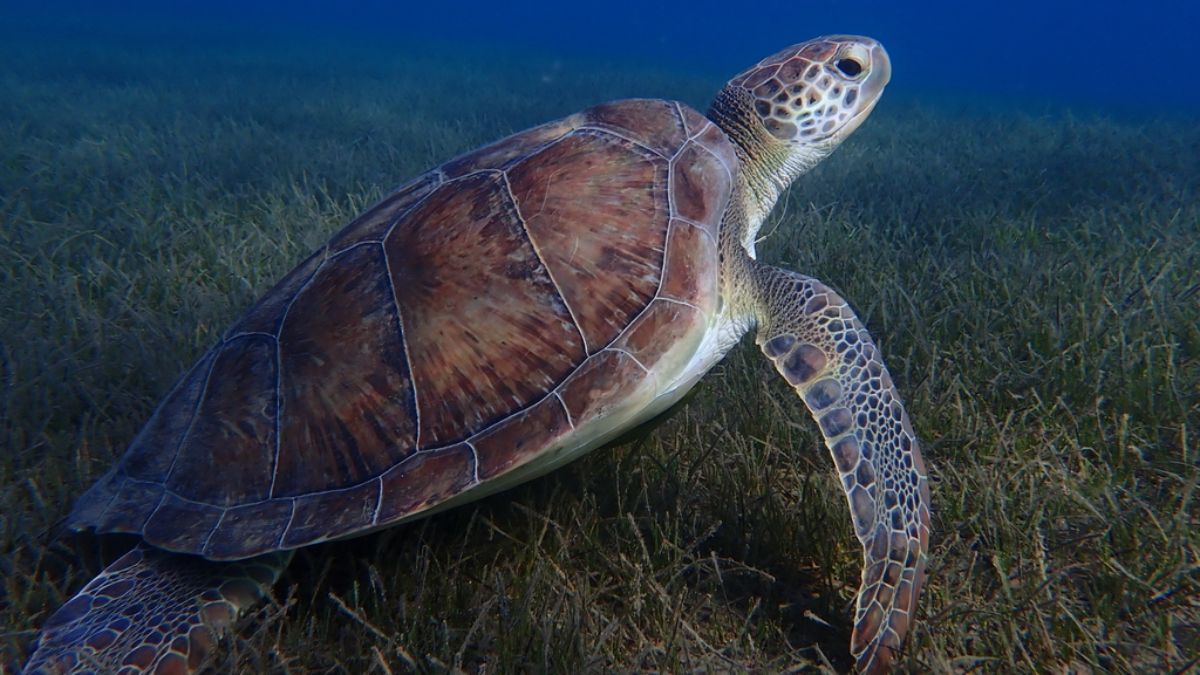
At Caño Island, they’re most commonly found at Shark Cave, Coral Garden, and El Faro.
Watching a Hawksbill feed is fascinating. They’ll stick their narrow beak deep into crevices to extract sponges. They can eat sponges that would be toxic to other animals, including species with glass-like spicules.
Watch for this at Shark Cave: there’s a section of reef on the north side around 45 feet deep where three large coral heads create a natural corridor. Sponges grow thick in the crevices. I’ve seen Hawksbills there on probably 60% of my dives at that site.
When Is the Best Time to Dive with Turtles at Caño Island?
You can see turtles year-round at Caño Island, but certain months offer advantages depending on what you’re looking for. The turtle diving season at Caño Island is unique because it never really ends.
Is There a Turtle Season at Caño Island?
Unlike nesting beaches, Caño Island is a feeding ground and resident habitat. Turtles are present throughout the year. However, behavior patterns and species likelihood vary by season.
Dry season (December through April) brings the best visibility, often 60 to 100 feet on good days. Water is slightly cooler at 78 to 82°F. Calmer seas make boat rides more pleasant. Green turtle activity is excellent, and better visibility increases Hawksbill sightings.
Did you know? Caño Island Biological Reserve protects over 14,000 acres of marine habitat surrounding the island. This protection has been in place since 1978, making it one of Costa Rica’s oldest marine protected areas and a crucial sanctuary for sea turtle populations.
Wet season (May through November) has warmer water at 82 to 84°F. Visibility drops to 40 to 60 feet on average, but overall marine life activity increases. I’ve noticed that Olive Ridley sightings increase slightly during wet season, particularly July through October.
If I had to pick one month for guaranteed turtle encounters with good conditions, I’d say February. Water is clear, turtles are active, weather is reliable, and you’ve got decent chances of seeing all three species.
What Time of Day Are Turtles Most Active?
Green turtles are morning feeders, most active between 7 AM and 11 AM. Early morning dives give you the best chance of seeing them feeding actively. By afternoon, many find resting spots on the reef or under ledges.
Hawksbills don’t follow as clear a pattern. I’ve seen them feeding at all times of day. Olive Ridleys are wild cards since they’re pelagic feeders. Their activity depends more on prey availability than time of day.
For photography, morning light is superior. The sun angle creates better color saturation and contrast. If you’re planning a two-tank dive trip, departing around 7 AM captures peak morning turtle activity on the first dive.
Where Are the Best Dive Sites at Caño Island for Turtle Encounters?
So where should you actually dive to maximize turtle sightings? I’ve got three favorite sites that consistently deliver.
Shark Cave (Cueva del Tiburón) – Shallow Turtle Paradise
Shark Cave is my go-to site for guaranteed turtle sightings. Located on the northwest side with depths from 30 to 55 feet, you have an 85% chance of seeing at least one Green turtle here.
The reef structure is perfect for Green turtles. Large rocks covered with algae provide endless feeding opportunities. The shallow depth means minimal air consumption and longer bottom times.
About halfway through the dive, three large coral heads create a natural corridor. This is prime Hawksbill habitat where I’ve seen them countless times. The crevices are packed with sponges.
Look for areas where algae appears freshly grazed. You’ll see lighter-colored patches on rocks where turtles recently fed. If you see fresh grazing marks, a turtle is probably nearby.
Night diving at Shark Cave is completely different. Green turtles sleep on the reef at night, tucked under ledges. With your dive light, you can approach sleeping turtles more closely than during the day. Always keep your light angled away from their eyes.
Bajo del Diablo – Big Animals and Turtles
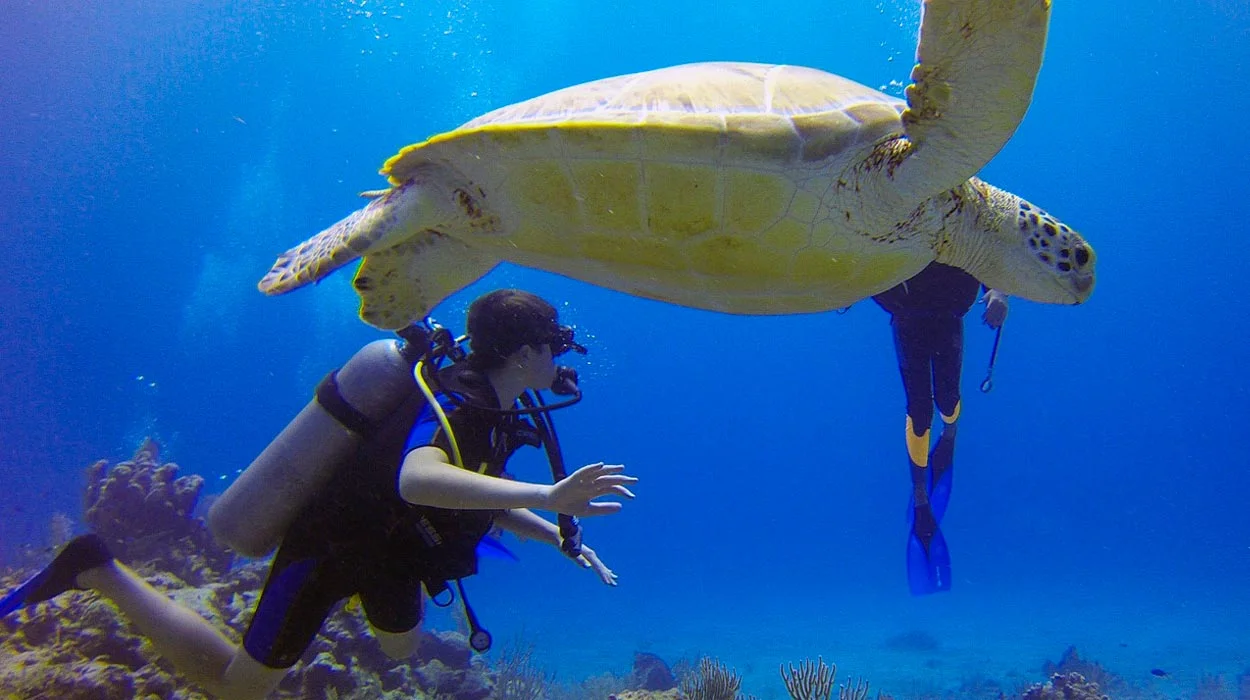
Bajo del Diablo is the most famous dive site at Caño Island. It’s a large underwater rock formation with multiple depth zones. For turtle encounters, I focus on 60 to 90 feet where Green turtles patrol looking for algae-covered rocks.
What makes this site special is the combination of reef turtles and larger marine life in one dive. On a good day, you’ll see Green turtles feeding, white-tipped reef sharks, massive schools of snappers, and maybe even a manta ray passing overhead.
I’ve noticed that the largest Green turtles at Caño Island prefer Bajo del Diablo over shallower sites. If you want to see a truly massive Green turtle (4+ feet and 400+ pounds), this is where I’d take you.
The visibility is usually excellent, often 70 to 100 feet in dry season. This means you can spot turtles from far away and watch them swimming in from the blue water.
Coral Garden – Night Dive Turtle Encounters
Coral Garden is one of the shallower sites, with depths from 20 to 40 feet. It’s excellent habitat for Hawksbill turtles and often saved for night dives.
This is hands down the best site for observing sleeping turtles at night. I’d say 70% of my night dives here include at least one sleeping turtle sighting.
At night, turtles wedge themselves under ledges or into crevices, entering a sleep state where metabolism slows dramatically.
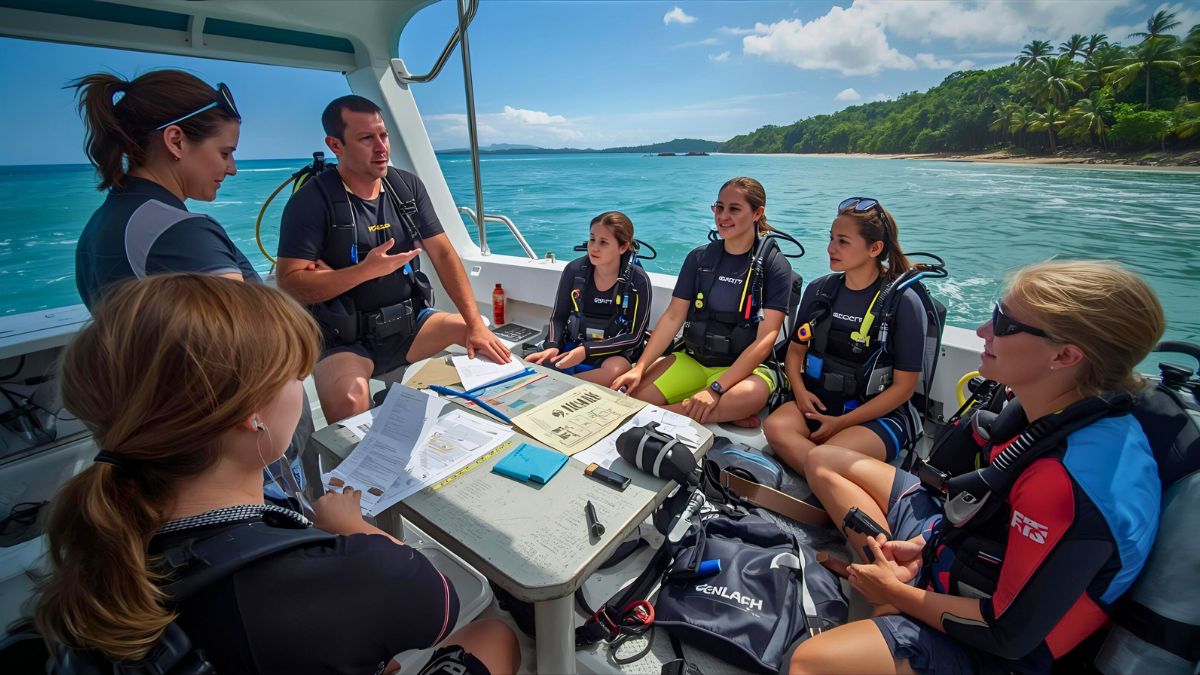
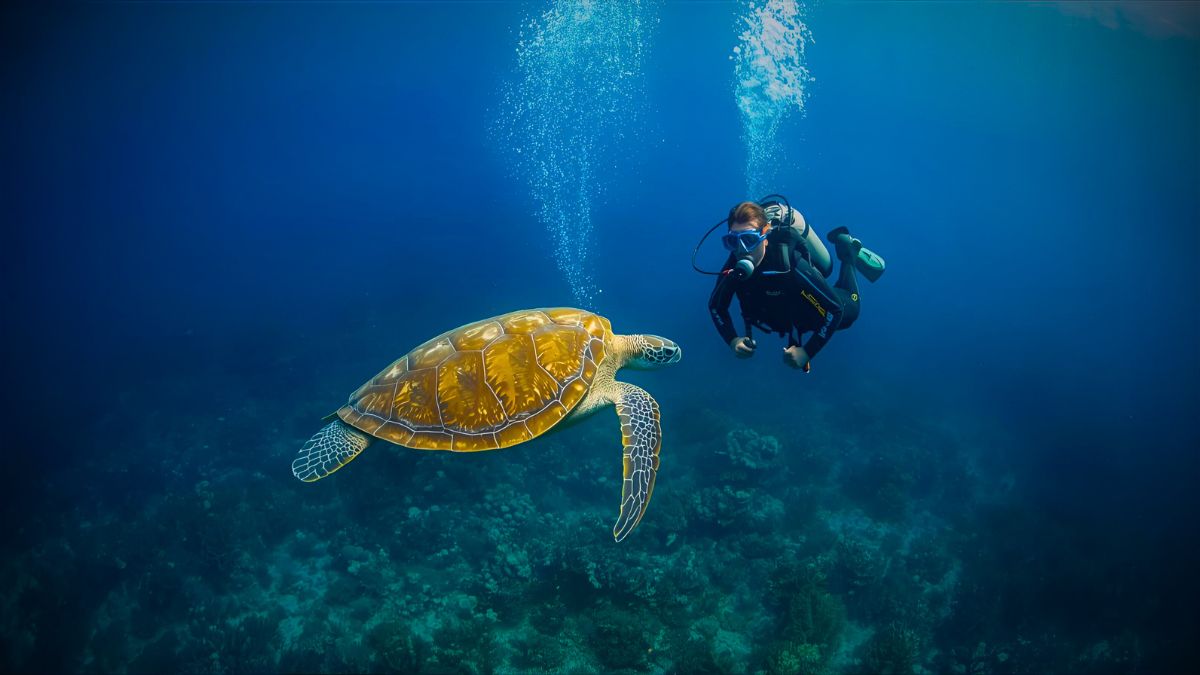
Always brief night divers on proper etiquette. Use your light peripherally, never directly on the turtle’s face. Stay low, approach slowly, and never block their path to the surface.
How to Prepare for Diving with Turtles at Caño Island
Getting to Caño Island requires some preparation beyond just having your dive certification.
What Certification Do You Need?
The minimum requirement is Open Water Diver certification. Most turtle-rich sites are within Open Water depth range (30 to 60 feet).
That said, I strongly recommend Advanced Open Water certification. Some of the best sites go deeper than 60 feet. Advanced certification means you’re a more confident diver.
For night diving to see sleeping turtles, you need the Night Diver specialty or be willing to do a supervised Discover Night Diving experience.
What Should You Bring for Turtle Diving?
I recommend a 3mm wetsuit for dry season and a 5mm or 3mm with hooded vest for wet season. Water temperature stays relatively warm at 78 to 84°F year-round, but you can get chilled during multiple dives.
A dive computer is essential. For underwater photography, even a simple GoPro with red filter works well. If you’re serious about photography, bring a camera with manual controls.
I shoot at ISO 400-800, shutter speed around 1/125th, and aperture around f/8.
Bring reef-safe sunscreen. Regular sunscreen damages coral reefs. Look for mineral-based sunscreens with zinc oxide or titanium dioxide.
Did you know? Sea turtles have been around for over 100 million years, surviving the extinction event that wiped out dinosaurs. The three species you see at Caño Island have ancestors that swam alongside prehistoric marine reptiles like mosasaurs and plesiosaurs.
How Should You Behave Around Turtles Underwater?
This is probably the most important section. How you behave directly affects turtle welfare and encounter quality.
First rule: maintain distance. Stay at least 6 to 10 feet away from turtles. This gives them space to move naturally without feeling threatened.
Second rule: never, ever touch a turtle. Touching can transfer oils from your skin, disturb natural behaviors, and stress the animal. This rule extends to their behaviors. Don’t block a turtle’s path to the surface.
Third rule: control your buoyancy. Nothing ruins a turtle encounter faster than poor buoyancy control. Get yourself neutral, horizontal, and stable before approaching.
For photography, slow and steady wins. Make small, controlled movements. Use your breath for adjustments rather than inflating your BCD. Most importantly, don’t sacrifice the turtle’s welfare for a photo.
I always tell my students: the goal is observation, not interaction. We’re guests in the turtle’s environment. Our job is to watch, learn, and appreciate, not to disturb.
Turtle Conservation at Caño Island: What I’ve Witnessed in 10 Years
One privilege of diving the same location for a decade is watching conservation play out in real time.
When I started in 2015, Hawksbill sightings were rare. Maybe one every 10 dives. Now I see them on roughly one in every four or five dives. That’s significant population recovery.
I’ve also noticed behavioral changes. Green turtles are less skittish now than 10 years ago. This suggests they’ve learned snorkelers and divers don’t pose a threat. Local dive operators deserve credit for promoting responsible practices with strict no-touch policies and conservation education.
One specific success story: the Green turtle with the notched shell I’ve been seeing since 2017. She was a juvenile when I first saw her. Now she’s a full adult producing eggs.
That one turtle represents conservation success. Multiply that across hundreds of turtles, and you understand why protection matters. Divers contribute to conservation in simple ways. Follow the no-touch rule. Maintain proper distance. Don’t chase turtles. Choose dive operators who prioritize conservation.
Every time you dive responsibly, you’re showing that turtles are more valuable alive than as turtle soup or jewelry.
Frequently Asked Questions
Can Beginners Dive with Turtles at Caño Island?
Yes, beginners with Open Water certification can absolutely dive with turtles here. Many of the best turtle sites have depths between 30 and 55 feet. Communicate your experience level with your dive operator, and they’ll pair you with an experienced divemaster.
How Close Can You Get to Sea Turtles While Diving?
Maintain at least 6 to 10 feet of distance. This gives them space to move naturally. Turtles sometimes swim closer on their own, which is fine. Let them make that choice.
Can You Touch the Turtles at Caño Island?
No, absolutely not. Touching wild sea turtles is prohibited and harmful. It transfers oils, disrupts behaviors, and causes stress. Admire them, photograph them, watch them, but keep your hands to yourself.
What’s the Water Temperature at Caño Island?
Water temperature ranges from 78 to 84°F year-round. During dry season it’s 78 to 82°F, warming to 82 to 84°F during wet season. Most divers are comfortable in a 3mm wetsuit.
How Long Is the Boat Ride to Caño Island?
The boat ride from Uvita takes approximately 40 to 50 minutes. From Drake Bay, it’s 20 to 30 minutes. Most operators depart around 7 AM to arrive by 8:30 AM for the first dive.
Can You See Turtles While Snorkeling at Caño Island?
Yes, turtles can be seen while snorkeling, especially Green turtles in shallow water. That said, diving gives you significantly better encounters with longer observation time and access to deeper sites.
Final Thoughts: Why You Should Dive with Turtles at Caño Island
After 10 years and thousands of dives, I still get excited every time I see a turtle underwater. There’s something deeply peaceful about watching these ancient creatures go about their lives, completely indifferent to your presence.
Whether you’re planning your first turtle dive or your hundredth, Caño Island offers something special. Diving with turtles at Isla del Caño isn’t just about ticking a species off a list. It’s about connecting with the ocean in a way that’s hard to put into words.
It’s about understanding that we share this planet with incredible animals that deserve our respect and protection.
If you visit, do it responsibly. Choose dive operators who prioritize conservation. Follow all guidelines about distance and not touching wildlife. Bring reef-safe sunscreen. Take only photos and leave only bubbles.
I’ll be down there next week, probably at Shark Cave, watching the same turtles I’ve been diving with for years. If you decide to visit, I hope you have the same incredible experiences that keep me coming back.
And remember: these animals are worth protecting, and every encounter should be on their terms, not ours.
See you underwater.