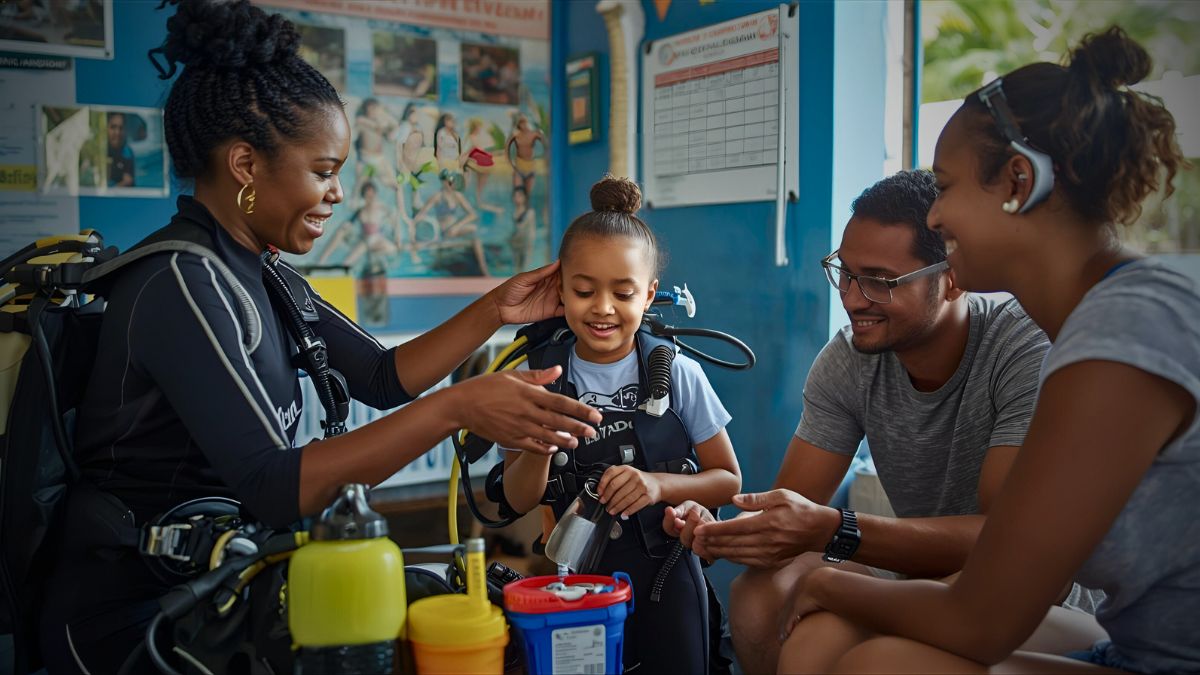
In tropical conditions, disinfecting mouthpieces and shared equipment with a mild antibacterial solution is essential. Salt, heat and humidity will destroy neglected gear faster than you think. I clean dive gear every single day. Not once a week, not after a trip. Every day.
Running a dive center in Costa Rica means our equipment goes through saltwater, tropical heat, high humidity and UV exposure on repeat. Over eight years of doing this at Costa Rica Divers, I’ve learned exactly what shortcuts lead to corroded regulators, stinking wetsuits and cracked silicone. I’ve also learned what actually works, and what’s a waste of your time.
In this guide, I’ll walk you through the complete process of cleaning and disinfecting your scuba equipment, piece by piece. Whether you own your gear or rent it, whether you dive weekly or twice a year, these steps will keep your equipment safe, functional and lasting years longer than it would otherwise.
Why Is Cleaning Your Dive Gear So Important?
Your scuba equipment is a life-support system. That’s not dramatic. It’s literally what keeps you breathing underwater. And the two biggest enemies of that system are salt and sun.
Saltwater is corrosive. The moment water starts evaporating from your gear, salt crystals form in every crevice, hinge and valve. Left unchecked, those crystals jam zippers, freeze regulator valves, corrode metal buckles and weaken rubber components. I’ve seen regulators free-flow on the surface because a diver skipped rinsing after a week of diving. That’s not a minor inconvenience. That’s a safety issue.
UV radiation is the second threat. Direct sunlight breaks down neoprene, silicone and rubber over time. A wetsuit left on a boat rail in the Costa Rican sun will start cracking within months. A mask skirt exposed to daily UV will turn yellow and lose flexibility in a single season.
Beyond damage prevention, cleaning your gear is also about hygiene. Mouthpieces, mask skirts and BCD bladders are breeding grounds for bacteria, especially in warm, humid climates. If you share equipment or rent gear, disinfection isn’t optional. It’s a basic health measure.
Clean gear lasts longer, performs better and keeps you safer. That’s not opinion. It’s the reality I see every day at our dive center.
How Do You Rinse a Regulator Properly?
Your scuba regulator is the most critical and most delicate piece of equipment to clean. Get this wrong, and you could cause the very damage you’re trying to prevent.
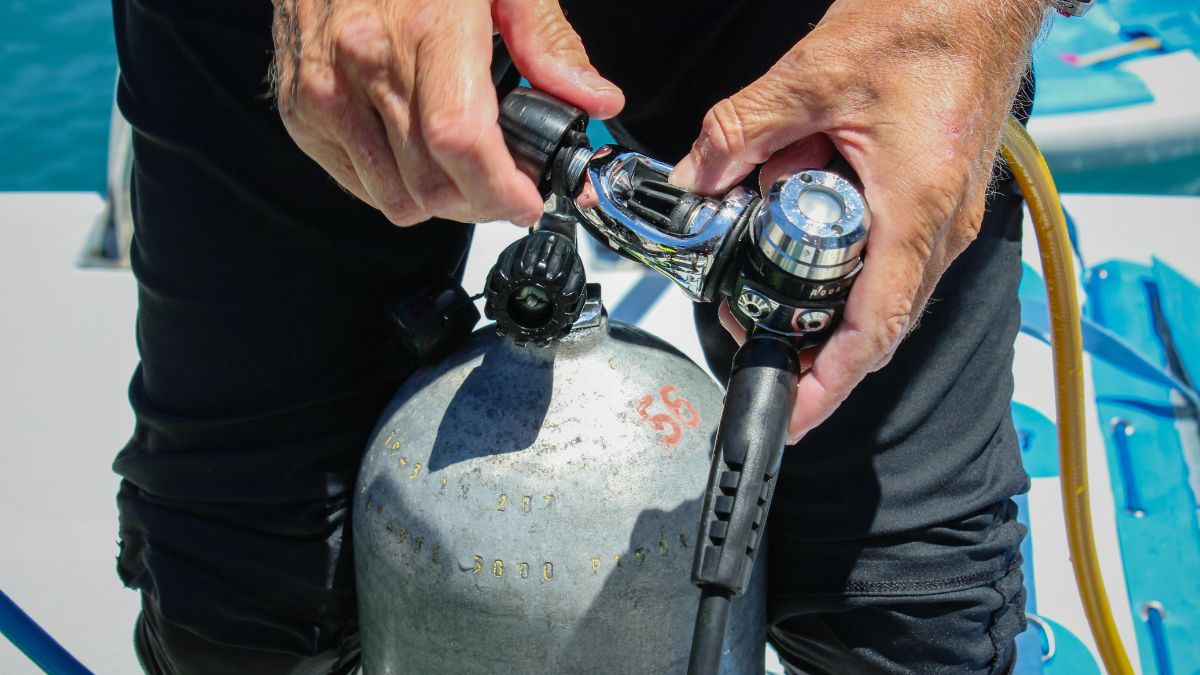
The golden rule: never rinse your first stage without the dust cap securely in place. If water enters the first stage, it can cause internal corrosion that leads to regulator malfunction. This is not something you can fix at home. It requires a full professional disassembly and service.
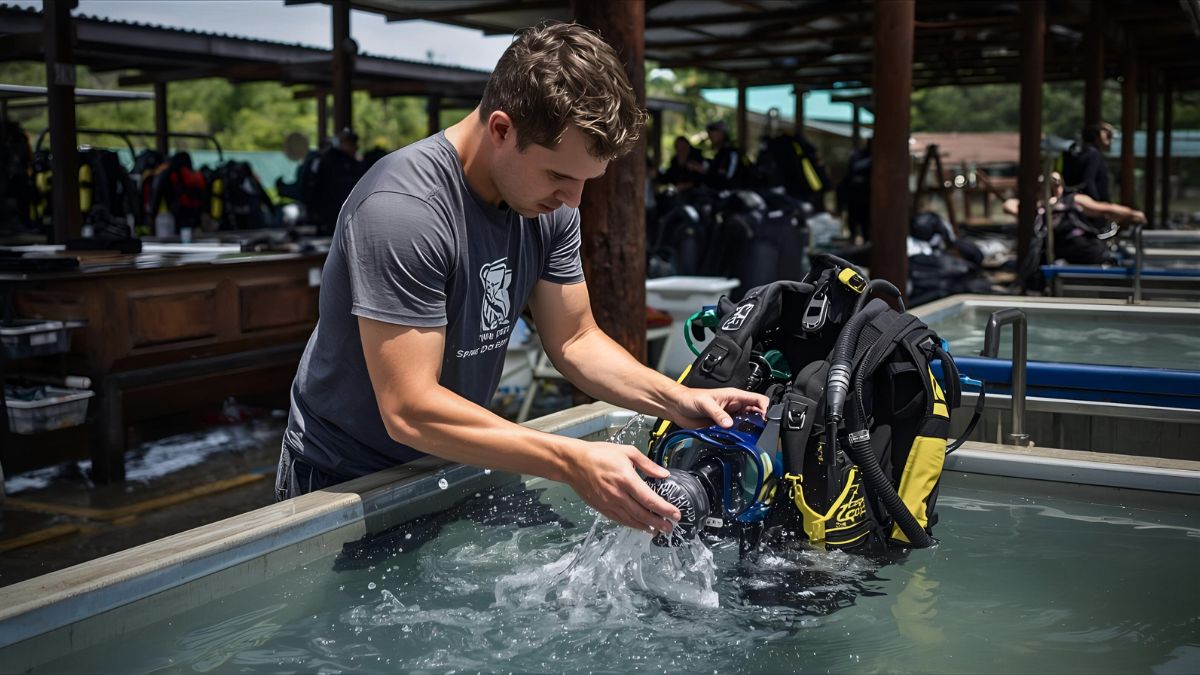
Here’s the process I follow after every dive. Remove the regulator from the tank. Make sure the dust cap is dry before you put it on, because a wet dust cap defeats the purpose. Press it firmly into place. Now you can rinse.
Use warm, fresh water
Use fresh, lukewarm water, not hot. Hot water damages rubber components and O-rings. Submerge the entire regulator in a tub of clean water and let it soak for 15 to 20 minutes. This dissolves salt crystals that a quick spray would miss. While it soaks, gently work the second stage purge button a few times, but only if the regulator is pressurized (connected to a tank). If it’s unpressurized, never press the purge button. Doing so draws water into the mechanism.
Let water flow through the second stage mouthpiece and exhaust valve area. Rinse every hose, every connection point, every gauge. After soaking, lift the regulator out and hang it to dry in a shaded, ventilated area.
Rinse with the dust cap on. Soak, don’t spray. Never press the purge unpressurized. These three rules protect the most expensive piece of gear you own.
How Do You Clean a BCD Inside and Out?
Most divers rinse the outside of their BCD and call it done. That’s only half the job. The inside of the bladder collects salt, sand and bacteria with every dive, and if you ignore it, the internal dump valves will eventually corrode and stick.
Start with the exterior. Submerge your BCD in a tub of fresh water and work the buckles, clips and straps to flush out any sand or salt trapped in moving parts. Check metal buckles for corrosion. A white chalky buildup or green powder means the metal is deteriorating. Minor corrosion can be cleaned with a soft brush and a little white vinegar, followed by a thorough freshwater rinse.
Now the bladder
Pour fresh water into the BCD through the low-pressure inflator hose while holding down the inflate button. Fill the bladder about 60 to 70 percent. Orally inflate the rest, then shake the BCD vigorously to agitate the water inside. Drain the water through each dump valve. Use every one of them, including the pull-dump on the inflator hose. This flushes salt from the valves themselves. Repeat the process once more for good measure.
After draining, inflate the BCD to about 50 percent capacity and let it air-dry. Storing it partially inflated prevents the internal walls from sticking together and helps the bladder maintain its shape.
Here in Costa Rica, where the humidity stays high year-round, I add one extra step. Every few weeks, I run a mild BCD cleaning solution through the bladder to kill bacteria and prevent that musty smell that builds up fast in tropical climates.
Outside rinse is the minimum. Inside flush is what actually protects your BCD. Do both, every time.
Did you know? Most regulator manufacturers recommend professional servicing every 12 to 24 months, or every 100 dives, whichever comes first. But regulators that sit unused in a closet actually need service more urgently than gear in regular use. Internal seals dry out, lubricants harden, and valves can freeze in place.
How Do You Clean a Dive Mask, Fins and Snorkel?
These are the simplest pieces to clean, and the ones divers most often neglect. The damage is slower, but it adds up. Your dive mask needs a freshwater rinse after every use.
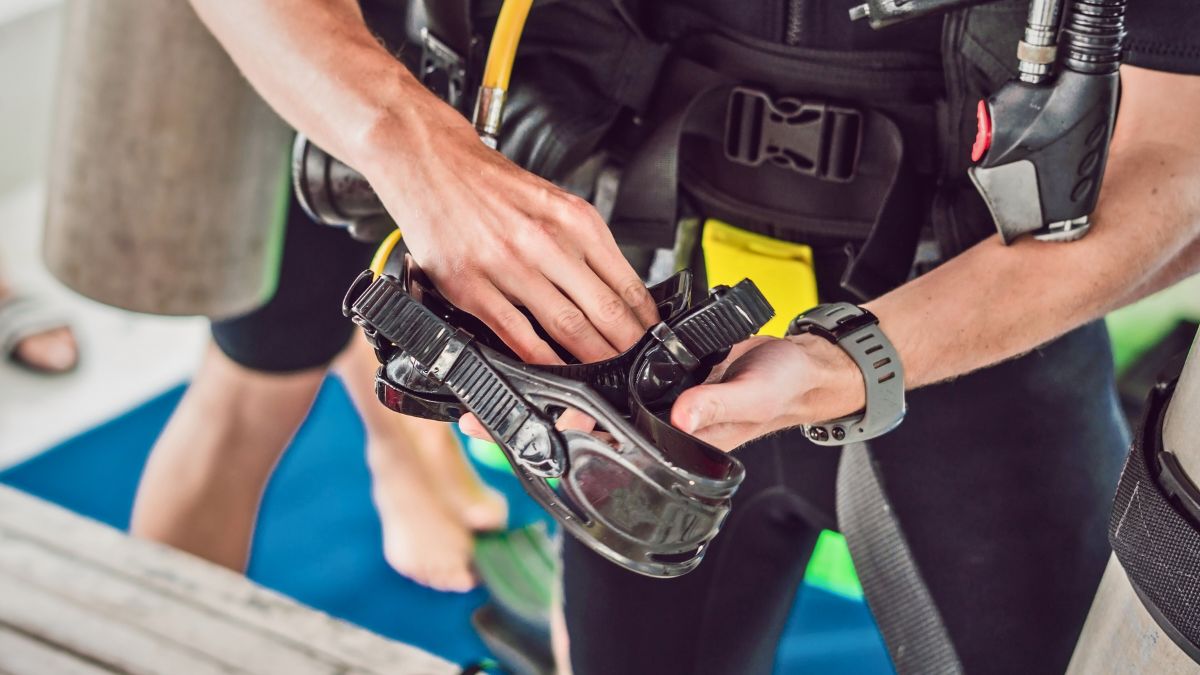
Pay attention to the area where the silicone skirt meets the lens frame. Bacteria and algae love to build up in that groove. A soft toothbrush works well for scrubbing it clean. Dry the mask completely, then store it in a hard case or mask box. Never leave it lens-down on a hard surface, because scratched lenses can’t be fixed. And never store your mask in direct sunlight. UV degrades silicone fast, and a degraded skirt means a leaking mask on your next dive.
Take care of your diving mask
Fins get the same freshwater rinse. Check the straps for fine cracks in the rubber. Those cracks are early warning signs of strap failure. Store fins flat or hanging by their straps. Never stand them on their blade tips. The blade will warp over time, and warped fins change your kick efficiency underwater.
Snorkels need both rinsing and disinfecting. The mouthpiece sits in your mouth, collects saliva and bacteria, and can develop a biofilm if you don’t clean it properly. Soak the snorkel in a mild antibacterial solution (diluted mouthwash or a commercial snorkel sanitizer) for 10 to 15 minutes after each dive trip. Rinse thoroughly afterward.
Simple gear, simple cleaning. But consistent cleaning is what separates gear that lasts one season from gear that lasts five years.
How Do You Wash a Wetsuit Without Ruining It?
Wetsuits are tough underwater. But they’re surprisingly easy to damage during cleaning if you don’t know the rules.
First: never use hot water. Heat breaks down neoprene, causing it to lose flexibility and insulation. Lukewarm to cool fresh water is what you want. Fill a tub, submerge the suit, and let it soak for 10 to 15 minutes. Turn it inside out and soak it again. Both sides need attention. The inside collects body oils, sunscreen residue and sweat, while the outside picks up salt and marine debris.
For a deeper clean, use a wetsuit-specific shampoo. Regular detergent and dish soap are too harsh. They strip the neoprene’s elasticity and can cause fading. Wetsuit shampoo is designed to clean without degrading the material. A small capful in the soak water is all you need.
Can a wetsuit be washed in an automatic washing machine?
You might wonder about machine washing. Some divers do it on a gentle cycle, but I don’t recommend it. The agitation can stress seams and zippers, especially on thinner suits. If you absolutely must, use the delicate cycle, cold water, and pull the suit out before the spin. But hand washing in a tub takes five minutes and gives you better control.
Dry your wetsuit on a wide, padded hanger. Never use a thin wire hanger, which creates permanent creases in the neoprene. Hang it in the shade. If you must dry it outside, choose a spot with airflow but no direct sun. Turn the suit inside out first so the interior dries faster.
One more thing: wax your zippers. A light coat of zipper wax or beeswax after cleaning keeps them sliding smoothly and prevents corrosion. I’ve seen zippers seize up completely because divers skipped this 30-second step.
Cool water, wetsuit shampoo, shade drying, zipper wax. Four steps that keep your suit performing for years, not months.
Fun fact: That terrible smell your wetsuit develops? It’s not just salt. It’s bacteria feeding on organic material trapped in the neoprene. A single wash with wetsuit shampoo kills the bacteria and eliminates the odor. In tropical climates like Costa Rica, where wetsuits rarely dry completely between dives, this wash is essential after every dive day.
How Do You Clean a Dive Computer?
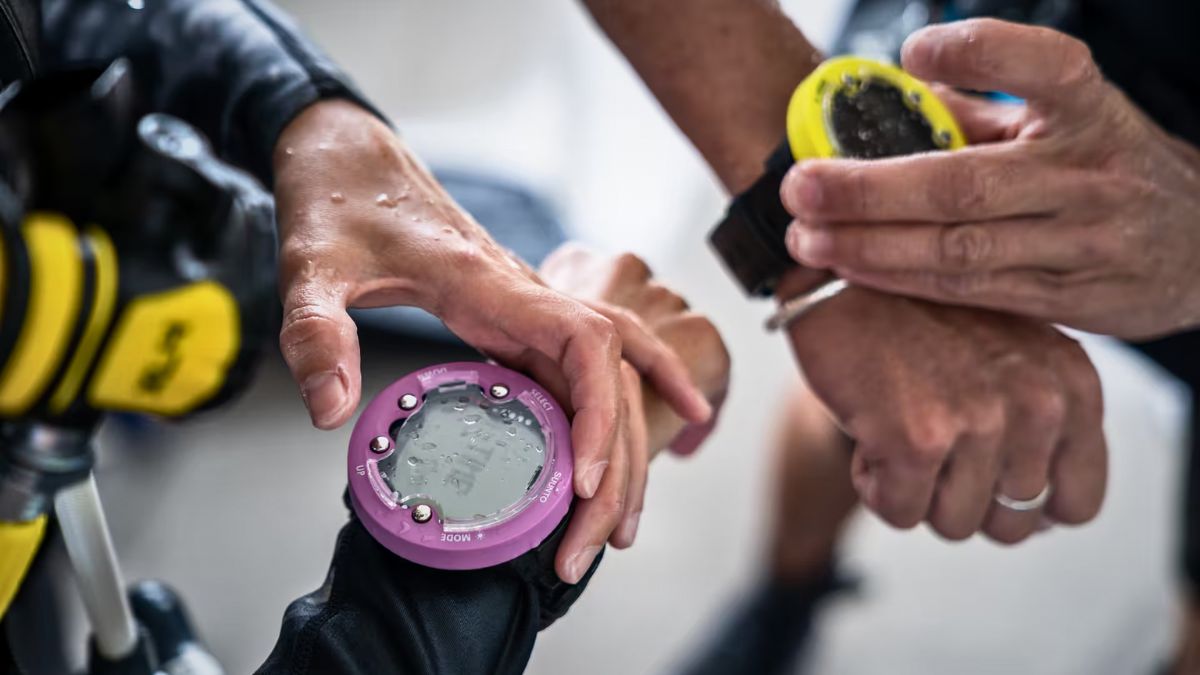
Your dive computer tracks your depth, time and decompression status. If salt builds up on the water-contact sensors, the computer may activate incorrectly or fail to activate at all. Neither is a situation you want at depth.
Rinse your computer in fresh water after every dive. Soak it for a few minutes and use a soft toothbrush to gently clean around the buttons, the sensor contacts on the side of the housing, and the depth sensor. Don’t use anything abrasive. The screen and housing scratch easily.
Dry it thoroughly before storing. If your computer uses a replaceable battery, check the battery compartment O-ring periodically for wear. A compromised O-ring means water intrusion, and water inside a dive computer is usually fatal to the electronics.
When storing your computer between dive trips, remove the battery if you won’t be using it for several months. A corroded battery leaking inside the housing can destroy a $500 computer. Store it in a protective case, in a cool, dry place. Not in your gear bag where it can get crushed or exposed to residual humidity.
A two-minute rinse and brush after each dive protects the electronics that protect your life underwater. Don’t skip it.
How Should You Store Scuba Equipment After Cleaning?
Cleaning is only half the equation. How you store your gear determines whether it stays in good condition or deteriorates between dives.
The three storage enemies are heat, direct sunlight and humidity. A garage in a tropical climate is one of the worst places for dive gear. The combination of heat and moisture accelerates rubber and neoprene breakdown. A climate-controlled closet inside your home is ideal. If that’s not available, a well-ventilated room away from windows works fine.
Your wetsuit should hang on a wide hanger or be draped over a thick bar. Never fold it for long-term storage. Permanent creases weaken the neoprene at the fold points. Your BCD should be stored partially inflated so the bladder walls don’t stick together.
Regulators should hang freely, with hoses relaxed and not kinked. If you don’t have hanging space, coil the hoses gently, never at sharp angles. Keep the dust cap in place at all times during storage.
Your mask goes in its hard case. Fins lie flat or hang by their straps. Your dive computer goes in a protective pouch. And all of it stays out of direct sunlight.
Did you know? Insects, particularly in tropical climates, are attracted to silicone and can actually chew through mask skirts and regulator mouthpieces. Store silicone components in sealed containers or zip-lock bags. I learned this the hard way during my first year in Costa Rica.
One more point: scuba tanks should never be stored completely empty. An empty cylinder allows moisture to enter and cause internal corrosion. Always keep at least 200 PSI of pressure in your tank during storage. Store tanks upright and secured so they can’t fall over.
Clean and dry before storing. Shade, ventilation, no pressure on components. Your gear will reward you with years of reliable performance.
What Should You Never Do When Cleaning Dive Gear?
Knowing what to do is important. Knowing what not to do might be even more important, because some of the most common “cleaning” habits actually cause damage.
- Never use hot water. It damages O-rings, degrades neoprene and can warp plastic components. Lukewarm is the maximum. Cool is fine.
- Never use chemical solvents, petroleum-based products or bleach. These destroy rubber, silicone and neoprene. Stick to products specifically designed for dive gear, or plain freshwater for the daily rinse.
- Never press the purge button on an unpressurized regulator while it’s submerged. This draws water directly into the second stage mechanism. It’s the single most common cleaning mistake, and it can require a full professional service to fix.
- Never try to disassemble your regulator at home. Unless you’re a certified technician with the right tools, you risk voiding the warranty and creating a safety hazard. The most you should do is remove the second stage cover to clean out visible sand or debris, and even that requires care.
- Never dry your gear in direct sunlight. UV rays break down rubber, neoprene and silicone. It might dry faster in the sun, but the material damage far outweighs the time saved. Always shade-dry.
- Never store a wetsuit folded or on a thin hanger. Folds create permanent weak points in the neoprene. Thin hangers cause shoulder creases. Use a wide, padded hanger or drape it over a thick bar.
Each of these mistakes is easy to make and easy to avoid once you know better. Now you know better.
Frequently Asked Questions
Can I clean my dive gear with regular soap?
For most equipment, a plain freshwater soak and rinse is enough for daily cleaning. If you want to add soap, use a very mild, unscented variety. Dish soap works in a pinch for BCD exteriors and tanks. For wetsuits, always use wetsuit-specific shampoo. Regular detergent strips neoprene and shortens the suit’s life. For regulators and sensitive electronics, stick to freshwater only unless using a product specifically designed for dive gear.
How quickly should I rinse my gear after a dive?
As soon as possible. Salt crystals start forming the moment water begins evaporating. Ideally, rinse within an hour of exiting the water. If fresh water isn’t available at the dive site, keep your gear wet, even in saltwater, until you can rinse properly at home. A wet regulator is better than a dry one covered in salt crystals.
Is it safe to soak my regulator in water?
Yes, but only with the dust cap firmly in place and dry. If the dust cap is wet when you attach it, moisture can wick into the first stage. Soaking for 15 to 20 minutes in lukewarm freshwater is the most effective way to dissolve salt. If your regulator has an Automatic Closure Device (ACD), soaking is generally safe, but check your manufacturer’s guidelines. When in doubt, wipe the first stage down with a damp cloth instead of submerging it.
How do I get rid of the smell in my wetsuit?
That smell is bacteria, not salt. Soak the suit in a tub of cool water with wetsuit shampoo or a dedicated neoprene cleaner for 15 to 20 minutes. Turn it inside out and repeat. Rinse thoroughly and dry completely in the shade. In tropical climates where suits rarely dry fully between dives, this wash should happen after every dive day, not just at the end of a trip. Prevention is easier than cure: rinse the inside of your suit immediately after each dive, before bacteria have time to multiply.
Should I clean dive gear after freshwater dives too?
Yes. Freshwater lakes, rivers and cenotes contain sediment, microorganisms and sometimes chemical contaminants. While the corrosion risk from freshwater is much lower than saltwater, the hygiene concern remains the same. Rinse everything with clean water and dry it properly. Your mouthpieces and mask still need sanitizing regardless of whether you dived in the ocean or a lake.
What cleaning supplies should I have at home?
You don’t need much. A plastic tub large enough to submerge your regulator and BCD, a garden hose or faucet with lukewarm water, a soft toothbrush for detail cleaning, wetsuit shampoo, a mild antibacterial solution for mouthpieces, zipper wax for your wetsuit, and a shaded drying area. That’s everything. Total cost: under $30. The return on that investment is equipment that lasts years longer.
Can I use vinegar to clean dive gear?
White vinegar works well for cleaning minor corrosion off metal buckles and removing hard water deposits. Soak the affected part in a vinegar-water mix (about 1:3 ratio), scrub with a stiff brush, and rinse thoroughly with fresh water afterward. Vinegar residue left on metal can cause its own problems. Don’t use vinegar on silicone, neoprene or rubber. It can degrade these materials over time. For anything beyond surface corrosion, take the piece to a professional technician.
How do I clean dive gear when traveling?
Hotel showers and bathtubs are your best friends. Fill the bathtub with cool water and soak your gear after each dive day. If you don’t have a tub, a long shower rinse is the next best option. Focus on your regulator (with dust cap) and BCD bladder. These are the most vulnerable to salt damage. Let everything dry in the air-conditioned room overnight. When packing for the flight home, make sure every piece is completely dry. Packing damp gear in a sealed bag creates a perfect environment for mold and bacteria growth.
Take Care of Your Gear, and It Takes Care of You
Picture this: you’re gearing up for a morning dive at Caño Island. You pull your regulator from its hanger. Clean, dry, serviced. Your BCD inflates smoothly on the first press. Your wetsuit slides on without that sour smell. Your mask is clear, the silicone soft and pliable. Everything works exactly the way it should.
That feeling, the confidence that your equipment won’t let you down, starts with 15 minutes of care after each dive. Not glamorous. Not exciting. But it’s the difference between a diver who trusts their gear and one who worries about it.
And you know what… I look at every piece of my diving equipment as if it were my underwear. In both cases, I prefer to wear clean and fresh-smelling items rather than dirty ones with visible marks of use…
Related Resources
Gear & Equipment:
Beginner Guides:
- Is Diving Safe? All About Safety in Diving
- How to Get Scuba Certified in Costa Rica
- Scuba Diving for Kids in Costa Rica
Destinations: