I spend most of my life diving in the Pacific Ocean. I am used to current, surge, saltwater, and sharks. But every now and then, I feel the need to trade the noise of the open ocean for absolute silence.
That is when I head north to the Yucatan Peninsula in Mexico.
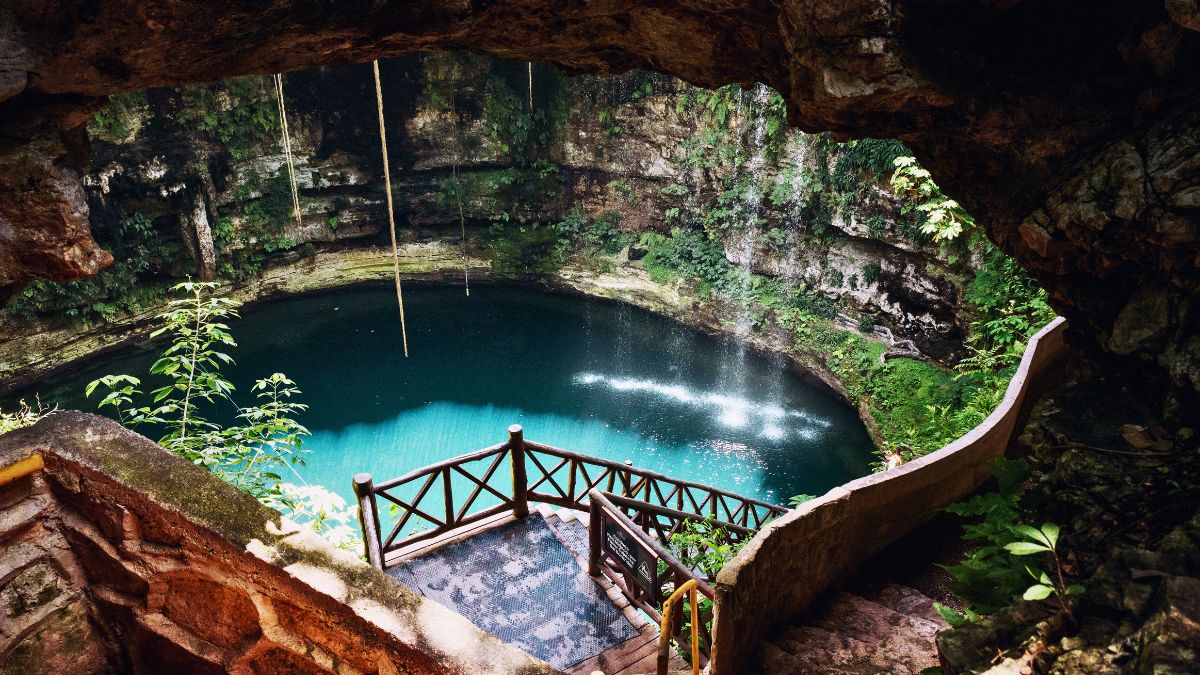
The Cenotes are unlike any other dive destination on Earth. They are sinkholes created by the collapse of limestone bedrock that exposes groundwater underneath. To the ancient Maya, these were sacred portals to Xibalba, the underworld. To us divers, they are the world’s largest underwater cave system.
But diving here is different. It requires a different mindset, different weights, and a different kicking style. If you treat a cenote like a coral reef, you will ruin the dive for everyone. Here is my brutally honest guide to diving the cenotes safely and correctly.
Cavern vs. Cave: The Line You Must Not Cross
Before you book your flight to Cancun, you need to understand one crucial definition. In the diving world, “Cavern” and “Cave” are two completely different sports.
Cavern Diving (Recreational)
This is what 99% of tourists do. You are allowed to do this with a standard Open Water certification (though Advanced is better) and a certified guide.
The Rule: You must always be within the “light zone.” This means if you turn off your torch, you can still see natural sunlight from the entrance. You are also limited to a maximum distance from the surface (usually 60 meters linear distance). You follow a permanent guide line.
Cave Diving (Technical)
This is for certified Full Cave Divers only. It involves entering the dark zone, where no natural light exists. It requires double tanks (or sidemount), redundancy in lights, and specialized training in stress management and line protocols.
My Warning: Never, ever push beyond the warning signs that say “STOP! PREVENT YOUR DEATH.” If you do not have cave training, entering the dark zone is often a one-way trip. The silt can blind you in seconds.
The Weird Physics: Haloclines and Hydrogen Clouds
Why do we dive in holes in the ground? It is not for the fish (there are hardly any). It is for the geology and the physics.
The Halocline Effect
In many coastal cenotes, fresh water sits on top of denser salt water that seeps in from the ocean. Where they meet, they do not mix instantly. They create a layer called a halocline.
Swimming through it is trippy. Everything goes blurry, like looking through oil or a mirage on a hot road. You can’t focus your eyes. It can be disorienting, but it is fascinating to see your buddy look like a blurred painting.
The Hydrogen Sulfide Cloud
In cenotes like Angelita or El Pit, organic matter (leaves, trees) falls into the hole and rots at depth. This creates a thick cloud of hydrogen sulfide. From above, it looks like a river flowing underwater.
When you descend into it, the smell of rotten eggs penetrates your mask (yes, really). The light disappears. It is spooky, eerie, and incredibly photogenic.
Practical Adjustments: Salt vs. Fresh Water
If you arrive in Mexico straight from diving in the ocean, you are going to have problems if you don’t adjust your setup.
1. Buoyancy Math
Fresh water is less dense than salt water. This means you float less.
The Fix: You need to remove weight. If you normally wear 6 kg (13 lbs) in the ocean with a 3mm wetsuit, drop 2 to 3 kg for the cenotes. If you don’t, you will be heavily overweighted. This leads to dragging your fins on the delicate bottom or inflating your BCD too much, which creates drag.
2. The “Frog Kick” is Mandatory
In the ocean, many divers use the “flutter kick” (scissor kick). In a cenote, this is a crime. The bottom of a cenote is covered in centuries of fine sediment (silt). If you kick downwards with a flutter kick, you stir up a cloud of dust that reduces visibility to zero. This is called a “silt-out.” It ruins the photos and the experience for everyone behind you.
The Fix: Use the “Frog Kick.” Keep your knees bent and kick outwards and upwards. Keep your fins higher than your body. Good trim is essential here.
Top Picks for Divers (Skip the Snorkelers)
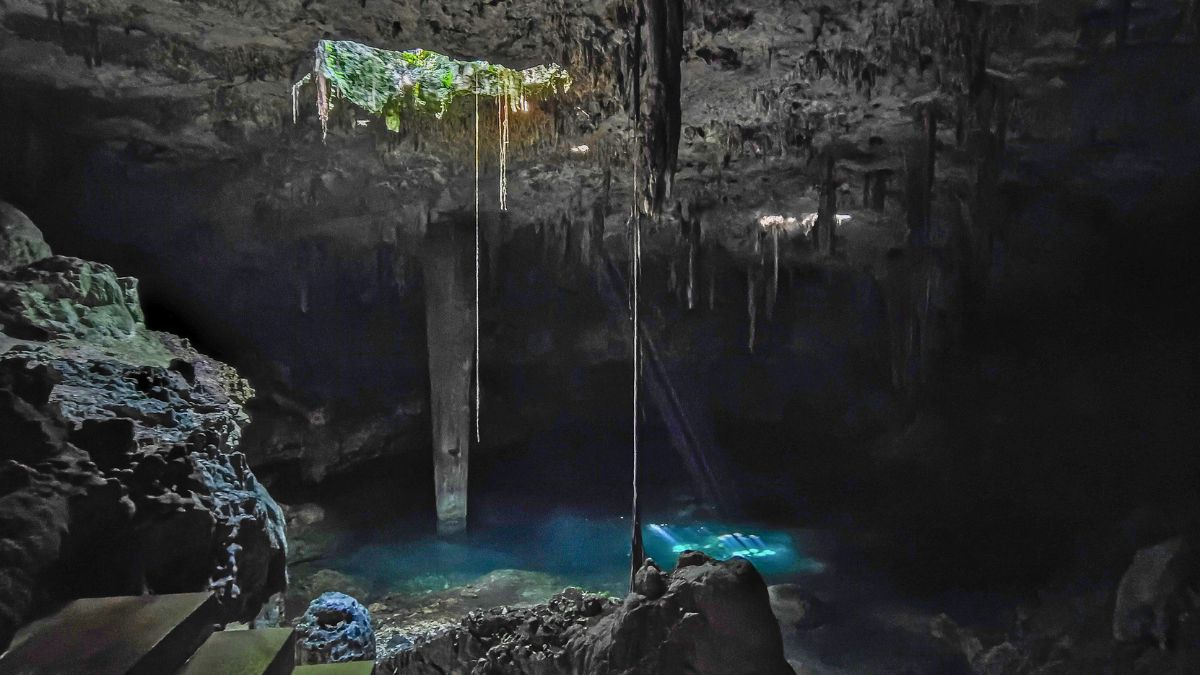
There are thousands of cenotes, but only a few are open to divers. Here are my personal favorites, ranked by experience type.
1. Dos Ojos (The Classic)
This is the most famous one. It has two lines: the Barbie Line (brighter, more formations) and the Bat Cave Line (darker, surfaces in an air dome with bats).
Verdict: It is crowded, but the decorations (stalactites and stalagmites) are spectacular. The visibility is usually 100 meters. It feels like flying through a crystal cathedral.
2. The Pit (El Pit)
This is a deep sinkhole in the jungle. You descend straight down.
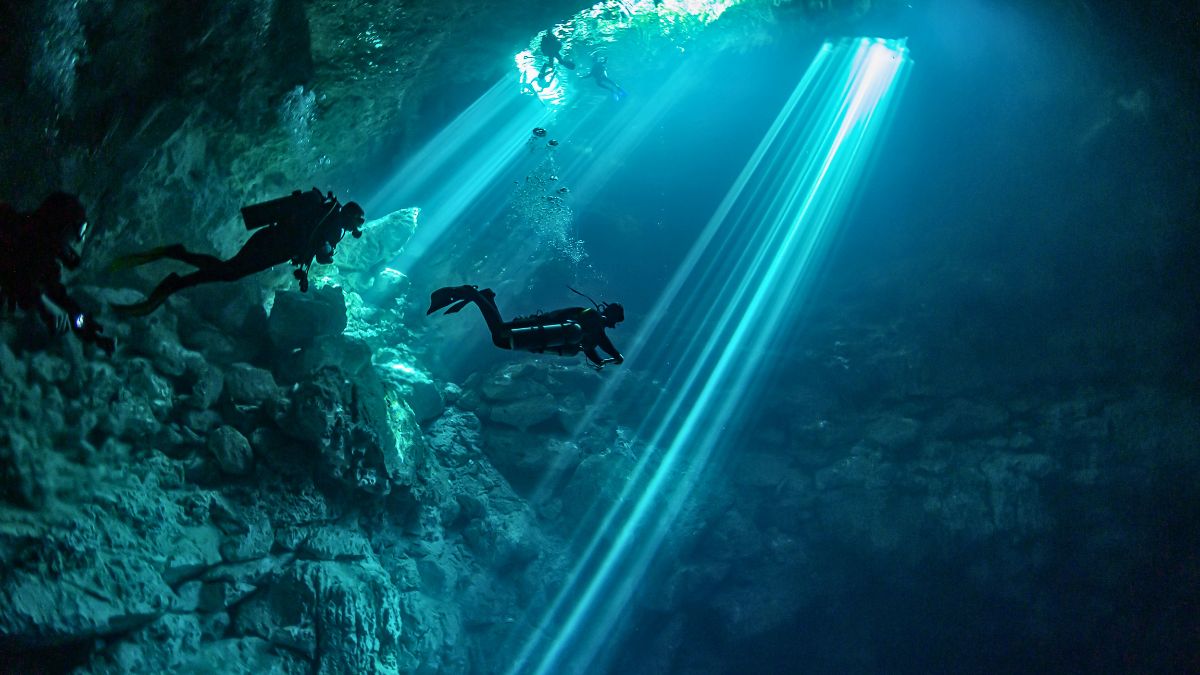
Verdict: The highlight is the light beams. If you go on a sunny day around noon, laser beams of sunlight pierce the water down to 30 meters. You also pass through a halocline and a hydrogen sulfide cloud. It is a deep dive (usually 30-40 meters), so watch your NDL (No Decompression Limit).
3. Cenote Angelita (The Spooky One)
As mentioned in my “Adrenaline” post, this is for divers who want atmosphere.
Verdict: It is not about pretty rocks. It is about the mood. Descending into the sulfur cloud at 30 meters is like landing on another planet. Below the cloud, it is pitch black. Not for the claustrophobic.
4. Carwash (Aktun Ha)
Named because taxi drivers used to wash their cars here (really).
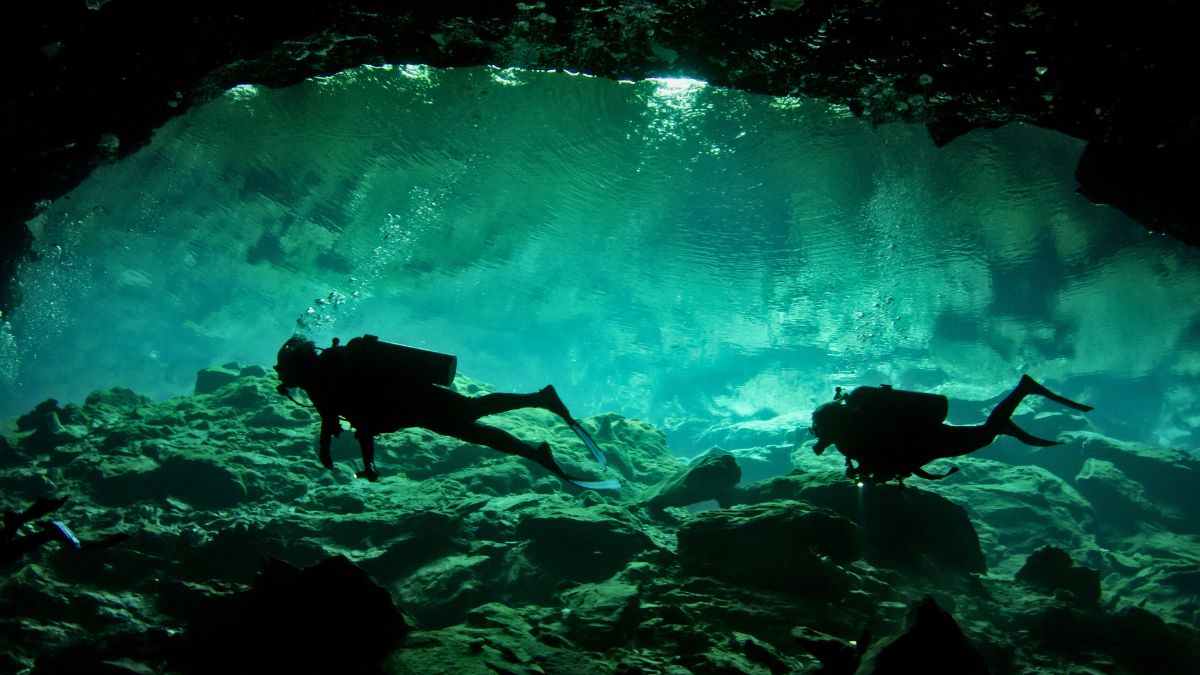
Verdict: This is an open-water style cenote. In the summer, the top layer blooms with algae, turning the water green. But below the green layer, it is crystal clear. The contrast is amazing. Also, look for the resident crocodile (he is usually chill).
5. Dreamgate (The China Shop)
This is my favorite for skilled divers. The guide might ask to check your buoyancy before taking you here.
Verdict: It is highly decorated with very thin, fragile stalactites. You have to navigate carefully. If you have bad buoyancy control, do not go here. You will break something that took 10,000 years to grow.
The Ugly Truth: It’s Crowded
The Riviera Maya is a massive tourism machine. You will not be the only explorer discovering these caves. At Dos Ojos, the parking lot is full of vans. In the water, you might see the lights of three other groups.
How to hack it
1. Go Early: Be at the gate when it opens (usually 8:00 AM). You will have the first dive with clear water and no crowds.
2. Go Private: Hire a private guide and ask for “off the beaten path” cenotes like Zapote (Hell’s Bells) or Maravilla.
Comparison Table: Ocean vs. Yucatan Cenotes Diving
Adapting your style is key. Here is a quick cheat sheet.
| Factor | Ocean Diving (Costa Rica) | Cenote Diving (Mexico) |
|---|---|---|
| Water Type | Salt Water | Fresh Water (mostly) |
| Temperature | Variable (20°C – 30°C) | Constant 24°C – 25°C |
| Exposure Suit | 3mm Shorty or Long | 5mm Full Suit (you move less) |
| Weights | Standard | Remove 2-3 kg (4-6 lbs) |
| Kicking Style | Flutter or Frog | Frog Kick ONLY |
| Main Hazard | Currents, Surge, Boats | Overhead Environment, Silt |
Frequently Asked Questions
Is it scary to dive in a cenote?
For some, yes. If you suffer from severe claustrophobia, it might not be for you. However, in cavern tours, you are always near an exit and can see light. The water is incredibly clear, which actually reduces anxiety for many divers compared to murky ocean water.
Are there crocodiles in the cenotes?
In some open-water cenotes like Carwash or Casa Cenote, yes. There are small freshwater crocodiles (Morelet’s crocodile). They generally ignore divers and stay on the surface near the mangroves. Attacks on divers are virtually unheard of.
Can I bring my GoPro?
Yes, but rules are changing. Some cenotes now charge an extra “camera fee” (sometimes ridiculously high) for anything larger than a phone. Others forbid cameras entirely for safety reasons (they want you focused on buoyancy, not selfies). Check the rules for each specific cenote before you go.
Do I need a torch?
Yes. The dive center will provide one primary light. It is a good idea to bring a small backup light of your own, just in case. But remember: do not shine your light in your buddy’s eyes. Use it to signal or look at formations.
What happens if I lose the guide?
This should not happen if you are paying attention. But if it does, the rule is: Stop. Look for the line. Look for other lights. If you cannot find the group after one minute, slowly ascend to the surface (if in open water) or follow the line to the exit (if in the cavern). Never leave the line.
Summary: Yucatan Cenotes is a Different Kind of Magic
Diving the cenotes is a spiritual experience. It is not about adrenaline in the fast sense; it is about control, silence, and awe. It reminds you how diverse our planet is.
Once you have mastered your buoyancy in the freshwater caves of Mexico, come visit us in Costa Rica. We will show you the other side of the spectrum—the wild, untamed Pacific Ocean. From the stillness of the underworld to the energy of the Bull Sharks, you need to experience both to be a complete diver.
Sources and References
- GUE (Global Underwater Explorers) – Information on cave diving protocols and trim/buoyancy techniques.
- Quintana Roo Speleological Survey – Maps and exploration data of the underwater cave systems in Mexico.
- DAN (Divers Alert Network) – Safety articles regarding overhead environment diving.