I still remember the first time I took a wheelchair user diving. Maria had been in a wheelchair for eight years after a car accident. She was nervous, excited, and skeptical all at once. But the moment she descended below the surface and felt the weightlessness, tears filled her mask.
For the first time in nearly a decade, she moved freely in three dimensions without any assistance. That’s the magic of scuba diving with disabilities. It’s not just a sport. It’s freedom. It’s equality. It’s a chance to experience something that makes physical limitations disappear, even if just for 40 minutes.
Can you scuba dive with a disability? Absolutely. With the right support, training, and equipment, diving is accessible to almost everyone. Let me share what I’ve learned from years of teaching adaptive diving in Costa Rica.
Can You Scuba Dive with a Disability?
Yes, you can. And I’m not just being encouraging here.
The underwater environment is uniquely suited for people with physical challenges. Water provides natural buoyancy that counteracts gravity.
Mobility limitations on land often disappear underwater. A wheelchair user can move as freely as an Olympic swimmer. Someone with partial paralysis can glide through coral reefs with grace and control.
Diving organization for people with disabilities
The Handicapped Scuba Association (HSA) has certified thousands of divers with disabilities since 1981. PADI now offers Adaptive Support Diver training for instructors. Organizations like Diveheart have made adaptive diving their entire mission. The numbers prove this works.
The barrier isn’t your body. It’s usually the dive center’s infrastructure, equipment availability, and instructor training.
Did you know? The HSA was founded in 1975 at the University of California-Irvine as a research program studying how scuba diving improved self-image for people with disabilities. The results were so positive that it became a worldwide movement.
Why Scuba Diving Works for People with Disabilities
Diving solves problems that exist on land.
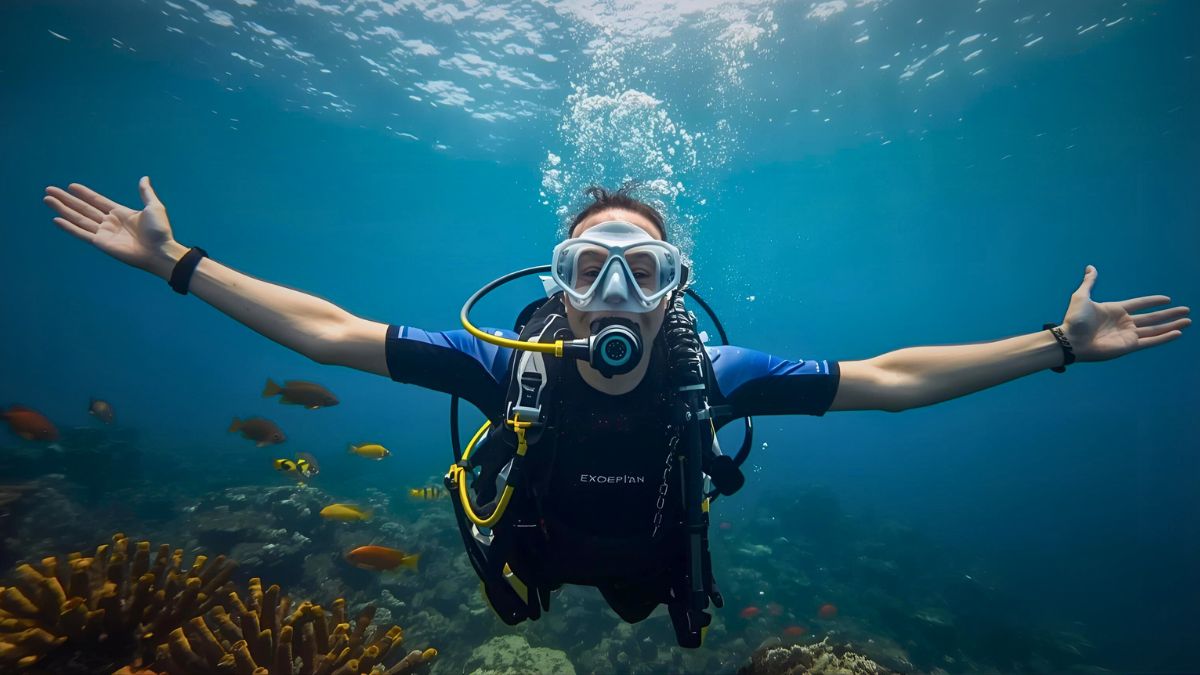
Buoyancy is the game changer. With proper weighting, your body becomes neutrally buoyant underwater. You hover effortlessly without fighting gravity. You don’t need leg strength to move around. Even if you can’t walk, you can fly underwater.
Communication doesn’t require speaking. We use hand signals for everything. Thumbs up means “let’s go up.” An OK signal means you’re fine. This system works perfectly for deaf divers or people with speech difficulties.
The equipment supports you. Your buoyancy control device helps you maintain position. Fins provide propulsion even with modified techniques. The water itself becomes your support system.
What Are the Benefits of Diving?
The physical benefits are real. Water resistance provides gentle exercise for muscles. Moving underwater engages your core and arms. It’s low-impact but effective. Range of motion expands because joints move freely without bearing weight.
But the mental health benefits matter even more.
Stress and anxiety decrease dramatically underwater. You focus on breathing. The ocean sounds become meditation. Daily worries stay on the surface.
Confidence grows with every dive. You accomplish something many able-bodied people never attempt. You prove to yourself that your disability doesn’t define your limits.
Equality feels real. Underwater, nobody cares about wheelchairs or prosthetics. You’re just another diver exploring the reef.
Research published in the International Journal of Environmental Research and Public Health found that people with disabilities who dive report significantly improved mental health, self-esteem, and belief in their own abilities.
What Types of Disabilities Are Compatible with Scuba Diving?
Can I Dive with Physical Disabilities?
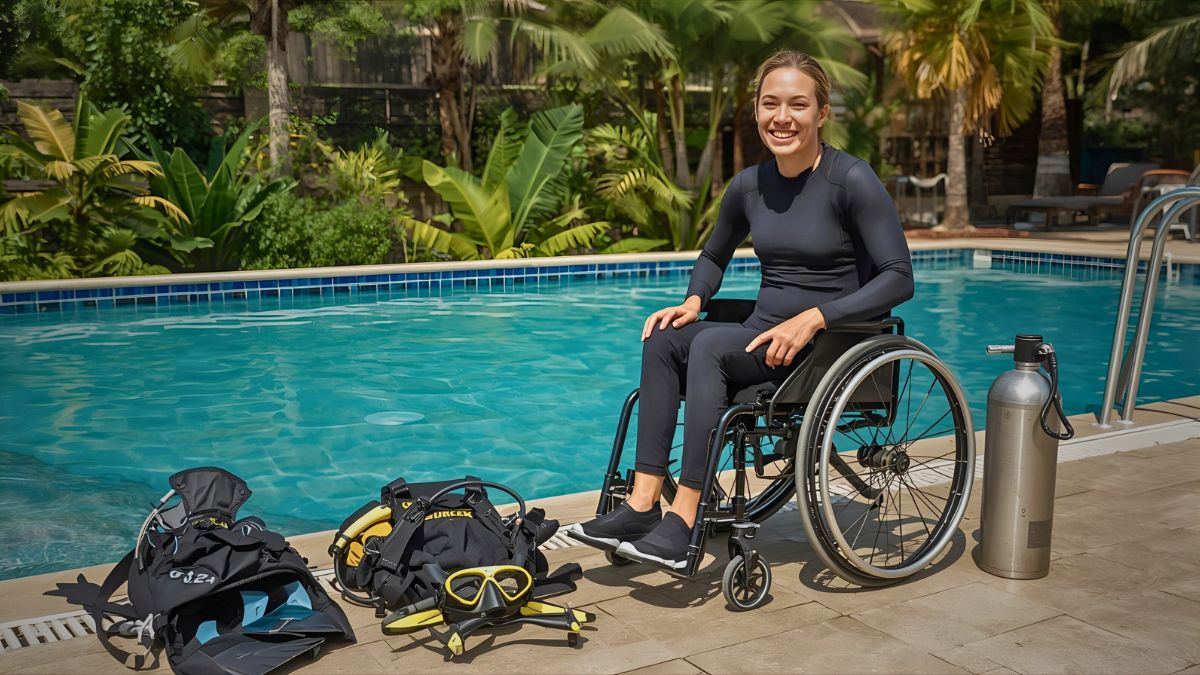
Absolutely. Wheelchair users make excellent divers. Getting to the water requires planning with ramps, lifts, or platforms. Underwater, wheelchairs don’t matter. You move using your arms, modified fins, or propulsion devices.
Amputations rarely prevent diving. Leg amputations often require minimal adaptation. You might use a shorter fin on one side or rely more on arm movement. Arm amputations need more creative solutions, but it’s entirely possible. I’ve certified divers with single and double amputations.
Partial or complete paralysis doesn’t automatically disqualify you either. Many paraplegic divers are among the most enthusiastic students I’ve taught. The sensation of movement and freedom underwater is profound for people who can’t walk. You’ll need assistance entering and exiting the water, and your buddy stays close, but the diving itself works beautifully.
Can I Dive with Sensory Disabilities?
Scuba Diving is actually ideal for deaf divers. We already communicate non-verbally underwater. Hand signals are the universal diving language. Being deaf creates no disadvantage here. The only consideration is equalization, clearing your ears as you descend.
Blind or visually impaired people can dive with proper buddy support. Blind divers rely on tactile signals and tether systems. Your buddy stays connected to you. Many blind divers report that diving heightens their other senses in remarkable ways.
Did you know? Astronauts train in swimming pools because underwater weightlessness is the closest simulation to space. For wheelchair users, diving offers that same sense of liberation.
What About Cognitive Disabilities?
Many people with autism, Down syndrome, or learning disabilities dive successfully. The key is individual assessment. Can you understand and follow safety procedures? Can you signal when something’s wrong? Can you remain calm underwater? If yes, diving is possible.
Training might take longer. Instructions might need different presentation methods. But certification is achievable. I’ve worked with students across the spectrum of cognitive differences.
What Conditions Actually Prevent Diving?
Some conditions create serious safety concerns.
Uncontrolled seizure disorders are typically disqualifying. A seizure underwater could be fatal. Severe cardiovascular disease raises risks because physical demands and pressure changes stress the heart. Serious respiratory conditions might prevent diving since you need adequate lung function.
This is why medical clearance is essential. Only a doctor familiar with diving medicine can properly assess your situation.
How Do I Get Started with Adaptive Scuba Diving?
Do I Need Medical Clearance?
Yes. This is non-negotiable for everyone, especially for adaptive diving.
Find a doctor who understands diving medicine. Divers Alert Network (DAN) maintains a list of dive medicine specialists. Your doctor needs to evaluate cardiovascular fitness, respiratory function, neurological stability, and medication effects under pressure.
Be honest about your condition. Your safety depends on accurate medical assessment. Bring the PADI Medical Statement form for your doctor to review.
Not every instructor has adaptive diving training.
Look for HSA certification. The Handicapped Scuba Association trains instructors specifically for working with divers with disabilities. PADI’s Adaptive Support Diver program is another credential.
Ask potential instructors directly: Have you taught divers with my specific disability? What adaptive equipment do you have? How do you handle water entry and exit? What’s your student-to-instructor ratio for adaptive diving?
What Training Should I Expect?
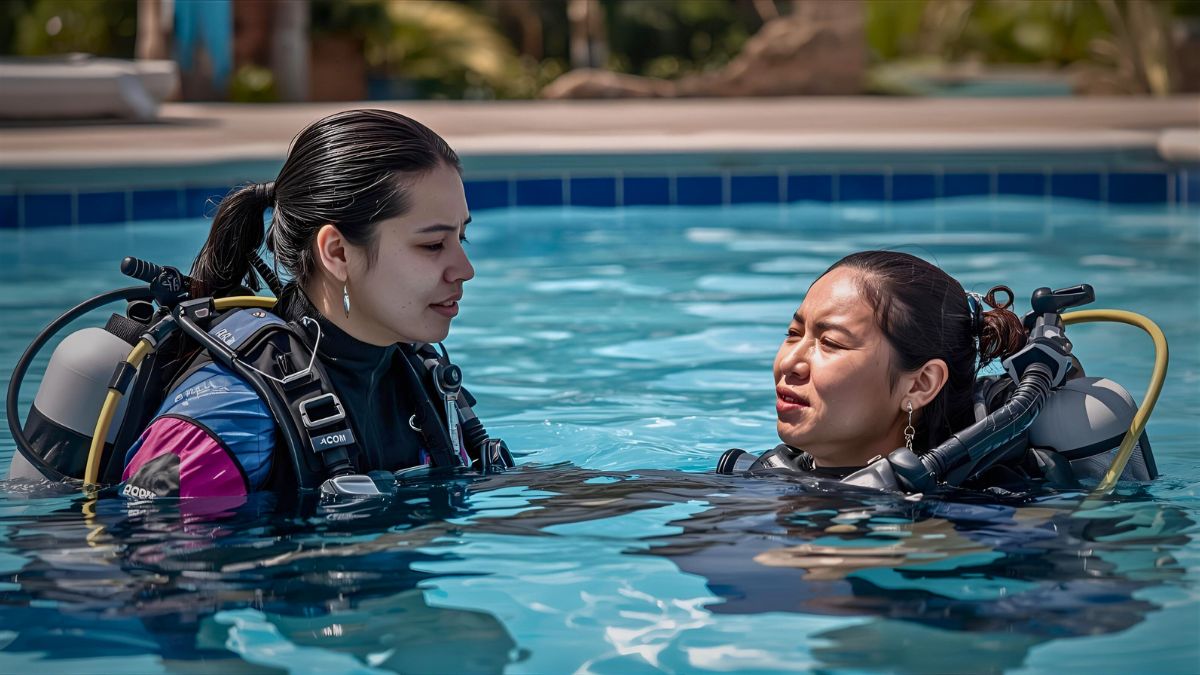
You always start in a pool. Confined water training lets you practice skills in a controlled environment. You learn to breathe underwater, clear your mask, and control buoyancy without ocean variables.
For adaptive diving, pool time is even more valuable. Your instructor figures out what adaptations you need. You experiment with different techniques. You build confidence gradually.
You have certification options. Standard PADI Open Water certification is possible for many adaptive divers if you can meet all performance requirements. HSA offers specialized certifications designed specifically for divers with disabilities. Some divers get both.
The certification matters less than the training quality and safety.
What Equipment Adaptations Will I Need?
This depends entirely on your specific needs. Some divers use standard equipment without modifications. Others need significant adaptations.
Common adaptations include modified fins or hand paddles for propulsion, BCD adjustments for easier inflation control, full-face masks if breathing through a standard regulator is difficult, and specialized entry systems like boat lifts or ramps.
Most adaptive-friendly dive centers have this equipment available. You usually don’t need to purchase anything special upfront.
Fun fact: Caño Island’s waters are protected within a biological reserve, making it one of Costa Rica’s top diving destinations. The island sits on an underwater mountain, creating unique conditions where deep-ocean species come close to shore.
What Equipment Modifications Are Available?
How Is Standard Scuba Gear Adapted?
Every diver uses the same basic gear: mask, regulator, BCD, fins, wetsuit, weights, and tank. Most of these work fine for adaptive divers without changes.
BCDs can be modified by relocating inflation controls to more accessible positions. Straps and buckles can use quick-release systems. Additional support padding helps divers who need extra stability.
Fin options vary widely. Shorter fins require less leg strength. Hand-held fins or webbed gloves help arm-powered divers. Propulsion devices like underwater scooters completely eliminate the need for leg power.
Full-face masks combine mask and regulator into one unit for divers who have difficulty holding a regulator in their mouth.
How Do You Handle Water Entry?
This is often the biggest challenge for adaptive diving.
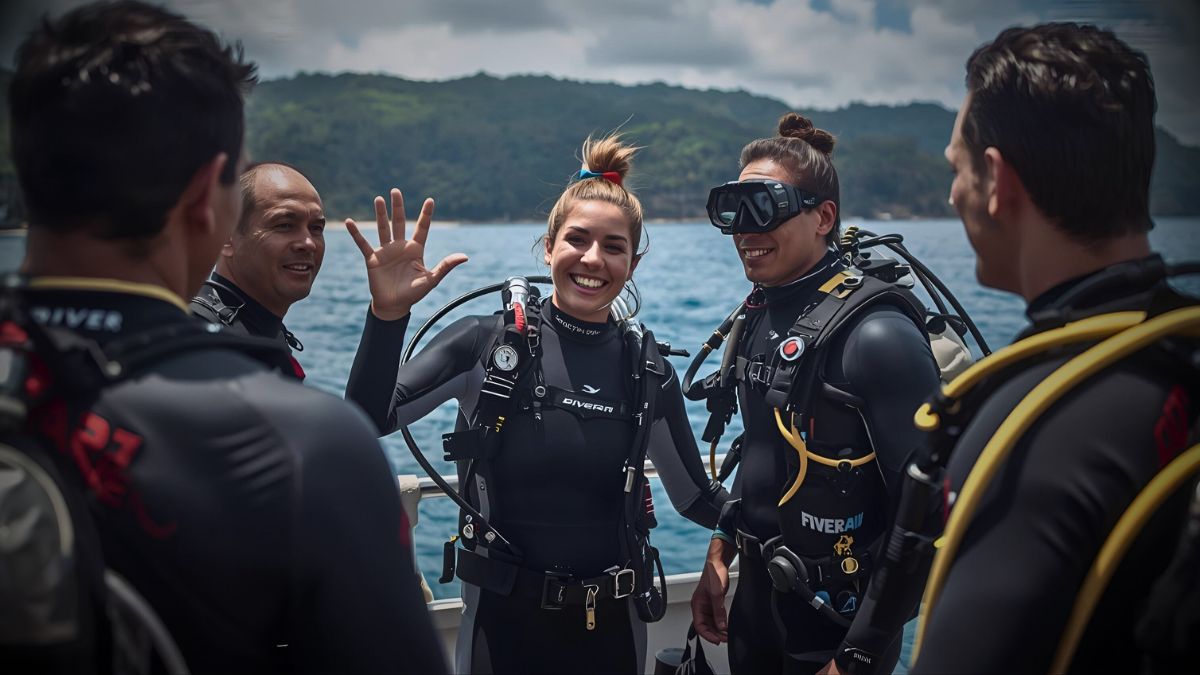
Boat lifts make entry simple. You remain seated while being lowered into the water. At Costa Rica Divers, our boat access eliminates difficult shore entry. Transfer techniques involve your buddy and instructor helping you move from wheelchair to water safely.
The ocean diving is actually easier than getting to the water. Once you’re in, buoyancy does the work.
Do I Need to Buy Special Equipment?
Usually not. Adaptive-friendly dive centers provide modified equipment. You rent it just like any other diver rents gear.
The cost of adaptive diving is generally the same as standard diving. Equipment rentals, certification courses, and dive trips cost about the same.
Scuba Diving with Disabilities in Costa Rica
Why Is Costa Rica Good for Adaptive Diving?
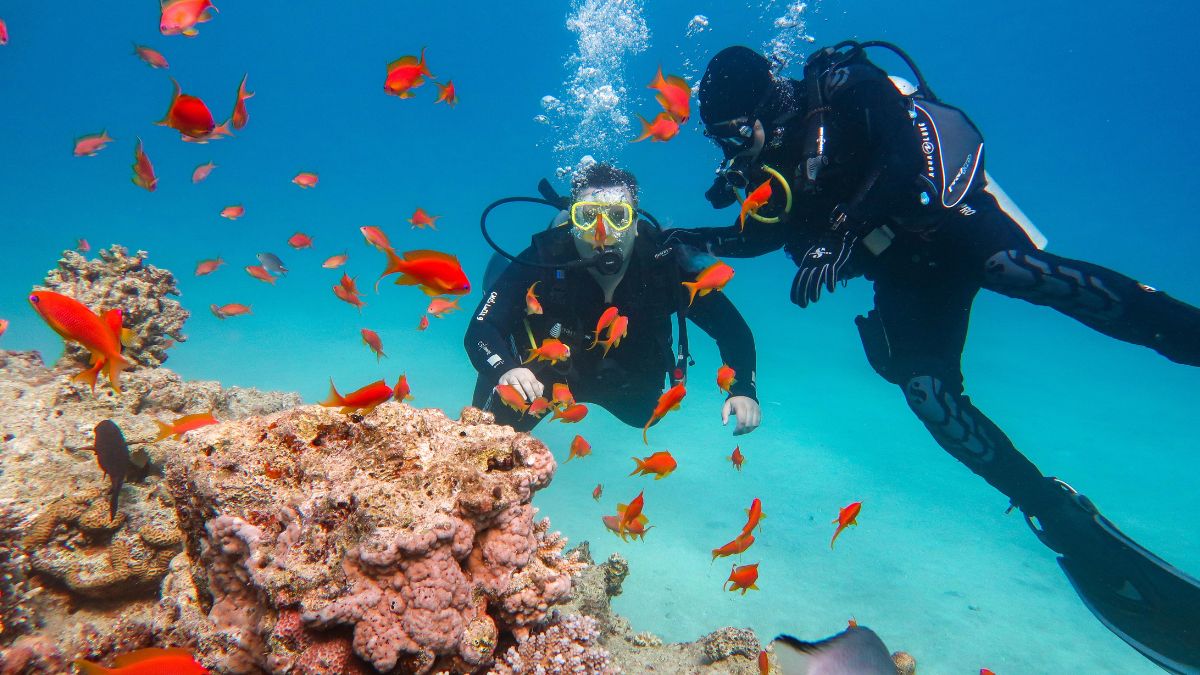
Costa Rica offers warm water year-round. You don’t need heavy, complicated thermal protection. A simple 3mm wetsuit works for most dives. The marine life provides incredible motivation with sea turtles, rays, dolphins, and colorful reef fish on every dive.
Some challenges exist. Not every dive center has adaptive equipment or trained instructors. Shore access can be difficult at many beaches. That’s why choosing the right operation matters.
Why Is Caño Island Ideal?
Caño Island offers some of the best diving conditions for adaptive divers. The water is typically calm with protected locations. Visibility often exceeds 20 meters. Marine biodiversity is stunning with sea turtles, white-tip reef sharks, manta rays, and thousands of tropical fish.
The trip takes about 90 minutes by boat from Uvita. We handle all equipment setup before you arrive. Entry and exit happen from the boat using techniques that accommodate your specific mobility needs. Your instructor stays with you throughout the dive.
What Organizations Support Adaptive Diving?
What Is the Handicapped Scuba Association?
HSA is the pioneering organization for adaptive diving. Founded in 1975, HSA started as a research project studying how scuba diving affected self-image for people with disabilities. The results were remarkable, leading to a permanent organization.
Today, HSA certifies divers and instructors worldwide. Their programs adapt standard diving procedures to accommodate various disabilities while maintaining safety standards. HSA certification is internationally recognized.
What Is the International Association for Handicapped Divers (IAHD)?
IAHD is an organization dedicated to making scuba diving accessible to people with physical and sensory disabilities. Established in 1993, IAHD was created to develop safe, enjoyable training programs that allow divers with disabilities to experience the underwater world with confidence.
Over the years, IAHD has expanded globally, offering specialized certifications for both divers and instructors. Their training standards focus on adapting traditional scuba skills to individual needs without compromising safety. Today, IAHD certifications are recognized worldwide, supporting inclusive diving opportunities across many destinations.
What Does PADI Offer?
PADI, the world’s largest diving organization, now includes adaptive diving support. The Adaptive Support Diver specialty course trains instructors to work with divers with disabilities, covering communication techniques, equipment modifications, and safety protocols.
PADI allows for reasonable modifications to performance requirements. If you can demonstrate a skill using an adapted technique, that counts as meeting the standard.
What Other Organizations Help?
Diveheart focuses on rehabilitation and therapy through diving, working extensively with veterans and people with spinal cord injuries. The International Association for Handicapped Divers (IAHD) operates primarily in Europe and Asia. Dive Ability in the UK specializes in adaptive diving for children and young adults.
Frequently Asked Questions
Do I Need a Special Certification?
Not always. Many divers with disabilities earn standard PADI or SSI Open Water certification. If your disability requires significant adaptations, HSA certification might be more appropriate.
The most important thing is getting proper training from a qualified adaptive diving instructor. The certification label matters less than the quality of your education and safety preparation.
Can I Dive Alone?
Nobody dives alone, regardless of disability status. The buddy system is fundamental to safe diving. For adaptive divers, the buddy relationship is even more important. Your buddy might provide physical assistance during entry and exit and stays close during the dive.
Some adaptive divers require two buddies for additional safety. Your instructor determines the right ratio based on your specific needs.
How Much Does It Cost?
Adaptive diving typically costs the same as standard diving. Open Water certification courses range from $400-600 in most locations. Individual dive trips cost $80-150 depending on location and dive site. Specialized adaptive equipment rental might add $20-50 per day if your needs are extensive.
What If I Get Anxious?
This is completely normal. Many able-bodied divers feel anxious too.
Start in a pool where you control the environment. Progress slowly. Don’t rush to open water until you’re comfortable. Communicate with your instructor. Good adaptive diving instructors expect anxiety and know how to help you work through it.
You can stop at any point. Many divers who start anxious become the most confident and enthusiastic once they push through initial fears.
Your Journey Starts Here
Imagine descending slowly through crystal-clear blue water. Sunlight filters down in shimmering columns. A sea turtle glides past, completely unbothered by your presence. You turn a slow circle, controlling your movement with tiny adjustments.
And for these 40 minutes, your disability doesn’t exist. You’re not in a wheelchair. You don’t have prosthetics. You’re not limited by paralysis or mobility challenges. You’re just a diver, equal to everyone else exploring this underwater world.
This isn’t fantasy. This is what adaptive diving offers.
Yes, it requires planning. Medical clearance, proper training, and the right support are essential. The process might take longer than it does for able-bodied divers. But the reward is extraordinary.
The ocean is waiting. And trust me, it’s worth it.
Sources and References
The information in this article is based on established adaptive diving practices, medical research, and professional diving organization standards. Key sources include:
- Handicapped Scuba Association – Standards for adaptive diving
- IAHD (International Association for Handicapped Divers)
- PADI – Adaptive Support Diver program guidelines
- International Journal of Environmental Research and Public Health
- Divers Alert Network (DAN) – Guidelines for adaptive diving protocols