
Picture this: You’re descending onto a beautiful reef, finally ready to enjoy the dive you’ve been planning for weeks. Suddenly, that familiar trickle of cold water creeps into your mask. Before you know it, you’re stopping every few minutes to clear water instead of watching the marine life glide past.
I’ve been teaching scuba diving for 10 years, and if there’s one complaint I hear more than any other, it’s about leaking dive masks. The good news? In most cases, your mask isn’t defective. The problem is usually how you’re wearing it, and the fix takes less than five minutes.
Let me share the four most common reasons dive masks leak and exactly how to solve each one.
Reason #1: Your Mask Is Worn Incorrectly
This is the most common cause of leaking dive masks. I’d estimate that 70% of the mask leaks I see during Open Water courses are because students put their masks on wrong.
Is Your Mask Positioned Too High?
What usually happens: You’re in a hurry to get in the water. You pull the mask on quickly and jump in. But if you position the mask too high on your forehead, your nose won’t sit comfortably inside the mask’s nose pocket.
When the mask sits too high, the bottom edge (the mask apron or skirt) ends up right under your nostrils instead of below your nose. This creates an uneven seal, and water slowly seeps in.
Did you know? According to mask manufacturers, over 80% of mask leaking complaints are due to improper fitting or positioning rather than manufacturing defects.
I see this constantly with students who have their masks positioned almost on their hairline. When I ask them to drop it down half an inch, the leak disappears like magic.
Is the Mask Skirt Folded or Over Your Hood?
Another common mistake happens when part of the silicone skirt folds inward or gets trapped under your diving hood. The mask apron needs to lie flat against your skin. Even a tiny fold breaks the seal completely.
How to Put On a Mask Correctly
- Start with a clean, dry face. Sunscreen or oils can prevent a good seal.
- Hold the mask against your face without the strap. The nose pocket should comfortably enclose your nose.
- If wearing a hood, pull it back from your face first. Position the mask, then pull the hood back over your head.
- Pull the strap over your head. Don’t pull it tight yet.
- Run your finger around the entire edge of the mask skirt. Feel for any folds.
- If wearing a hood, slide your finger between the mask skirt and hood opening. This ensures the silicone sits on your skin, not neoprene.
This takes 30 seconds but prevents 15 minutes of frustration underwater.
Reason #2: Your Mask Strap Is Too Tight
When I suggest to students that their mask strap might be too tight, I’m often met with disbelief. But over-tightening is one of the most common causes of mask leaking, and it’s completely counter-intuitive.
Why Does Over-Tightening Cause Leaks?
When you pull that strap really tight, the silicone skirt distorts. Over-tightening pulls it away from your face in some areas while pressing it too hard in others.
The pressure causes the soft silicone to buckle and create tiny gaps where water seeps through. It’s like trying to seal a plastic bag by squeezing it really hard, you create wrinkles instead of a smooth seal.
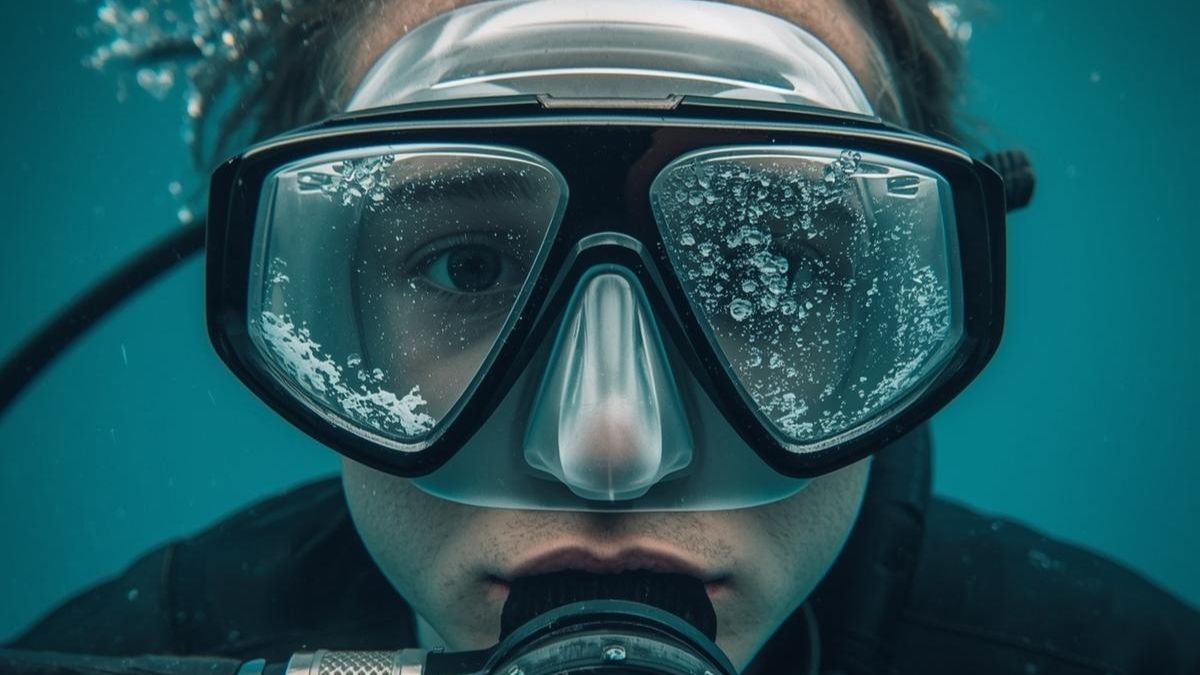
The Suction Test
Want to know if your mask seals properly?
- Position the mask on your face with the strap hanging loose.
- Inhale gently through your nose.
- The mask should suction to your face and stay there without any strap.
- If the mask stays on during this test, the seal works perfectly without strap tension. You only need enough tension to prevent sliding around.
- Try loosening your strap by two or three notches. I bet your leak problem disappears.
Reason #3: Hair or Hood Interference
Even a few strands of hair trapped under your mask skirt can cause a persistent leak.
Hair acts like a tiny straw, creating a pathway for water to seep in. I’ve seen divers with long hair who missed a few short strands near their temples. Those few hairs caused a steady drip throughout the entire dive.
Pull all hair completely away from your forehead, temples, and sides of your face. Run your fingers around the mask skirt edge to feel for trapped hair.
Fun fact: The deeper you dive, the more water pressure helps seal your mask. That’s why some masks that leak at the surface seal better at depth.
What About Facial Hair?
Beards and diving masks don’t get along well. If you have a full beard, you’ll probably experience some mask leaking. The hair prevents the silicone skirt from sealing directly against your skin.
A word of caution about Vaseline: Petroleum-based products can break down the silicone skirt over time. Use sparingly and clean your mask thoroughly after every dive.
A mustache is less problematic but can still cause small leaks. Trimming or shaving is the most reliable solution.
Sealing With a Diving Hood
Put your hood on first, but pull the face opening back. Position your mask. Pull the hood’s face opening back into position.
Critical step: Slide your finger around the entire perimeter of the mask, between the mask skirt and hood opening. Check that the silicone sits on your skin, not neoprene.
Pay special attention to your temples, forehead, and under your cheekbones.
Reason #4: Wrong Mask for Your Face Shape
Sometimes, despite your best efforts, your mask still leaks. The problem might be the mask itself.
Faces come in an incredible variety of shapes and sizes. No single mask design works for everyone. The challenge is that a scuba mask might feel comfortable in the dive shop but leak underwater because of pressure changes and facial movements.
The Suction Test for Fit
Don’t put the strap over your head. Just hold the mask against your face.
- Inhale gently through your nose to create suction.
- Take your hands away. The mask should stick.
- Look up, look down, turn your head side to side. Try talking or smiling slightly.
If the mask falls off immediately, or if you feel air leaking in from a particular spot, this mask doesn’t fit your face shape well.
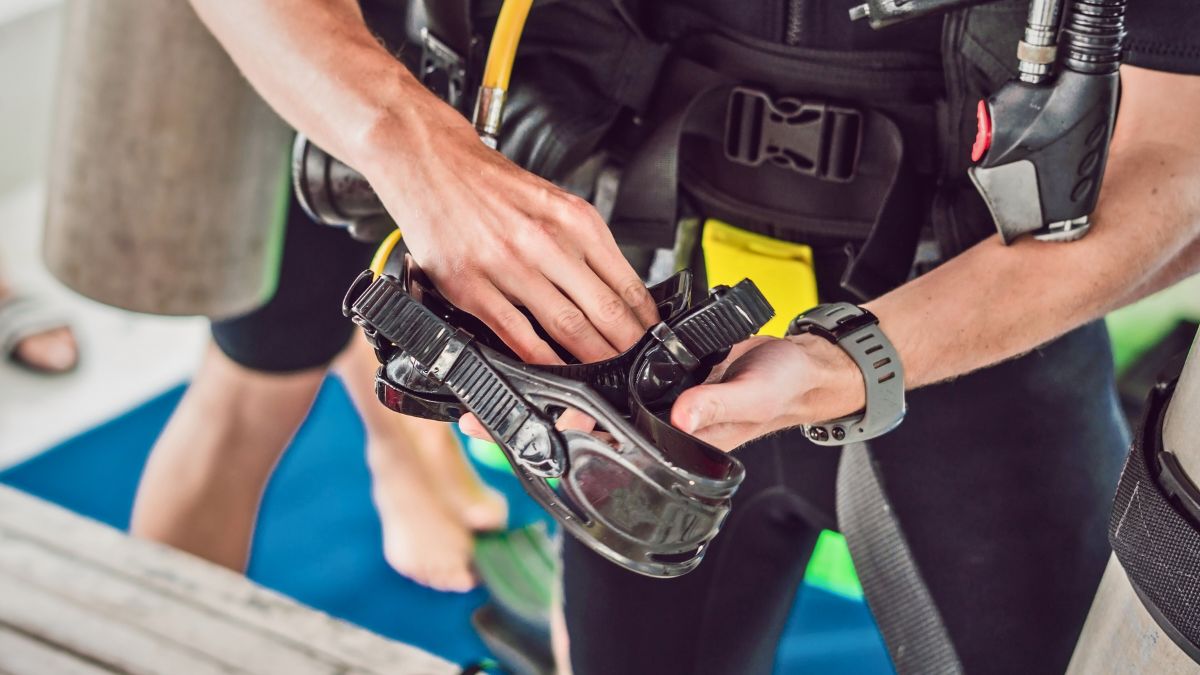
When to Get a Different Mask
You’ve tried everything and your mask still leaks persistently. It might be time to try a different mask.
Signs your current mask isn’t right: consistent leaking after several dives, leak always from the same spot, fails the suction test repeatedly.
Don’t feel bad. I’ve tried on dozens of masks, and some simply don’t work for my face shape.
When shopping, try multiple models. Perform the suction test with each one. Don’t just buy based on looks or price.
Additional Common Causes
Are You Breathing Out Through Your Nose?
Some divers unconsciously exhale through their nose. Every time you do this, you push air into your mask. When it escapes, it can break the seal.
If your mask leaks intermittently, focus on breathing only through your mouth. This improves with practice.
Do Facial Expressions Break Your Seal?
Smiling, laughing, or talking changes your face shape. These movements can temporarily break the seal. You can’t avoid facial expressions, diving should be enjoyable, but being aware helps you understand occasional leaks.
Is Your Mask Damaged?
Dive masks don’t last forever. Sun exposure, improper storage, or age can cause the silicone to become brittle or develop cracks.
Examine your mask skirt for small tears, stiff areas, or discoloration. If you notice these signs, it’s time for a new mask.
How to Prevent Mask Leaking
Pre-Dive Checklist
Before every dive:
- Clean face: Wash to remove oils and sunscreen
- Hair secured: Pull all hair away from forehead
- Hood first: Put it on before the mask
- Position correctly: Nose comfortable in nose pocket
- Check the skirt: Run finger around entire edge
- Suction test: Quick test without strap
- Strap tension: Just tight enough
- Final check: Look left, right, up, down
This takes 45 seconds but prevents many problems.
Mask Maintenance
After every dive, rinse thoroughly with fresh water. Pay attention to the silicone skirt.
Store your mask in a protective case away from direct sunlight.
Never use petroleum-based products on the silicone.
What to Do During a Dive
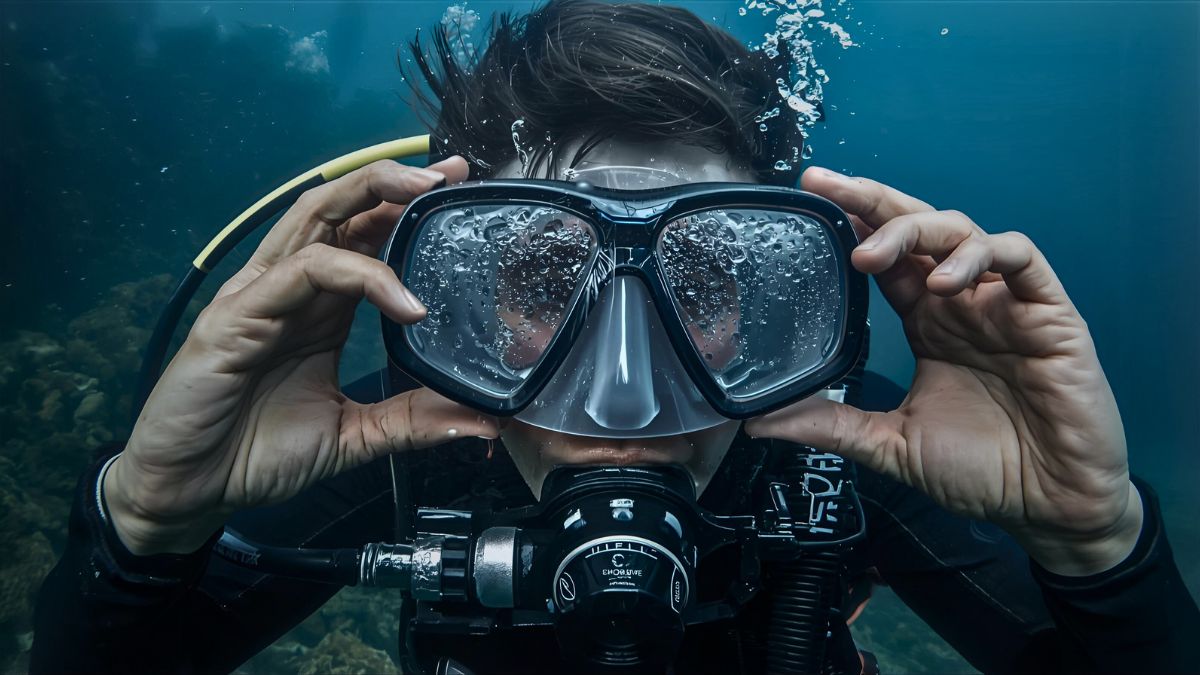
For small, slow leaks, continue diving and clear your mask as needed.
For persistent leaking, signal your buddy. Ascend to comfortable depth. Remove and reposition the mask. Check the skirt edge for folds. Adjust strap tension.
Remember, clearing your mask is a basic skill. A leaking mask is annoying but not dangerous.
So, Why Does My Dive Mask Leak?
After 10 years of teaching diving, I can tell you: Most mask leaks are fixable without buying new equipment.
The four main culprits are incorrect positioning, over-tightening the strap, hair or hood interference, or the wrong mask for your face shape. Start with the first three – they’re easiest to fix.
A little water in your mask occasionally is normal. Don’t let perfection prevent you from enjoying your dives.
Take an extra 30 seconds to properly position your mask, check for obstructions, and set your strap tension correctly. Those 30 seconds might save you 30 minutes of frustration underwater.
Now get out there and enjoy leak-free diving!
Frequently Asked Question
Why does my mask leak only on one side?
A one-sided leak indicates incorrect positioning or a localized fit issue. Check if one side of the mask skirt is folded, if hair is trapped, or if your hood slipped under the skirt in that area.
Can I use Vaseline to help seal my mask?
I don’t recommend it. Petroleum-based products break down silicone over time. Choose silicone-based lubricants designed for diving equipment, or address the root cause of the leak.
How often should I replace my dive mask?
With proper care, a quality mask lasts 5-7 years of regular diving. Replace it sooner if you notice cracks, tears, or stiffness in the silicone skirt.
Is it normal for my mask to leak a little bit?
Yes. Small amounts of water entering occasionally are normal. Clearing your mask once during a 45-minute dive is acceptable. Clearing it every 5-10 minutes indicates a problem.
Can a new mask leak even if I’m wearing it correctly?
Yes. New masks sometimes leak due to manufacturing residue. Before first use, scrub the inside of the lens and skirt with toothpaste or mild dish soap to remove factory coatings.
Sources and References
- PADI – Equipment Fitting and Maintenance.
- DAN – Dive Equipment Care and Maintenance.
- SSI – Mask Selection and Fit Guide
- How to choose a diving mask?