Scuba diving fins are one of the most important pieces of equipment you’ll own as a diver, yet they’re often the most confusing to choose. Walk into any dive shop and you’ll face walls of options: blade fins, split fins, open heel, full foot, rubber, plastic, expensive, cheap. Where do you even start?
I’ve been a diving instructor for 10 years, and I’ve fitted hundreds of students with their first scuba diving fins. I’ve seen the paralysis that happens when beginners try to make this decision. The good news? Choosing diving fins is actually simpler than you think once you understand a few key concepts.
In this guide, I’ll walk you through everything you need to know to choose the perfect fins for your diving journey. No marketing fluff, no confusing jargon. Just practical advice from someone who’s been in the water almost every day for over a decade.
Why Do You Need Scuba Diving Fins?
What Makes Diving Fins Essential Equipment?
Let me start with a story. During my early instructor days, I had a student accidentally leave his fins on the boat before a dive. He insisted he could manage without them. Five minutes into the dive, he was exhausted, having barely moved 20 meters from the descent line.
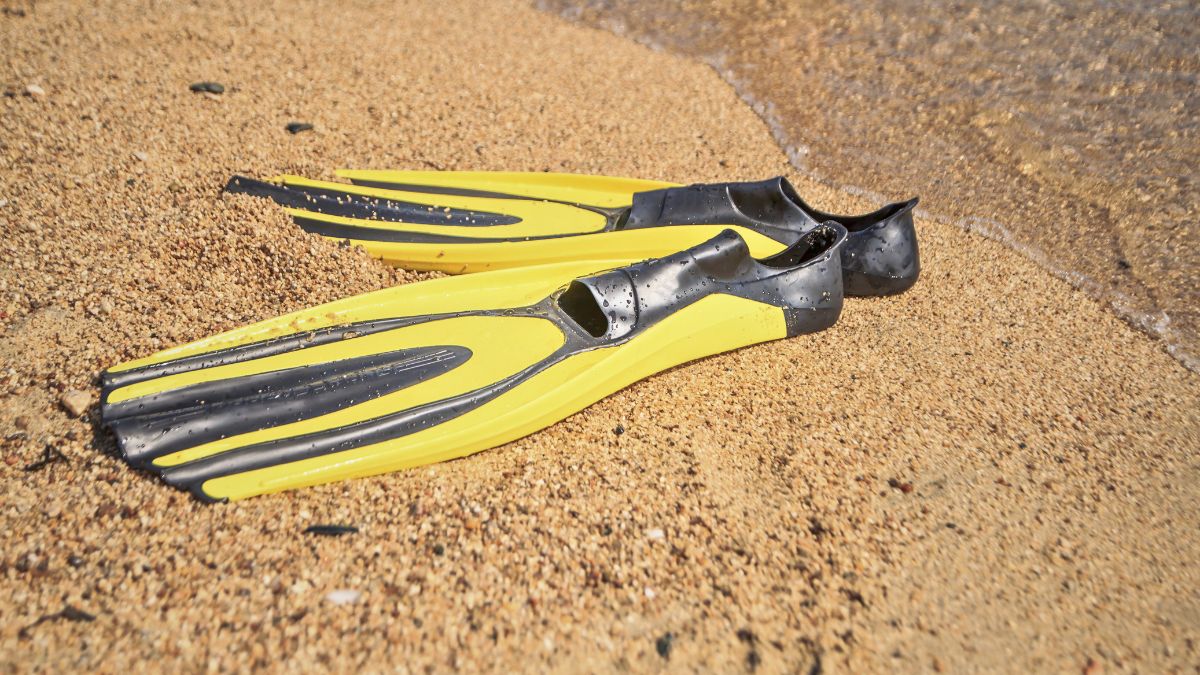
Diving fins transform your legs into powerful propulsion tools. Without them, you’re basically treading water while wearing 30 pounds of equipment. Your arms can’t generate enough thrust, and trying to kick with bare feet or booties is like trying to paddle a kayak with your hands.
How Do Fins Improve Your Diving Experience?
The right scuba fins make diving effortless in three critical ways.
First, they dramatically increase your efficiency underwater. Each kick moves you forward with minimal energy expenditure. This efficiency translates directly to longer bottom times because you’re breathing slower and using less air.
Second, fins give you control. Want to hover motionless while photographing a seahorse? Fins let you make tiny adjustments. Need to fight a current to reach the reef? Fins provide the power.
Third, fins enhance safety. In emergency situations like strong currents, long surface swims back to the boat, or assisting a buddy, your fins can be lifesavers. I’ve used mine to tow tired divers more times than I can count.
Did you know? Studies show that efficient finning technique can reduce air consumption by up to 30%. That means longer dives and more time exploring underwater.
What Are the Different Types of Scuba Diving Fins?
This is where beginners get overwhelmed. The diving industry has created dozens of fin designs, each claiming to be revolutionary. Let me simplify this for you.
What’s the Difference Between Blade Fins and Split Fins?
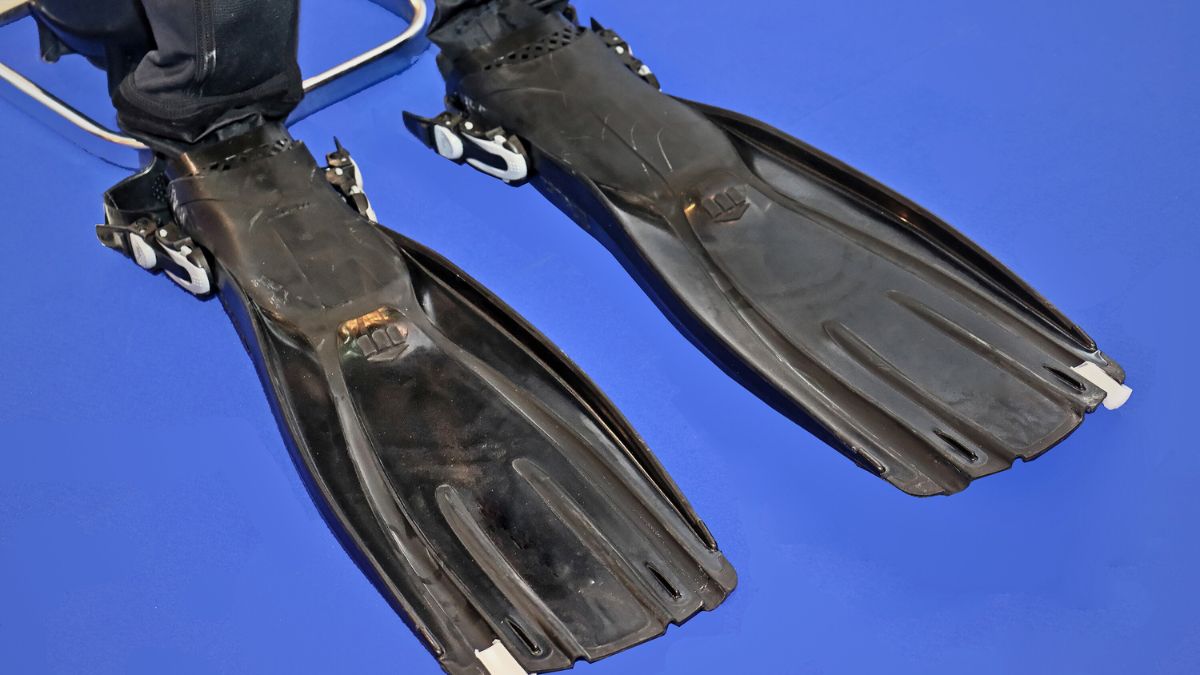
Blade fins are the traditional design you probably picture when you think of scuba fins. They have one solid, undivided blade that pushes water backward as you kick. Think of them like paddles attached to your feet.
I use blade fins for most of my diving. They provide maximum power and work exceptionally well in strong currents. The downside? They require more leg strength and can tire out beginners with weaker kicks.
Split fins have a blade divided down the middle, creating two separate channels. When you kick, water flows through these channels, reducing resistance. They require significantly less effort to use.
At our dive center in Costa Rica, about 60% of students prefer split fins initially. They’re easier on the knees and ankles, which matters when you’re learning proper finning technique.
When to choose blade fins:
- You have strong legs and good cardiovascular fitness
- You frequently dive in currents
- You prefer powerful, responsive propulsion
When to choose split fins:
- You’re new to diving or getting back into it
- You have knee, ankle, or hip issues
- You prefer efficiency over raw power
- You mostly dive in calm, warm water conditions
Should You Choose Open Heel or Full Foot Fins?
This decision is actually more important than blade versus split for most beginners.
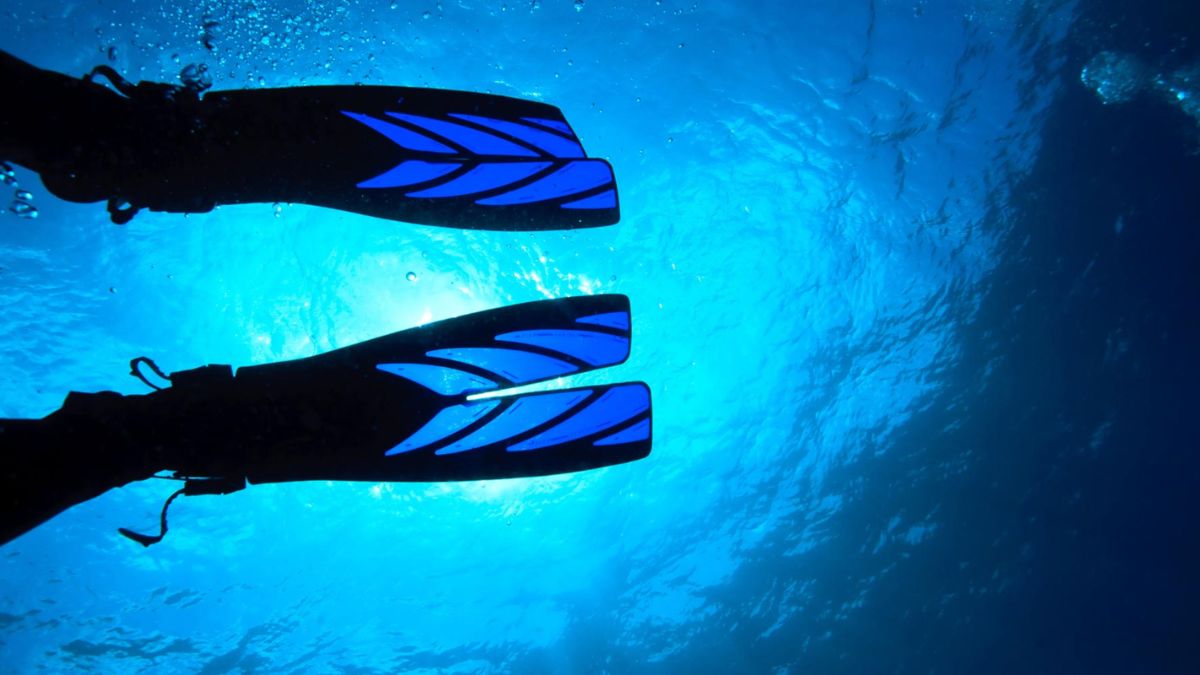
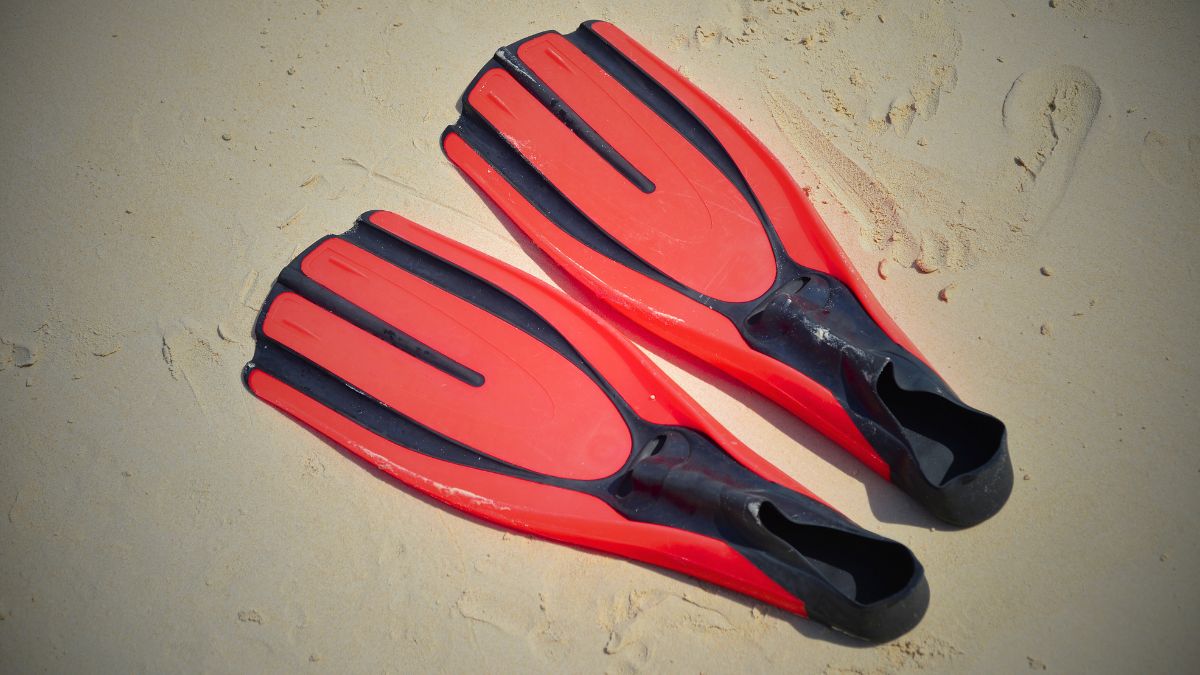
Open heel fins have a foot pocket that exposes your heel, with an adjustable strap that wraps around the back. You wear them with dive booties. These are the fins you see in most dive centers and on most recreational divers.
Here at our operation in Uvita, we exclusively use open heel fins with students. Why? Versatility. The same fins work in warm water with thin 3mm booties and in cold water with thick 7mm booties. The adjustable straps accommodate different foot sizes.
Open heel fins are also easier to walk in on boats, rocky shores, or beaches because you’re wearing protective booties underneath. I can’t count how many times I’ve walked across sharp coral rubble or hot boat decks, grateful for my booties.
Full foot fins enclose your entire foot like a shoe. You wear them barefoot. They’re lighter, more streamlined, and eliminate the need to pack separate booties when traveling.
The trade-off? Full foot fins only work in warm water. Walking barefoot on rough surfaces before entering the water is uncomfortable at best, dangerous at worst. They also must fit perfectly. Too tight causes cramps and blisters, too loose causes them to fall off mid-dive.
Choose open heel fins if you:
- Plan to dive in various conditions (warm and cold water)
- Do shore dives where you’ll walk to entry points
- Want maximum adjustability and comfort
Choose full foot fins if you:
- Dive exclusively in warm, tropical water
- Enter from boats or easy beach access points
- Want to minimize luggage weight for travel
How Should Scuba Diving Fins Fit?
This is where beginners make expensive mistakes. I’ve watched students buy beautiful fins online, only to discover they don’t fit correctly after the return window closes.
What’s the Correct Fit for Open Heel Fins?
Open heel fins should fit snugly around your foot when you’re wearing the booties you’ll dive in. This is critical: always try on fins with your actual dive booties, not regular socks or bare feet.
The foot pocket should grip your foot firmly without pinching. Your toes should not touch the end. Leave about a centimeter of space. When you lift your heel inside the bootie, the fin should lift with it.
Adjust the strap until it’s comfortably tight. You should be able to slip two fingers under the strap at the widest setting. If the strap is maxed out just to keep the fin on, the fin is too large.
Here’s my test: Put the fins on and walk around the dive shop for five minutes. Do they pinch anywhere? Does your heel slip up and down? Any pressure points on your ankles? These small irritations become painful problems during hour-long dives.
How Should Full Foot Fins Fit?
Full foot fins are trickier because you can’t adjust them. The fit must be perfect from the start.
Your entire foot should slide into the pocket comfortably without forcing. Your heel should sit flush against the back of the pocket. Toes should come close to the end without touching.
The fit should feel like a well-fitted shoe. Snug everywhere without pressure points. If you have to really jam your foot in, or if your heel lifts when you point your toes, the sizing is wrong.
Many beginners size full foot fins too large thinking they’ll be more comfortable. Big mistake. Loose fins cause blisters from rubbing, require more effort to kick, and can fall off underwater.
Sizing tip: Most manufacturers suggest sizing full foot fins 1-2 sizes smaller than your street shoe size. If you normally wear a US men’s 10, start by trying a size 8 or 9 fin.

What Fin Features Should Beginners Look For?
Why Do Fin Straps Matter?
Open heel fins come with different strap systems, and this seemingly small detail significantly impacts your diving experience.
Spring straps use stainless steel springs instead of rubber straps and buckles. They’re my personal preference. You slip them on, and the springs automatically tension to your foot. No fumbling with buckles while wearing gloves or on a rocking boat.
Spring straps last for years, they’re easy to don and doff, and they maintain consistent tension throughout the dive. The downside? They add $40-$60 to the fin’s cost.
Adjustable buckle straps are the standard. They work fine, but the buckles can be finicky. I’ve watched students struggle with frozen buckles after long storage or fight with adjustment mechanisms while trying to keep balance on a boat.
If you’re buying your first fins and budget allows, get spring straps. You’ll appreciate them on dive number 50.
What About Fin Weight and Buoyancy?
Fins have buoyancy characteristics just like every other piece of gear, and this affects your trim (horizontal body position) in the water.
Negatively buoyant fins sink when you release them. Heavy rubber fins fall into this category. They help counterbalance floaty legs, especially when wearing thick wetsuits.
Neutral or slightly positive fins float or hover when released. Most plastic and composite fins are neutral to slightly positive. For warm water diving in thin wetsuits, these work beautifully.
As a beginner, neutral buoyancy fins are easier to manage. You’re already learning to control your BCD, weights, and body position. Adding negative fins to the equation complicates things.
Fun fact: The first commercial diving fins were invented in 1935 by Frenchman Louis de Corlieu, who called them “swimming propellers.” Modern fin technology hasn’t changed the basic concept. We’ve just refined the materials.
How Much Should You Spend on Scuba Diving Fins?
What’s a Realistic Budget for Beginner Fins?
Let’s talk money. Scuba diving fins range from $50 to $500+, which makes budgeting confusing.
- Entry-level fins ($50-$100): Basic plastic fins with adjustable straps. These work fine for occasional vacation diving. Brands like Cressi, Mares, and Tusa make solid options in this range.
- Mid-range fins ($100-$200): This is the sweet spot for most beginners. You get better materials, more comfortable foot pockets, and often spring straps or easy-adjust systems. Split fins typically start in this range.
- Premium fins ($200-$400+): High-end materials, advanced designs, often made by technical diving brands. Unless you’re diving 50+ times per year or pursuing technical certifications, these are overkill for beginners.
Is It Worth Investing in Expensive Fins as a Beginner?
I get asked this constantly: “Should I just buy expensive fins now so I don’t need to upgrade later?”
My honest answer: probably not.
You don’t yet know what kind of diver you’ll become. You might love drift diving in strong currents (blade fins excel). You might prefer leisurely reef photography (split fins work great). You might discover you only dive twice per year on tropical vacations (basic fins are perfect).
I recommend this approach: Buy mid-range fins ($100-$150) for your first pair. Dive them for 20-30 dives over your first year or two. By then, you’ll understand your preferences, diving style, and needs.
The exception? If money genuinely isn’t a concern and you’re certain you’ll pursue diving seriously, then yes, buy quality fins from the start. I have students who bought premium fins as their first fins 10 years ago and still use them today.
What Should You Know Before Buying Your First Fins?
Should You Buy or Rent Diving Fins?
This question depends entirely on how often you dive.
Rent fins if:
- You dive 1-5 times per year
- You’re trying diving to see if you enjoy it
- You’re traveling to different regions with varying water temperatures
Buy fins if:
- You dive 6+ times per year
- You’ve completed your PADI Open Water certification and plan to continue
- You want consistent equipment that fits properly
The rental math is simple. Fin rentals typically cost $10-$15 per dive. After 10-15 dives, you’ve spent enough on rentals to have purchased decent fins. Plus, rental fins are often beat-up, incorrectly sized, and uncomfortable.
Can You Use the Same Fins for Different Diving Conditions?
Sort of, but with limitations.
Open heel fins with adjustable straps are your most versatile option. You can use them in warm water with thin 3mm booties and in cold water with thick 7mm booties. Just adjust the strap accordingly.
Full foot fins only work in warm water where you don’t need thermal protection on your feet. I have students who bought full foot fins for warm Caribbean diving, then discovered they wanted to try California kelp diving. They had to buy a second pair. Don’t make that mistake.
How to Care for Your Scuba Diving Fins?
Proper fin care is embarrassingly simple, yet I see divers neglect their gear constantly.
- After every dive: Rinse your fins thoroughly with fresh water. Salt, sand, and organic debris corrode materials and clog adjustment mechanisms. Pay special attention to strap buckles, spring connections, and the inside of foot pockets.
- Drying: Let fins air dry completely before storage. Don’t leave them in direct sunlight. UV degrades rubber and plastic over time.
- Storage: Store fins flat or hanging vertically by the strap. Never store them bent or with heavy equipment piled on top.
- Expected lifespan: Quality fins should last 10+ years with proper care. I know divers still using fins from the 1990s. The materials are durable. The main failure points are straps and buckles, which are easily replaced.
One maintenance tip I learned the hard way: never leave fins in a hot car. I left a pair in my trunk on a sunny Costa Rica day. The foot pockets warped so badly they were unusable.
Frequently Asked Questions
Can I use snorkeling fins for scuba diving?
Not really. Snorkeling fins are designed for surface swimming with minimal gear. When you add 30 pounds of scuba equipment, snorkeling fins become inadequate. Use proper scuba diving fins designed for underwater propulsion with full gear.
Do fin colors matter?
Only for visibility and personal preference. Brightly colored fins make it easier for dive buddies and guides to spot you underwater, especially in low visibility. Otherwise, color has zero impact on performance.
How often should I replace diving fins?
With proper care, quality fins last 10-20 years. Replace them when you see deep cracks in the blade, broken foot pockets, or worn-out straps that can’t be replaced.
Are split fins really easier on your legs?
Yes, substantially. Split fins reduce the resistance you fight with each kick. Every student I’ve taught with joint issues has preferred split fins.
Can I fly with diving fins?
Absolutely. Fins easily fit in checked luggage or large carry-on bags. Just make sure they’re dry before packing to avoid mildew.
Final Thoughts: Choosing the Right Diving Fins for Your Journey
After 10 years of teaching and thousands of dives, I’ve realized something: the “perfect” diving fins don’t exist. There are only fins that work well for your specific diving style, body, and conditions.
Here’s my simplified advice:
For most beginners, I recommend:
- Open heel fins (versatile for all conditions)
- Split fins or moderate blade fins (easier to learn with)
- Mid-range price ($100-$150)
- Spring straps if budget allows
- Proper fit above everything else
Don’t agonize over blade technology, material science, or minor feature differences. Get fins that fit comfortably, fall within your budget, and come from a trusted brand.
And here’s the secret nobody tells you: after 50 dives, you’ll barely think about your fins at all. They’ll become an unconscious extension of your body.
Now stop reading, pick a pair of fins that meet the criteria above, and get diving. The best way to learn what fins work for you is to get underwater and start kicking.
Sources and References
This guide is based on 10 years of professional diving instruction experience and industry-standard equipment knowledge. The following authoritative sources provided additional technical verification and safety information:
- Scuba Diving Magazine – Fin Testing and Reviews
- TDI/SDI – Scuba Fins Education
- Mares Diving Fins – Technical specifications and material information
- Cressi Scuba Fins – Italian manufacturer specifications