When divers ask me about “underwater museums,” they usually talk about the famous sites in Cancún or Lanzarote. They show me pictures of hundreds of statues standing on the ocean floor. Then they ask: “Peter, does Costa Rica have something like this?”
The answer is yes. But it is one of our best-kept secrets.
It is not as massive as the museum in Mexico. However, Costa Rica has its own unique underwater sculpture park. It is located in the Central Pacific. You will find it right in the beautiful waters of Punta Leona.
If you look for a unique snorkeling experience or a shallow dive off the beaten path, this guide is for you. Here is everything you need to know about the Underwater Museum in Costa Rica.
Is There Really an Underwater Museum in Costa Rica?
Yes, there is. It is located in Playa Blanca. This is inside the Punta Leona resort area. The location is about 20 minutes north of Jacó and about 90 minutes from San José.
Unlike the vast concrete armies you might see elsewhere, our museum is smaller. It is more intimate. It was created with a specific purpose: conservation.
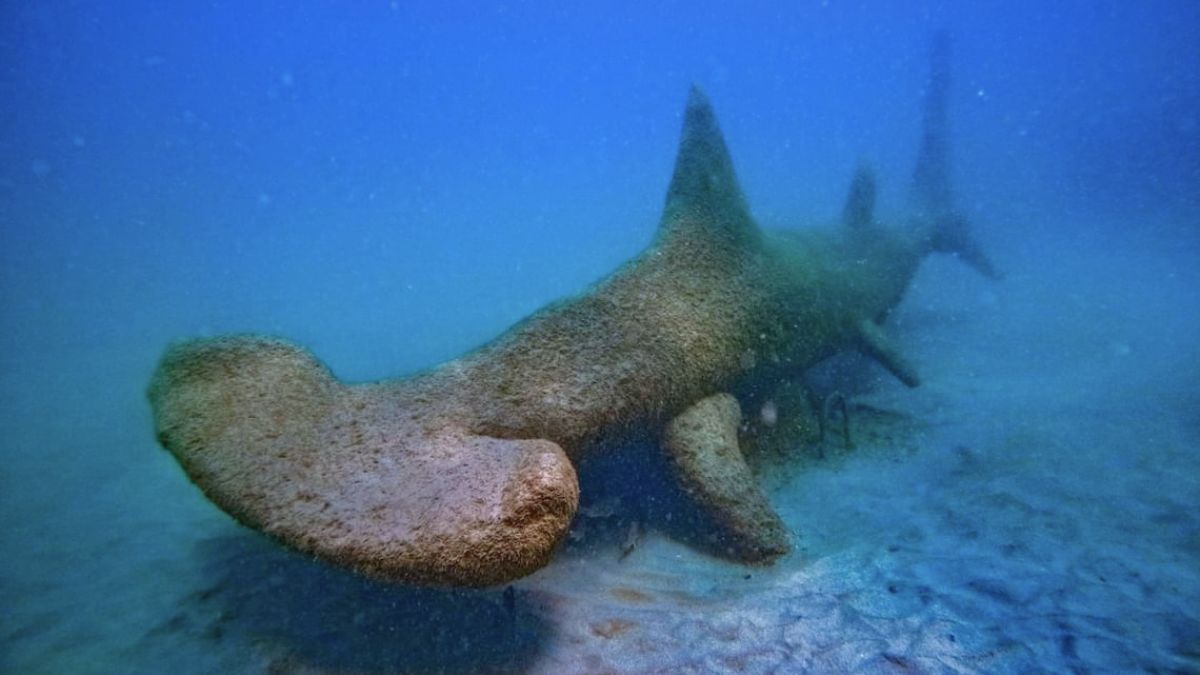
The project started around a decade ago. The goal was not just to create art. The main idea was to build an artificial reef. The sculptures provide a solid structure for corals to grow on. They also offer a hiding place for fish.
What Will You See? The Sculptures of Playa Blanca
When you enter the water at Playa Blanca, you are not just looking for fish. You are looking for history.
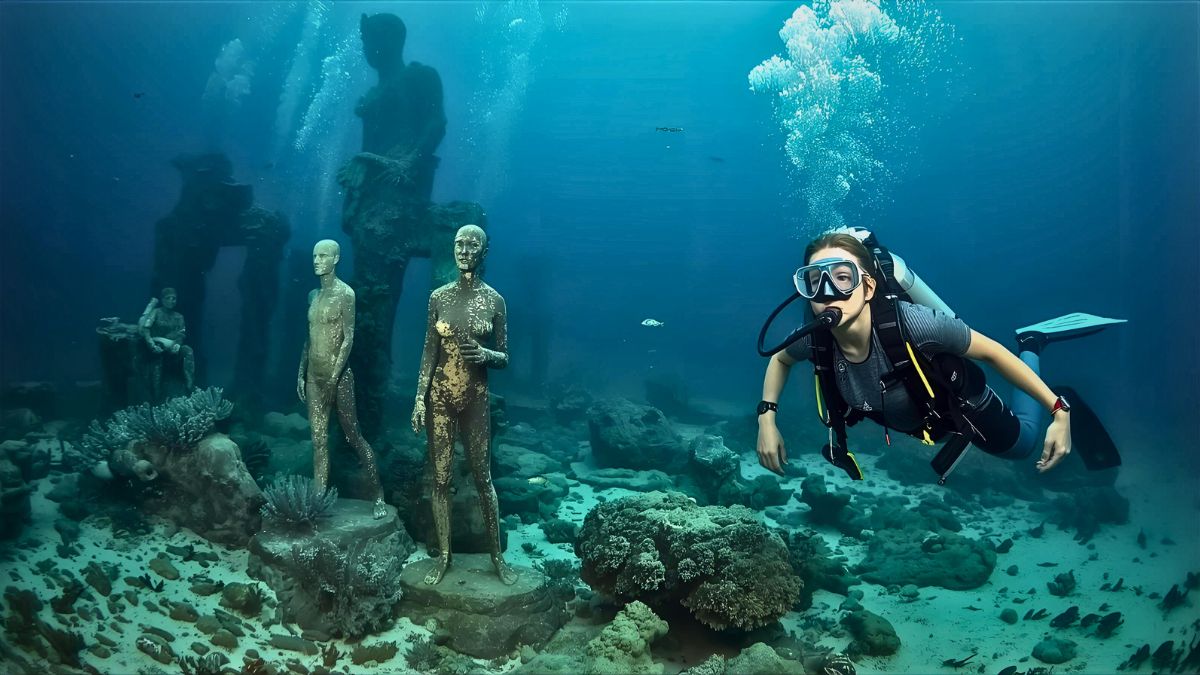
The main attraction of the museum is the statue of Cacique Garabito.
For those who don’t know the local history, Garabito was the most important indigenous chief in this region. He was a warrior who resisted the Spanish conquest in the 16th century. Today, his stone figure stands guard underwater and protects the reef.
Besides the Cacique, you can find other figures:
- A large sea turtle (representing the nesting turtles of the Pacific).
- A manta ray.
- Several “Reef Balls” (dome-shaped structures designed specifically for coral growth).
It is fascinating to see how nature has taken over the art. Sponges, small corals, and barnacles now cover the statues. It proves that the project is working.
Did you know? Coral reefs are some of the most diverse ecosystems on Earth. By sinking concrete structures like these sculptures, we give marine life a “head start.” This helps rebuild habitats in areas where the natural reef might have been damaged.
Snorkeling vs. Diving: My Professional Recommendation
As an scuba instructor, I always want to manage expectations.
This site is shallow. The sculptures sit at a depth of about 2 to 4 meters (6 to 12 feet). This depends on the tide.
Is it good for Scuba Diving?
Ideally, this is a site for discovery dives (beginners) or for a very relaxed shallow dive. If you are an experienced diver with hundreds of logged dives, you might find it too shallow. You might spend more time trying not to float to the surface than actually diving!
However, for photographers, the shallow depth means great natural light. You can get amazing photos of the statues without heavy strobe lighting.
Is it good for Snorkeling?
Absolutely. In my opinion, this is one of the best snorkeling spots in the Central Pacific. You can easily see the sculptures from the surface. The water in Playa Blanca is usually calmer than other beaches nearby. This makes it safe for families.
How to Visit the Underwater Museum in Costa Rica
Getting to the museum requires a bit of planning. It is located at Playa Blanca, which is part of the Punta Leona Club.
There are two main ways to access it:
- Guests of the Club: If you stay at the Punta Leona hotel or rent a villa inside the complex, you have direct access. You can simply swim out from the shore near the rocky reef on the south end.
- Public Access: If you visit for the day, you must park at the public lot near Playa Mantas. From there, you have to walk across the beach at low tide. You will need to climb over a small rocky point to reach Playa Blanca. It is a bit of an adventure. But the white sand and turquoise water are worth it.
Fun Fact: The best time to snorkel here is during “slack tide” or simply at low tide. Slack tide is the period between high and low tide. This is when the water is clearest and the sculptures are closest to the surface.
Important Safety Note
Even though it is shallow, never snorkel alone. There can be boat traffic in the area. Always use a surface marker buoy if you are freediving. Or stick close to the rocks.
How Does It Compare to Global Museums?
The concept of underwater museums was popularized by the artist Jason deCaires Taylor. His most famous work is the MUSA (Museo Subacuático de Arte) in Cancún, Mexico. It features over 500 life-sized sculptures and draws thousands of tourists every year. Other famous sites include the Museo Atlántico in Lanzarote, Spain, and the sculpture park in Grenada.
While these global sites are massive open-air art galleries, the project in Punta Leona is different. It is smaller and less commercial. We don’t have hundreds of statues, but we have a thriving ecosystem growing on the ones we do have. It is a more personal, quiet experience compared to the busy dive sites of the Caribbean.
How to Visit the Underwater Museum
Getting to the museum requires a bit of planning. It is located at Playa Blanca, which is part of the Punta Leona Club.
Is it worth visiting the underwater museum in Costa Rica?
If you expect the scale of the MUSA in Mexico, you might be disappointed. But if you look for a unique, hidden gem in Costa Rica where history meets ocean conservation, the Underwater Museum in Punta Leona is a fantastic stop.
It is a perfect half-day trip. You can combine it with a relaxing day on one of the most beautiful white sand beaches in the country.
Want to see more of Costa Rica’s underwater world?
If you are ready for deeper adventures, check out our trips to Caño Island or join us for a local dive. At Costa Rica Divers, we love showing you the secrets of our ocean.
Sources and References
- Hotel Punta Leona – Information on the resort’s marine conservation program
- La República – News article covering the opening of the sculpture park
- Jason deCaires Taylor – The artist who pioneered the concept of underwater museums