If there is one skill that separates a comfortable diver from a struggling one, it is neutral buoyancy in scuba diving. I have been teaching people to dive for many years, and I can tell you with confidence: almost every problem a new diver has underwater comes back to buoyancy. The flailing arms. The accidental contact with the reef. The tank that runs out in 30 minutes. All of it.
The good news? Neutral buoyancy is not some rare talent. It is a skill, and like any skill, it can be learned. In this guide I will break it down into simple steps, explain the physics without putting you to sleep, and share the most common mistakes I see, along with exactly how to fix them.
What Neutral Buoyancy in Scuba Diving Actually Means
Let me start with the basics, because a lot of divers think they understand buoyancy but do not quite have it yet.
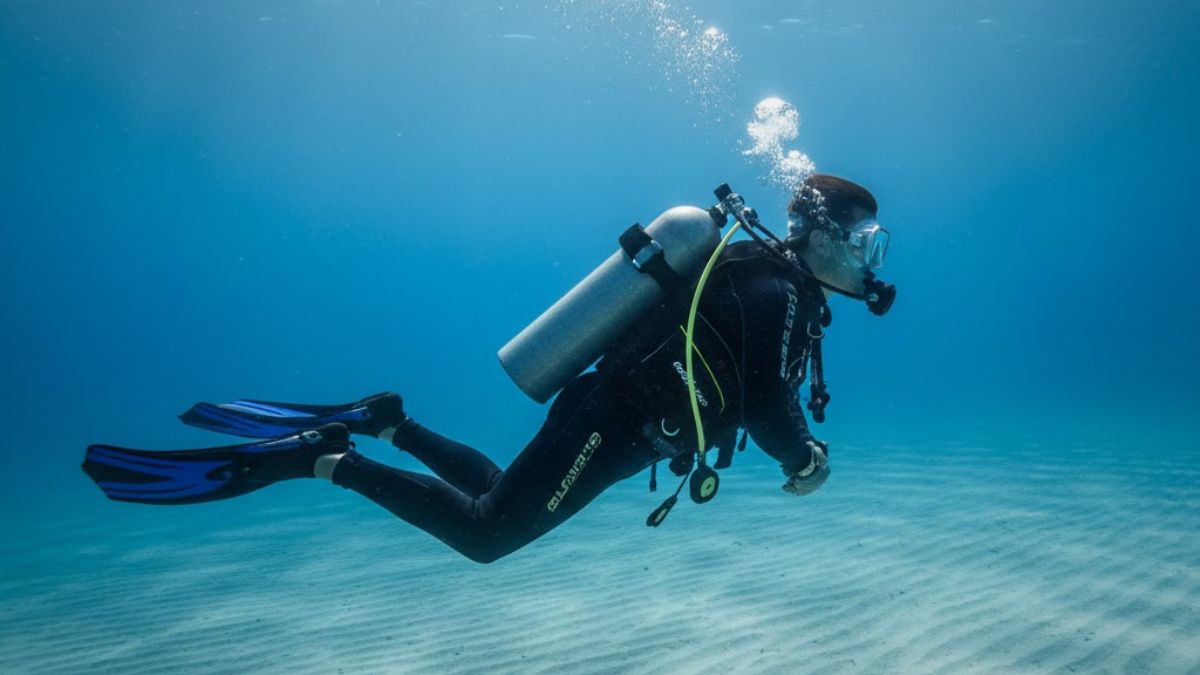
There are three states of buoyancy in diving. Positive buoyancy means you float upward. This is your natural state at the surface, since your body and wetsuit are less dense than water. Negative buoyancy means you sink. When you deflate your BCD and exhale, you descend. Neutral buoyancy is the sweet spot in between: you hover at a chosen depth without rising or sinking. No effort. No kicking just to stay still. You simply exist in the water column.
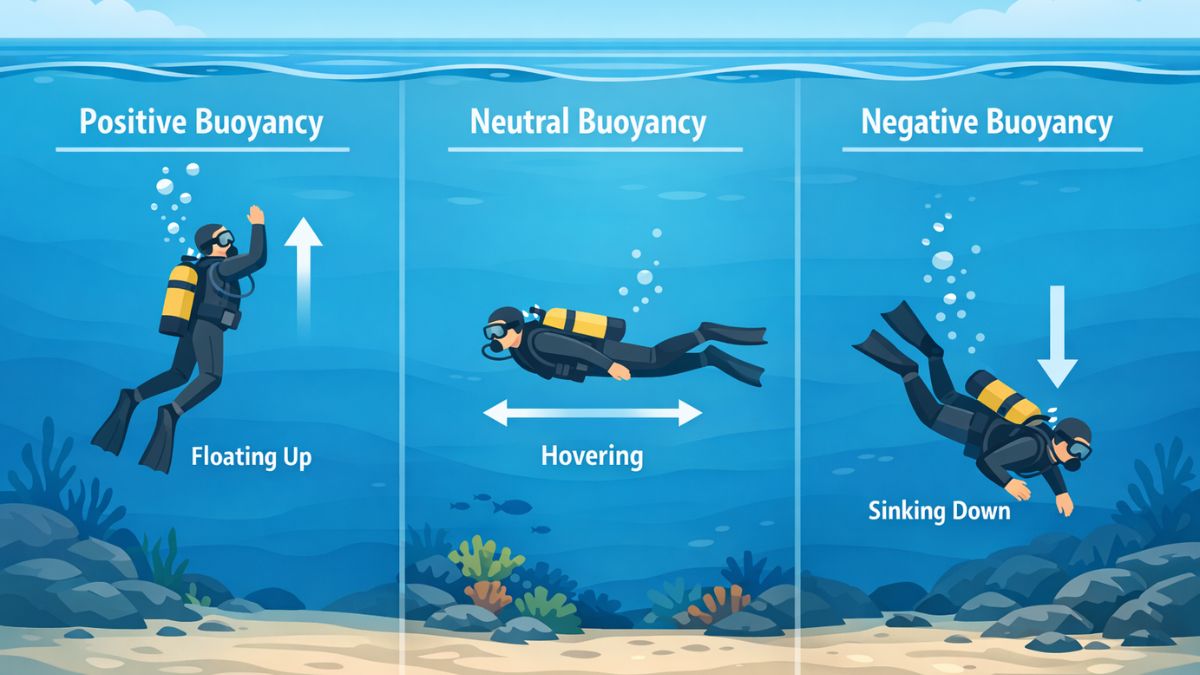
That is what neutral buoyancy in scuba diving feels like when you get it right. And it genuinely feels like flying.
Why is it hard at first? Because your body is used to living in air. Underwater, everything that affects your position changes as you breathe, change depth, or use your air. Your lungs expand and contract. Your wetsuit compresses under pressure. Your tank gets lighter as you use the air inside it. Every one of these things shifts your buoyancy, and in the beginning you are reacting to all of it instead of anticipating it.
Did you know? A full aluminum 80 scuba tank weighs approximately 2.5 kg more than an empty one. This means you become significantly more buoyant as a dive progresses, which is why it is normal to feel yourself floating up near the end of a dive, even if you felt perfectly weighted at the start.
Why Neutral Buoyancy Control Matters More Than You Think
I want to give you a real reason to care about this, beyond just “it looks nicer.”
Safety
Poor buoyancy control is one of the leading causes of dive accidents. A diver who cannot control their position is more likely to ascend too fast, which risks decompression sickness. They are also more likely to panic, exhaust their air supply, or become disoriented near walls, wrecks, or in surge. Good buoyancy control in scuba diving is not just graceful. It is a genuine safety skill.
Air Consumption
When you fight your buoyancy, you burn energy. When you burn energy, you breathe faster. When you breathe faster, your dive ends sooner. Divers with poor neutral buoyancy regularly finish a dive in 30 to 35 minutes. Divers with good buoyancy control often stay down for 50 to 60 minutes on the same tank. That is almost twice the dive time, for free.
Marine Life Protection
A diver with no buoyancy control is a wrecking ball on a reef. One accidental fin kick can destroy coral that took decades to grow. I have seen it happen many times. When you achieve true neutral buoyancy in scuba diving, you become part of the underwater environment instead of a threat to it.
Step 1: Get Your Weighting Right
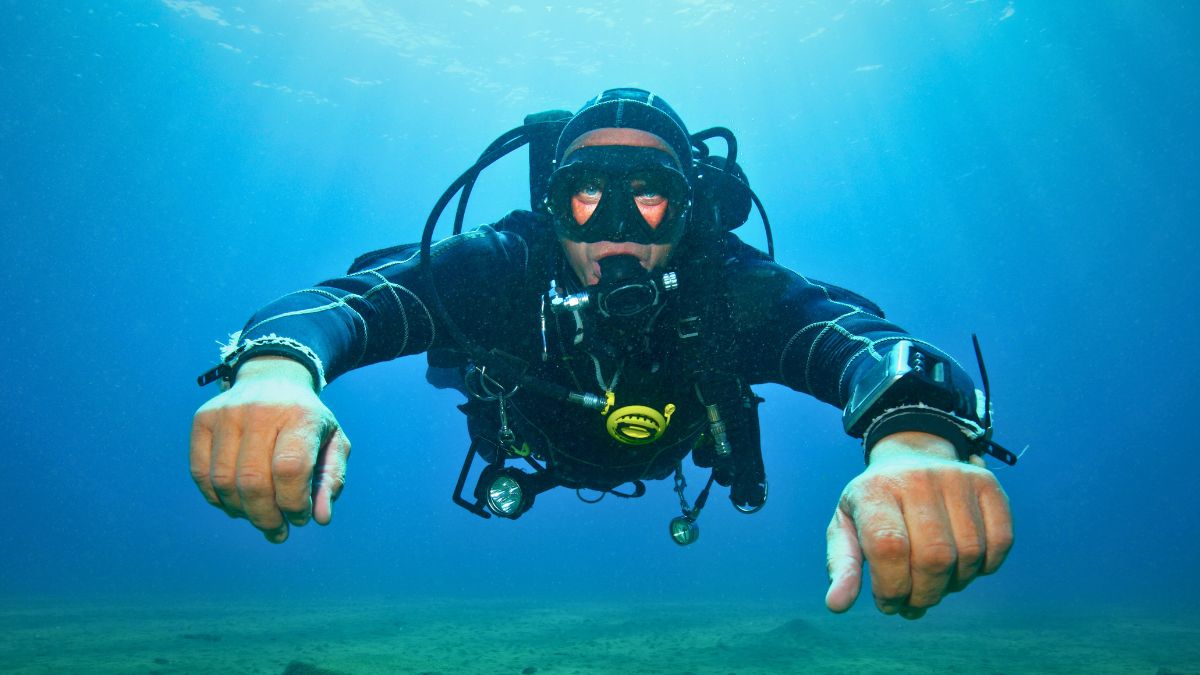
This is the most important step. If your weighting is wrong, nothing else will work properly. I see overweighted divers almost every day, and it is the single most common reason people struggle with buoyancy.
Here is the weight check I run with every student. At the surface, with a nearly empty tank (around 50 bar / 700 psi) and a completely empty BCD, float upright with your regulator in your mouth. Exhale fully. You should sink slowly until the water is at eye level. If you sink faster than that, you are carrying too much lead. If you do not sink at all, you need more.
Quick diver buoyancy test
Why use a nearly empty tank? Because by the end of the dive, your tank will be lighter and you will be more buoyant. You want to be correctly weighted for the end of the dive, not the beginning.
A few factors that affect how much weight you need:
- Saltwater vs. freshwater: Salt water is denser and provides more lift. You typically need 2 to 4 kg more weight when diving in saltwater compared to a freshwater lake.
- Wetsuit thickness: A 7mm wetsuit needs much more ballast than a 3mm one, because the neoprene is buoyant.
- Body composition: More body fat means more natural buoyancy and more lead needed.
- Tank material: Aluminum tanks become buoyant when nearly empty. Steel tanks stay negative. This affects your end-of-dive buoyancy significantly.
Take the time to do a proper weight check at the start of every trip whenever you are in new conditions. It takes five minutes and saves the entire dive.
Step 2: Use Your BCD Correctly
Your BCD (buoyancy control device) is not a depth management tool. This is a mistake I see constantly. New divers inflate their BCD when they want to go up and deflate it when they want to go down, and they end up doing this constantly throughout the dive, never quite getting it right.
Here is how the BCD should actually work. Use it to establish rough neutral buoyancy at depth. Once you feel roughly neutral, stop touching the inflator button. From that point, use your breathing to manage fine adjustments. The BCD should barely change during a dive, except when you change depth significantly.
Adjust your position with your breath, not with equipment
Add air in small, short puffs. Never hold the button down. Air expands as you rise, so a BCD that feels right at 15 meters will push you upward at 5 meters if you are not venting it. Many runaway ascents happen exactly like this: a diver adds air at depth, starts to rise, the air expands, they rise faster, and suddenly they are at the surface before they know what happened.
When you ascend intentionally, start venting your BCD before you move up. Hold the deflator hose above your head so air escapes easily. The goal is a slow, controlled ascent, never faster than 9 meters per minute.
Fun fact: NASA astronauts train for spacewalks in a 23-million-liter pool called the Neutral Buoyancy Laboratory in Houston, Texas. They use the same principle scuba divers rely on, achieving weightlessness through careful ballasting, to simulate working in zero gravity. So yes, mastering buoyancy in diving is essentially astronaut training.
Step 3: Master Breath Control
Your lungs are the most precise buoyancy tool you have. Once you are correctly weighted and roughly neutral via your BCD, your breathing takes over for all the small adjustments.
Think of it this way: a full breath adds roughly 3 to 4 liters of air to your body. That is enough volume to lift you noticeably in the water column. A complete exhale removes that volume and lets you sink slightly.
The ideal breathing pattern for scuba diving is what I call the “exhaled neutral state.” You should feel neutral, neither rising nor sinking, in the moment after you exhale but before you inhale again. If you feel neutral only at full inhale, you are underweighted. If you feel neutral only when holding a partial breath, something else is off.
Practice this on your next dive: find a sandy patch at depth, get roughly neutral with your BCD, then put your hands behind your back and breathe slowly. Just breathe. Watch what happens. A gentle inhale lifts you slightly. A slow exhale brings you back down. That is neutral buoyancy in scuba diving, controlled by breath alone.
Do not hold your breath. Ever. Always breathe in slow, continuous cycles. Holding your breath risks lung overexpansion injury and disrupts your buoyancy control completely.
Step 4: Fix Your Trim
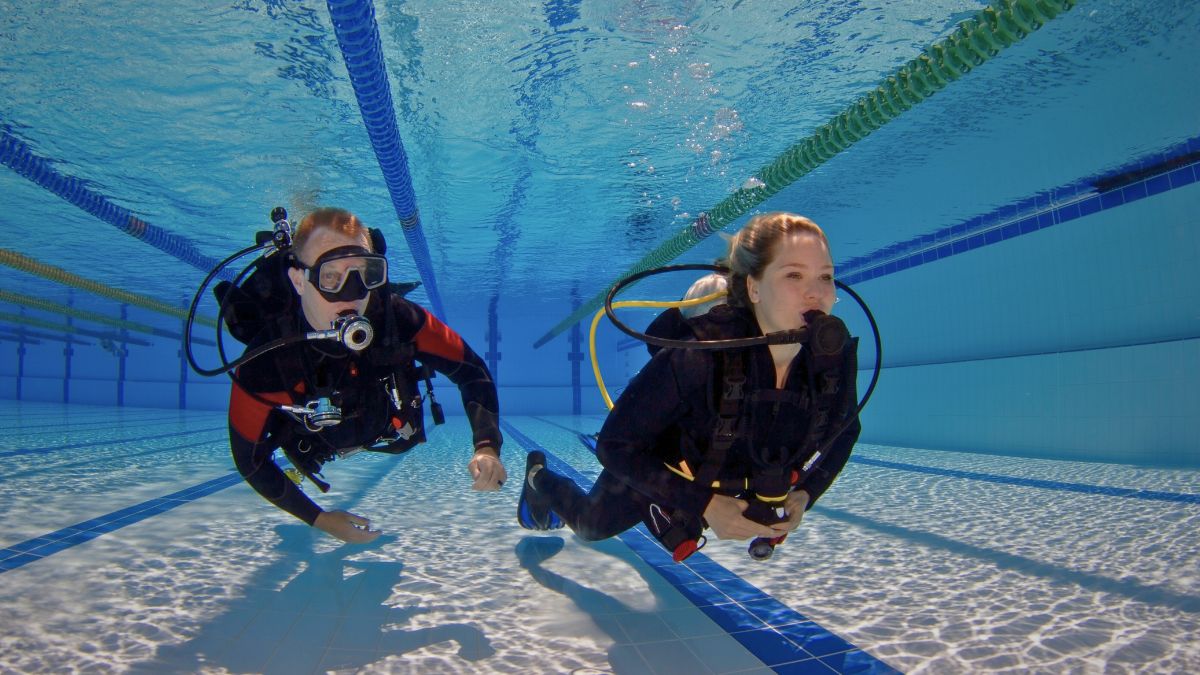
Trim is the position your body holds in the water. The goal is a horizontal, streamlined position: head forward, legs behind you, fins parallel to the ground or angled slightly upward.
Bad trim creates drag. A diver who is “feet down,” meaning slightly vertical, is pushing water with their whole body instead of slicing through it. They use more energy, burn more air, and constantly disturb the bottom with their fins.
Here is a simple trim test: once you feel neutral, hold completely still with your arms at your sides and legs extended. If your feet slowly sink, your weight distribution is off. Move some of your lead from the waist to trim pockets higher on your body. If your head sinks, move weight toward your hips or thighs.
Equipment choice matters here too. Where your tank sits, what kind of BCD you use, and how you route your gear all affect trim. A wing-style BCD keeps the air bladder behind your back, which naturally promotes a flatter body position. Jacket-style BCDs inflate around your torso and can push you into a more upright position. Neither is wrong, but it is worth knowing the difference.
The Most Common Neutral Buoyancy Mistakes
After teaching hundreds of divers, these are the five mistakes I see most often.
- Carrying too much lead. The most common mistake by far. When you have too much weight, you compensate by inflating your BCD more. A bigger air bubble in your BCD is harder to control as depth changes. The solution is always the same: do a proper weight check and remove lead until you are just barely sinking with a full exhale at the surface.
- Pumping the BCD instead of breathing. The BCD is slow to respond. Breathing is instant. If you are constantly pressing the inflator button throughout the dive, you are doing it wrong. Get your weight right, establish rough neutral with the BCD at depth, and then leave it alone.
- A tense body. Tension makes everything harder. Tense divers breathe faster, kick more erratically, and cannot feel subtle changes in their buoyancy. Relax your hands, soften your legs, and let the water support you. The calmer your body, the easier buoyancy control becomes.
- Using your arms and hands. Your hands should not be sculling underwater. They add drag and make your trim worse. Keep them close to your body or crossed over your chest. Propulsion comes from your fins only.
- Not adjusting for depth changes. Every time you change depth, your buoyancy changes. Your wetsuit compresses, the air in your BCD expands or contracts. Many divers only react to this instead of anticipating it. Start venting air before you ascend. Be ready to add a small puff before you descend.
How Long Does It Take to Get Neutral Buoyancy Right?
Honestly? Most divers have a workable sense of neutral buoyancy by the end of their Open Water course. They are not elegant yet, but they can hold depth and avoid hitting things.
To get genuinely good at it, the kind of buoyancy where you hover effortlessly at the safety stop with a nearly empty tank and do not move an inch, I usually see that click somewhere between dive 15 and dive 25 after certification. Sometimes sooner if the diver is paying close attention. Sometimes later if they have been diving without really thinking about it.
If you want to accelerate this significantly, the PADI Peak Performance Buoyancy specialty course is genuinely worth your time. It is a focused two-dive course where the entire point is to dial in your weight, trim, and breath control with a dedicated instructor watching your every movement. I have seen divers improve more in two Peak Performance dives than in ten normal recreational dives. That is not an exaggeration.
The course teaches you to determine your exact weighting, correct your trim, and hover in any position, including vertically and upside down, using breathing alone. If buoyancy has been frustrating you, this course removes that frustration fast.
Frequently Asked Questions
What is neutral buoyancy in scuba diving?
Neutral buoyancy means you neither sink nor float while underwater. You hover at a chosen depth with minimal effort, using small breathing adjustments to stay in position. It is the fundamental goal of every diver and the skill that makes diving truly enjoyable.
Why do I keep floating up during a dive?
The most likely reasons are that you are underweighted, your BCD has too much air in it, or you are inhaling too deeply without exhaling fully. Try a proper weight check at the surface first. If your weight is correct, focus on slowing down your breathing and exhaling more completely before your next inhale.
Why do I keep sinking even with my BCD inflated?
You are almost certainly carrying too much lead. When you overweight yourself and compensate with a full BCD, you make buoyancy control much harder, because the large air bubble in your BCD responds dramatically to depth changes. Remove 1 to 2 kg and redo your weight check.
How does breathing affect buoyancy underwater?
Your lungs hold 3 to 4 liters of air when fully inflated. That volume creates lift. A slow, deep inhale raises you slightly. A complete exhale lowers you. In practice, you use this to make micro-adjustments to your depth without touching your BCD. Slow, relaxed breathing is essential for good buoyancy control.
What is trim in diving and why does it matter?
Trim is the position your body holds underwater. The ideal is horizontal, like Superman flying. Good trim reduces drag, improves air consumption, and keeps your fins from stirring up sediment or hitting the reef. If your feet hang low, move some ballast weights higher on your body.
Should I take a Peak Performance Buoyancy course?
If buoyancy control feels inconsistent or frustrating after 10 or more dives, yes, absolutely. The PADI Peak Performance Buoyancy specialty is a focused, two-dive course specifically designed to fix weighting, trim, and breath control under direct instructor supervision. Most divers see dramatic improvement after just those two dives.
Sources and References
- PADI Peak Performance Buoyancy Course – Official course information
- Divers Alert Network (DAN) – Buoyancy and Diving Safety
- NASA Neutral Buoyancy Laboratory – Background on NASA’s astronaut training.