The first time a student takes a breath underwater, they almost always pause for a second. Not from panic, just from surprise. The air comes exactly when you need it, at exactly the right pressure, without any effort on your part. They didn’t do anything special. They just inhaled. And that’s the entire point of a scuba diving regulator.
I’ve watched that moment happen hundreds of times. It never gets old. And it happens because of a piece of engineering that most divers use every single dive without fully understanding how it works.
This guide covers everything: what a dive regulator does, how each part works, the differences between regulator types that actually matter, and how to choose one that fits your diving. Whether you’re renting gear, thinking about buying your first regulator, or just curious about what’s happening inside that tangle of hoses on your BCD. This is what you need to know.
What Does a Scuba Diving Regulator Actually Do?
The air inside a scuba tank is compressed to around 200–300 bar (roughly 3,000 PSI). Breathing that directly would be impossible. At that pressure, you couldn’t inhale at all: the force required would be far beyond what your lungs can generate.
A scuba regulator solves this in two steps. First, it drops that extreme tank pressure down to a manageable intermediate level. Then, it drops it again to match the surrounding water pressure, delivering air to your mouth at exactly the right pressure for comfortable breathing at whatever depth you’re at.
That second part is what makes it remarkable. As you dive deeper, the water pressure around you increases. Your regulator automatically adjusts to deliver air at the correct ambient pressure, whether you’re at 5 meters or 30 meters. You don’t adjust anything. You just breathe.
Did you know? The modern two-stage scuba regulator was co-invented by Jacques Cousteau and engineer Émile Gagnan in 1943. Their “Aqua-Lung” design is the direct ancestor of every regulator in use today.
The Parts of a Scuba Regulator: What Each One Does
What looks like a random tangle of hoses is actually a precisely organized system. Each hose has one job, connects to one thing, and operates at one specific pressure level. Here’s how it all fits together.
The First Stage
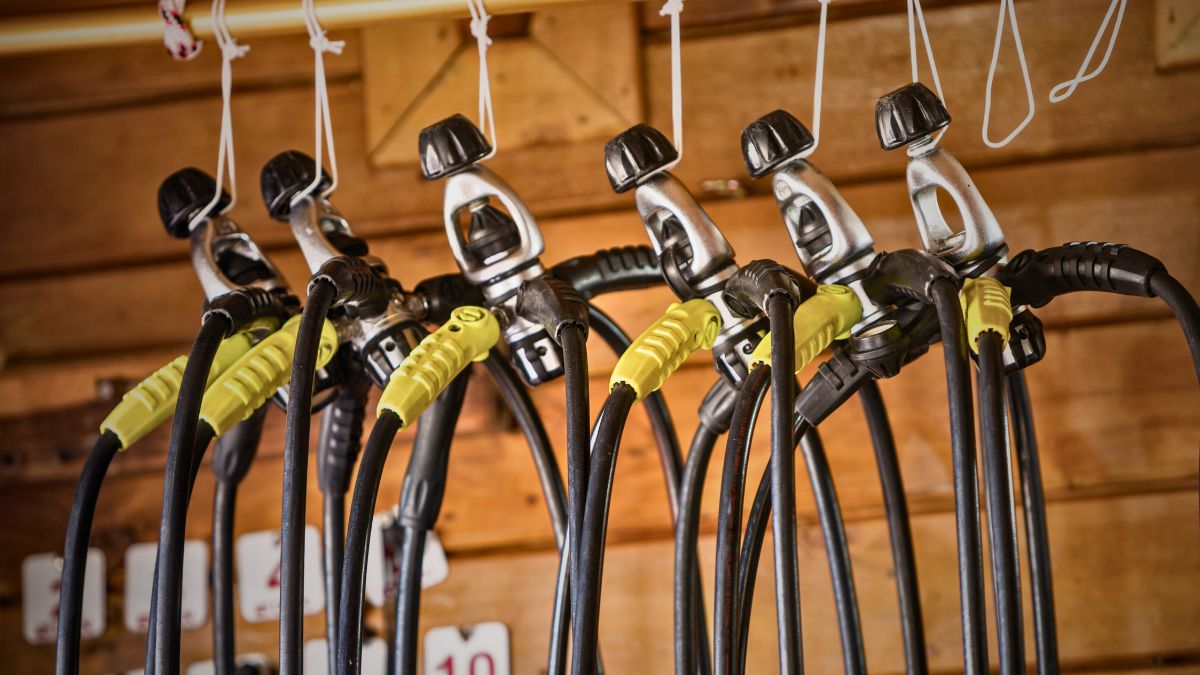
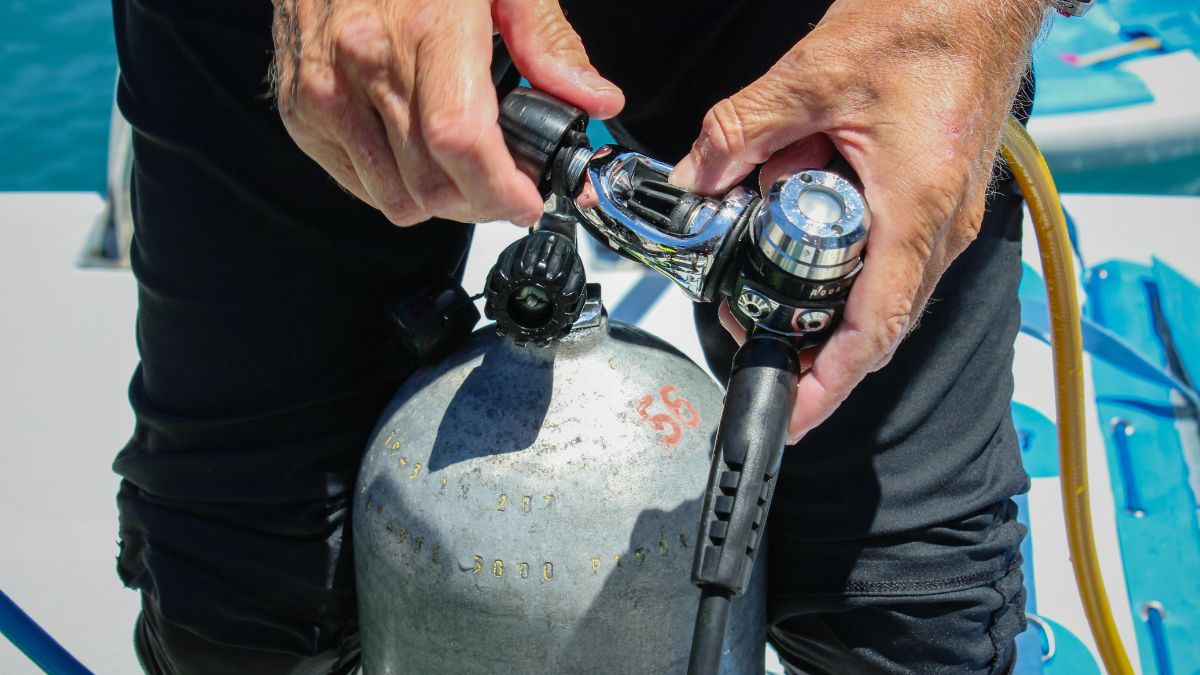
The first stage is the part that screws or clips onto your tank valve. Its job is to take the high pressure from the tank (up to 300 bar) and reduce it to an intermediate pressure of roughly 8–10 bar above ambient. That intermediate-pressure air then travels through low-pressure hoses to the second stage, the octopus, and the LPI hose connected to your BCD.
There is one exception: the pressure gauge hose. That one connects directly to the tank’s full pressure, which is how it can show you exactly how much air you have left. It’s the only high-pressure hose in the entire system, and it’s why you should never point the gauge at your face when you open the tank valve.
The first stage also has multiple ports, both high-pressure and low-pressure, so you can add accessories like a drysuit inflation hose or a wireless tank pressure transmitter if your dive computer supports one.
The Second Stage (Demand Valve)
The second stage is the part that goes in your mouth. It’s called a demand valve because it gives you air on demand: only when you inhale, only as much as you need.
Here’s the mechanism in plain terms. When you inhale, the pressure inside the second stage housing drops slightly below the surrounding water pressure. A flexible rubber diaphragm on the front of the second stage detects this pressure difference and flexes inward.
That movement contacts a lever, which opens a small valve, and air flows from the first stage through the hose into your mouthpiece. When you stop inhaling, pressure equalizes, the diaphragm returns to its resting position, and the valve closes. When you exhale, a one-way exhaust valve opens and your breath exits as bubbles.

The purge button on the front of the second stage manually pushes the diaphragm in, forcing a continuous flow of air. You use it to clear water from the second stage if it floods, or to inflate a surface marker buoy at the end of a dive.
Most modern second stages also have two adjustment features: a venturi switch (pre-dive/dive setting that changes airflow characteristics to prevent free-flow on the surface) and a breathing resistance knob that lets you fine-tune how easily air flows when you inhale.
The Pressure Gauge (SPG)
The submersible pressure gauge, or SPG, shows your remaining tank pressure in bar or PSI. It’s simple and essential. As a well-trained diver, you should surface with at least 50 bar remaining, or more if you’re leading a group or diving in conditions where a direct ascent isn’t guaranteed.
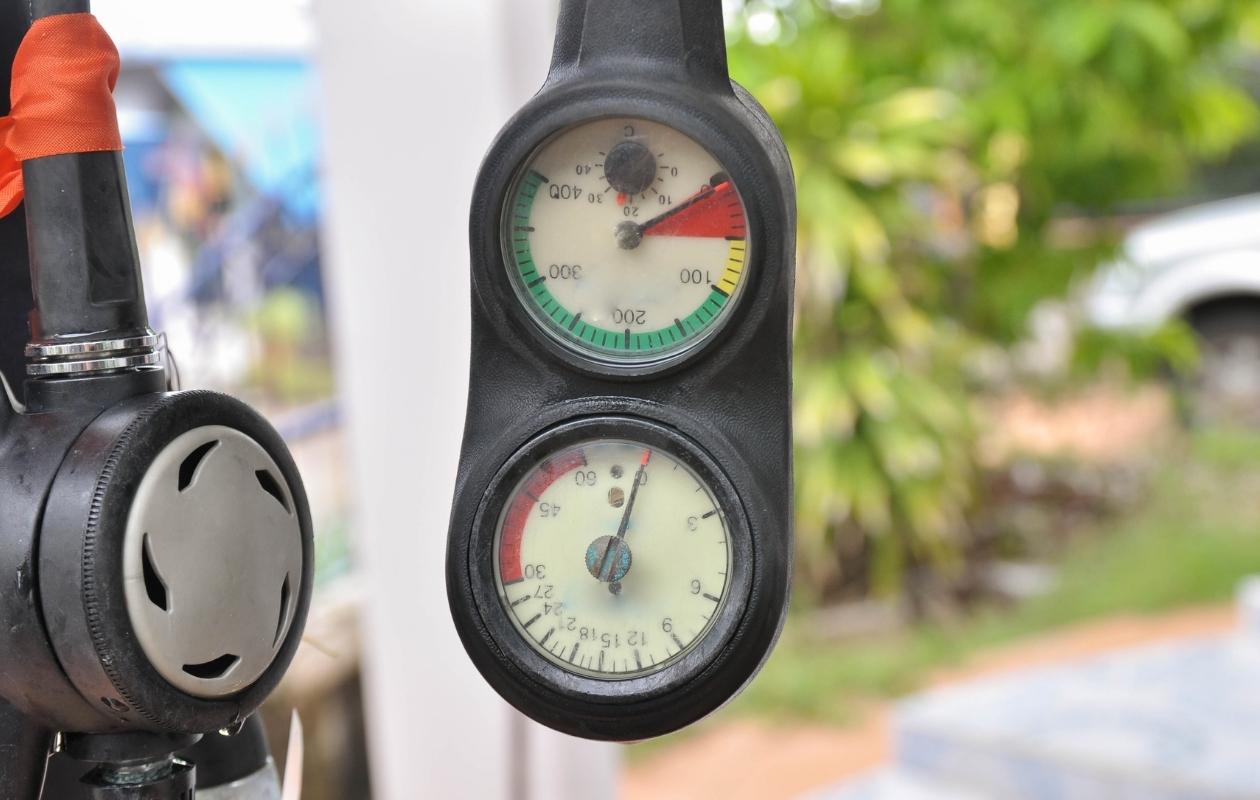
Some divers use a console that combines the SPG with a depth gauge and compass. Personally, I prefer a standalone dive computer on my wrist and keep the SPG simple. But that’s a matter of preference and budget.
The Octopus (Alternate Air Source)
The octopus is a second, backup mouthpiece connected to the first stage by a longer hose, typically yellow in recreational diving, to make it easy to locate in an emergency. If your buddy runs out of air or has a regulator problem, you hand them your octopus and share your air supply on the way to the surface.
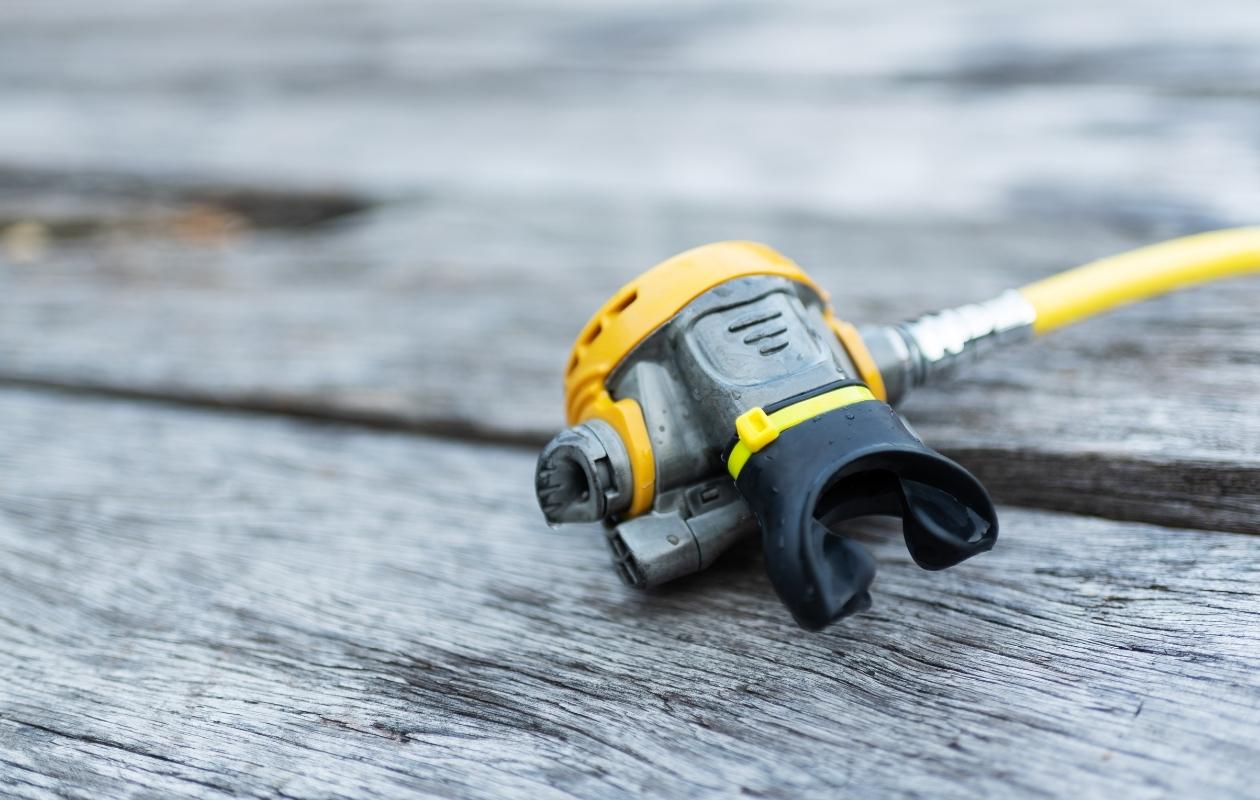
Giving someone your octopus sounds simple. In a real emergency it can be stressful, and doing it smoothly requires practice. Every open water course includes this drill in the pool and again in open water. Don’t skip the practice.
The LPI Hose (Low Pressure Inflator)
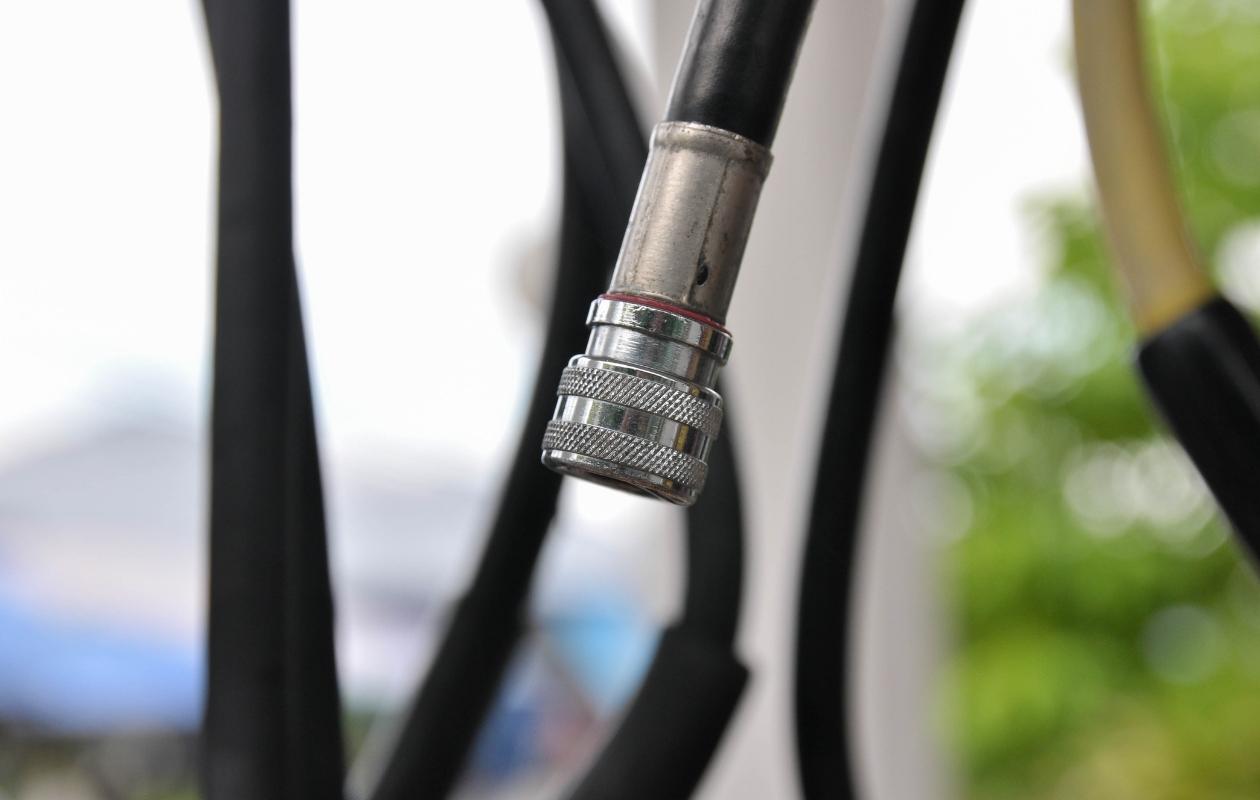
The LPI hose connects your first stage to the inflator valve on your BCD. When you press the inflate button on your BCD, it draws air from your tank through this hose and into the BCD bladder. Without it, you couldn’t adjust your buoyancy underwater or inflate your BCD on the surface.
Inside the First Stage: Piston vs. Diaphragm
This is the part most beginner guides skip over. There are two ways a first stage can mechanically reduce tank pressure to intermediate pressure: using a piston, or using a diaphragm. Both work well. They have different trade-offs worth understanding.
- Piston first stages use a metal piston moving against a spring to regulate airflow. The design is relatively simple, with fewer moving parts. That simplicity means piston regulators tend to breathe easily, deliver high airflow, and require less complex servicing. The downside is that the piston mechanism is exposed to the water environment, which makes it more susceptible to contamination from silt, sediment, or ice in cold water.
- Diaphragm first stages use a sealed internal chamber separated from the water by a thick rubber diaphragm. Because the regulating mechanism never contacts the surrounding water, diaphragm regulators perform more consistently in cold water, dirty water, and contaminated environments. The trade-off is a more complex design with more components, which means more thorough servicing requirements and generally higher cost.
For warm-water recreational diving in clean conditions, a piston first stage is an excellent choice and often the better value. If you dive regularly in cold water, quarries, or any environment with silt or particulates, a diaphragm first stage is worth the extra investment.
Did you know? In water below 10°C (50°F), moisture in the air supply can freeze inside an unsealed piston regulator, causing it to free-flow or lock up entirely. This is called “icing,” and it’s the reason cold-water divers use sealed diaphragm regulators.
Balanced vs. Unbalanced Regulators: Does It Actually Matter?
A balanced first stage delivers consistent intermediate pressure throughout your dive, regardless of how much air remains in your tank or how deep you go. An unbalanced first stage allows the intermediate pressure to vary slightly as tank pressure drops and as depth increases.
In practical terms: an unbalanced regulator breathes fine at the start of a dive when the tank is full and you’re at shallow depth. As you go deeper and your tank pressure drops, you may notice slightly increased breathing resistance, meaning you have to work a little harder to inhale. It’s not dangerous, but it’s noticeable on long or deep dives.
Price vs. greater reliability
For occasional warm-water dives at recreational depths, an unbalanced regulator performs adequately and costs significantly less. For regular diving, anything deeper than 20–25 meters, or any situation where breathing effort matters, a balanced first stage is worth the difference in price.
Most mid-range and higher regulators sold today are balanced. If you’re buying your first regulator and plan to dive more than a few times a year, start with a balanced one.

Sealed vs. Unsealed First Stage
A sealed first stage keeps the internal mechanism isolated from the surrounding water. An unsealed first stage allows water to enter the first stage housing during the dive.
For tropical diving in clean, warm water, this distinction is largely irrelevant. The water that enters an unsealed first stage in 28°C Caribbean water doesn’t cause problems.
For cold water diving (below about 10°C), the difference matters significantly. Water entering an unsealed first stage can freeze around the mechanism and cause a free-flow, where air rushes continuously out of the regulator and depletes your tank rapidly. A sealed first stage prevents this by keeping water out entirely.
If you dive exclusively in warm water, save your money and get an unsealed regulator. If you dive in cold water or plan to, get a sealed first stage. If you’re not sure, get sealed. It works everywhere.
DIN vs. Yoke (INT): The Practical Answer
This is probably the question I get asked most often by students buying their first regulator. The difference is in how the first stage connects to the tank valve.
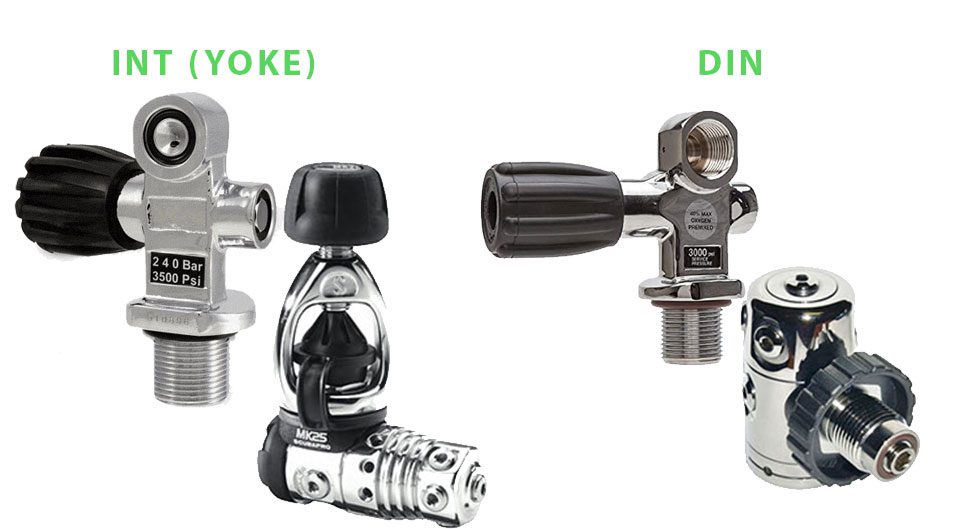
- A Yoke (INT) regulator clamps over the outside of the tank valve with a screw fitting. It’s the most common connection type worldwide, especially at tropical dive centers and in rental gear. Easy to connect, easy to remove, works with standard 232-bar valves.
- A DIN regulator screws directly into the valve. The connection is more secure and can’t be accidentally knocked loose the way a yoke fitting theoretically can. It also allows use with high-pressure 300-bar cylinders. DIN is standard in technical diving and common in Europe.
Here’s the practical answer for most recreational divers: if you dive primarily in tropical locations and use rental tanks at dive centers, get a yoke. The vast majority of tanks you’ll encounter are yoke-compatible, and a yoke regulator is simpler to deal with when traveling. If you dive in Europe or plan to do technical diving, get DIN. If you want flexibility, get DIN and carry a DIN-to-yoke adapter, a small inexpensive accessory that lets you use a DIN regulator on yoke-only valves.
How to Choose a Regulator for Your Diving Style
The best regulator for you depends on where and how often you dive. Here’s a practical breakdown based on four diver profiles.
| Diver Profile | First Stage | Balance | Seal | Connection |
|---|---|---|---|---|
| Beginner / occasional warm-water diver | Piston | Unbalanced fine | Unsealed fine | Yoke |
| Regular recreational diver (10+ dives/year) | Piston or diaphragm | Balanced | Unsealed or sealed | Yoke or DIN |
| Cold water / technical diver | Diaphragm | Balanced | Sealed | DIN |
| Traveling diver (tropical, multi-destination) | Piston | Balanced | Unsealed | Yoke (or DIN + adapter) |
One thing I always tell students: don’t buy the cheapest regulator you can find, and don’t buy the most expensive one either. Buy one from a reputable manufacturer that can be serviced locally wherever you dive most often. A mid-range regulator from Apeks, Scubapro, Mares, Aqualung, or Cressi that gets serviced regularly will outperform an expensive regulator that’s never been to a service technician.
Regulator Maintenance and Service
Your regulator is life-support equipment. It doesn’t need much day-to-day attention, but what it does need, it needs consistently.
- After every dive: Rinse the regulator in fresh water with the dust cover firmly in place on the first stage. Do not press the purge button while rinsing, as water will enter the second stage and from there into the first stage, which can cause corrosion. Let everything dry completely out of direct sunlight before storing.
- Storage: Coil the hoses loosely. Never store a regulator with tight bends in the hoses, as this degrades the hose material over time. Keep it in a padded bag away from prolonged UV exposure.
- Annual service: Most manufacturers recommend professional servicing every one to two years, or every 100–200 dives, whichever comes first. The technician replaces O-rings, seats, and other wear parts, checks intermediate pressure, and verifies the second stage cracking pressure. I’ve seen regulators that hadn’t been serviced in five years. They were still delivering air. They were also delivering it unpredictably and with significantly increased breathing resistance. Don’t skip service.
If your regulator starts breathing harder than usual, free-flows unexpectedly, or leaks air from anywhere, take it to a service technician before your next dive. Don’t dive on a regulator you’re not confident in.
Frequently Asked Questions
How does a scuba diving regulator work?
A scuba regulator works in two stages. The first stage attaches to the tank and reduces the high tank pressure (200–300 bar) to an intermediate pressure of roughly 8–10 bar above ambient. The second stage, which goes in your mouth, reduces that intermediate pressure to match the surrounding water pressure, delivering air only when you inhale. When you stop inhaling, the air supply stops. When you exhale, a one-way valve releases your breath as bubbles.
What is the difference between a balanced and unbalanced regulator?
A balanced regulator delivers consistent intermediate pressure throughout the dive, regardless of tank pressure or depth. An unbalanced regulator allows the intermediate pressure to vary slightly as your tank empties and as you descend deeper, which can result in slightly harder breathing at depth or on low tank pressure. For recreational diving at moderate depths, the difference is minor. For deeper or more demanding dives, a balanced regulator provides noticeably better performance.
What is a DIN regulator and how does it differ from yoke?
A DIN regulator screws directly into the tank valve, creating a more secure connection that supports pressures up to 300 bar. A yoke (INT) regulator clamps over the outside of the valve and works with standard 232-bar cylinders. DIN is common in technical diving and in Europe. Yoke is more widely used at recreational dive centers worldwide, particularly in tropical destinations. You can use a DIN regulator with yoke valves by adding a small DIN-to-yoke adapter.
How often does a scuba regulator need to be serviced?
Most manufacturers recommend professional servicing every one to two years, or every 100–200 dives. During a service, a technician replaces O-rings and soft parts, checks and adjusts intermediate pressure, verifies second stage cracking pressure, and inspects the entire system. A well-maintained regulator lasts for many years. A neglected one becomes unreliable and potentially unsafe.
Can I use a regulator with enriched air nitrox?
Most modern recreational regulators are compatible with enriched air mixes up to 40% oxygen without any modification. However, for oxygen percentages above 40%, the regulator must meet oxygen-service standards, which involves specific cleaning procedures and compatible materials. If you plan to dive nitrox, check your regulator manufacturer’s specifications. When in doubt, ask your dive center or a qualified service technician.
Is it worth buying my own scuba regulator?
If you dive more than five or six times a year, buying your own regulator is worth considering. You’ll know exactly when it was last serviced, you’ll be familiar with how it breathes, and you won’t spend time adjusting to unfamiliar rental gear at the start of every dive trip. A quality mid-range regulator from a reputable brand, properly maintained, will last you ten years or more.
Sources and References
- PADI: Scuba Regulators: official guidance on regulator selection
- DAN: Dive Equipment Safety: Divers Alert Network guidance on equipment maintenance
- SSI: Regulators: SSI educational resources on regulator function and maintenance
- CMAS Technical Standards: equipment standards including regulator requirements