The short answer is yes – impaired vision is not a barrier to scuba diving. I have certified hundreds of divers over the years, and a good portion of them wore contact lenses during the course. Some invested in prescription masks before their first open water dive.
A handful discovered they didn’t need any correction at all once they got underwater. There are solid options for every situation, and choosing the right one makes a real difference to your experience.
Let me walk you through everything: what works, what doesn’t, and what I actually recommend to my students before they get in the water.
Can You Wear Glasses While Scuba Diving?
No. Regular eyeglasses cannot be worn under a scuba diving mask, and there is no workaround that makes this a good idea. The problem is the mask seal. A diving mask needs to press firmly and evenly against your face to keep water out.
Glasses frames break that seal in multiple places, allowing water to leak in continuously. Even if you managed to get the mask on, you would be clearing it every thirty seconds – which is annoying in a pool and genuinely problematic at depth.
Glasses under a mask are not very comfortable
There is also the pressure issue. As you descend, water pressure increases against your mask. With glasses frames under that mask, the pressure pushes the frames into your face uncomfortably. It is not dangerous in itself, but it adds to the leaking problem and makes the whole setup miserable.
Some people have tried modifying glasses – bending the arms, removing them, taping things together. I have seen creative attempts. None of them work reliably, and none of them are worth the hassle when much better solutions exist.
The good news is that you have several options that actually work: contact lenses, prescription dive masks, stick-on magnifiers, and in some cases, no correction at all. Let me explain each one.
Can You Wear Contact Lenses While Scuba Diving?
Yes – with one important condition. Only soft contact lenses are suitable for scuba diving. This is not a preference or a suggestion. It is a safety recommendation from the Divers Alert Network (DAN), the leading medical authority in dive safety, and one I repeat to every student who asks me about this before their course.
Soft lenses work well underwater because they conform closely to the surface of the eye, adapt to pressure changes as you descend, and – most importantly – allow nitrogen to pass through them. That last point matters more than most people realize.
Soft Contact Lenses – The Safer Choice
Soft contact lenses are the most common choice among recreational divers with vision impairment, and they work well in practice. Here is why they are suitable:
They do not interfere with the mask seal at all, so your mask fits exactly as it should. They adapt well to the gradual pressure changes that occur during a normal recreational dive. And because they are permeable enough to allow gas exchange at the surface of the eye, you are not trapping anything that needs to escape.
Daily disposable lenses are the best option for diving
After a dive in saltwater, you replace them with a fresh pair – no cleaning solutions to remember, no contaminated lenses going back into your eyes, no risk of carrying waterborne bacteria into your next day’s wear. I always recommend that my students bring at least two spare pairs on any dive trip. Lenses are small, cheap insurance.
Re-wetting drops are also worth keeping in your dive bag. The air inside a dive mask is drier than ambient air, and longer dives can leave your lenses feeling dry and uncomfortable. A drop or two before and after the dive makes a real difference.
Hard Contact Lenses – Why You Should Avoid Them
Hard contact lenses, including rigid gas-permeable (RGP) lenses, are not recommended for scuba diving. The reason is specific and worth understanding.
As you ascend from a dive, nitrogen that has been absorbed by the tissues of your eye needs to escape. Soft lenses are permeable enough to allow this. Hard lenses are not. When nitrogen cannot escape through the lens, it forms tiny bubbles between the lens and the surface of your cornea. This causes blurred vision during the ascent and can cause significant discomfort or pain.
Hard lenses also sit differently on the eye. They are smaller and less flexible than soft lenses, which means they are more likely to shift or fall out if water enters your mask. During mask-clearing exercises – which every open water student practices – the risk of losing a hard lens is meaningful.
DAN’s position is clear: if you dive with contact lenses, use soft lenses only.
Did you know? Water refracts light differently than air, which means objects underwater appear approximately one-third larger and closer than they actually are. For divers with mild nearsightedness – roughly up to -1.5 diopters – this magnification effect can partially compensate for their vision impairment. Some of my students with mild prescriptions dive without any correction and see well enough to enjoy the dive and read their gauges comfortably.
Practical Tips for Diving with Contact Lenses
Based on what I have seen across hundreds of open water courses, here are the things that actually matter when diving with soft contact lenses:
- Tell your buddy before the dive. Agree on a hand signal for “I have a problem with my vision” – something simple and clear. If you lose a lens during a mask flood, your buddy needs to know why you are signaling distress and what kind of help you need.
- Keep your eyes closed during mask-clearing exercises. This is the moment of highest risk for lens displacement. Every open water student practices flooding and clearing their mask. Do it with your eyes shut. The skill does not require you to see – it requires you to breathe out through your nose while pressing the top of the mask against your forehead.
- Never try to reinsert a lens underwater. If a lens comes out during a dive, close that eye, signal your buddy, and end the dive calmly. Putting a lens back in your eye underwater is not possible in any practical sense, and attempting it creates more problems than it solves.
- Bring spare glasses on the boat. If you lose a lens during the dive, you need to be able to see on the surface. A spare pair of glasses in your dive bag is basic preparation.
- Rinse your eyes with fresh water after saltwater dives. Salt residue under a lens is uncomfortable. Fresh water after the dive, followed by a fresh pair of daily lenses, solves this completely.
Prescription Dive Masks – The Best Long-Term Solution
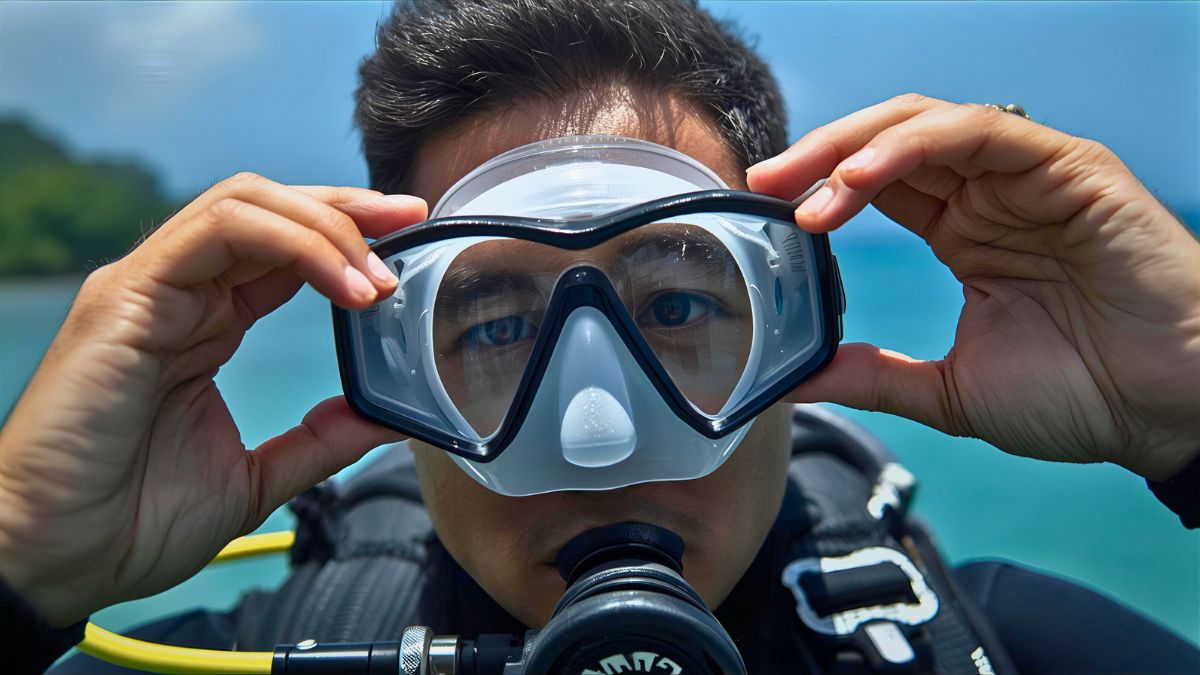
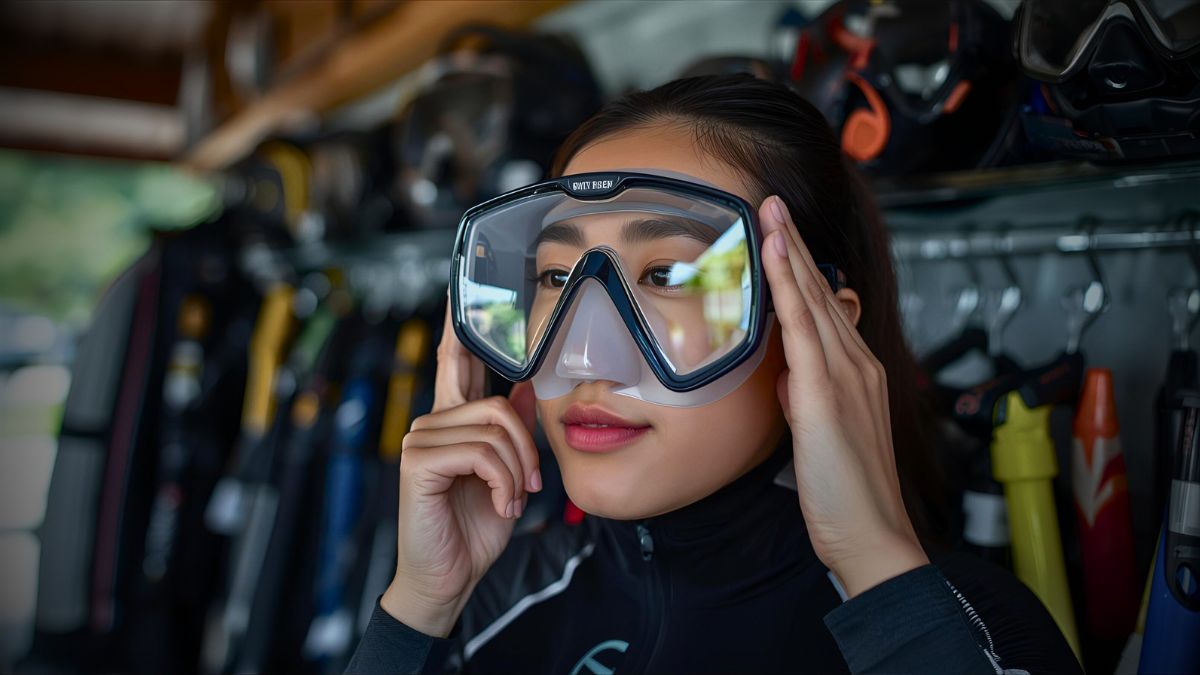
If you dive regularly and wear glasses in daily life, a prescription dive mask is the most practical investment you can make. It eliminates the contact lens considerations entirely and gives you clear vision from the moment you put the mask on.
There are two main approaches:
- Standard corrective lenses are pre-made lenses available for many popular mask models, typically in half-diopter increments from -1.0 to -8.0 for nearsightedness and +1.0 to +3.0 for farsightedness. They are not your exact prescription, but they are close enough for most divers and significantly cheaper than custom options. One important thing to check: not every mask model has corrective lenses available. Before buying a mask, ask at the dive shop whether that specific model supports corrective lenses. The lens must be manufactured for that mask – you cannot simply swap lenses between different mask models.
- Custom prescription lenses are made to match your exact prescription and fitted into your chosen mask. This gives you the most accurate vision correction available and is the right choice for divers with stronger prescriptions, astigmatism, or anyone who wants their underwater vision to match what they experience on land.
The one limitation of prescription masks: if your prescription changes, the lenses need to be replaced. For most adults whose prescriptions are stable, this is not a frequent issue.
Stick-On Magnifying Lenses – A Simple Solution for Reading Gauges
If your main challenge underwater is reading small text – your dive computer display, pressure gauge, or a slate – rather than seeing the reef clearly, stick-on magnifying lenses might be all you need.
These are small adhesive lenses that attach to the inside of any standard dive mask, acting as reading glasses for the lower portion of your field of view. They are available in magnification strengths from +1.0 to +3.0 in 0.25-diopter increments. They cost a fraction of a prescription mask and can be moved between masks.
Choose the right lenses
The limitation is obvious: they only help with close-up vision. They do not correct nearsightedness or give you a clear view of the reef at a distance. For divers with presbyopia who see distance well but struggle with close detail, they are a practical and affordable fix.
One practical note: in warm water, the adhesive can weaken over time. Check that the lenses are properly seated before each dive.
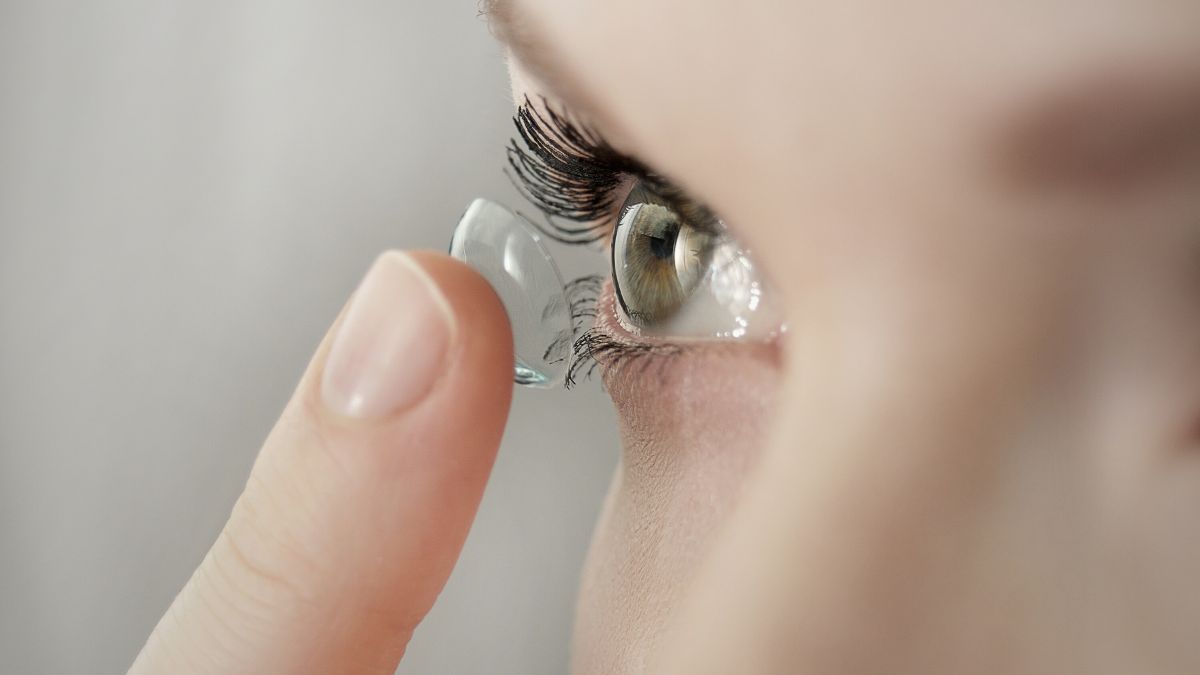
Ortho-K Lenses – Diving Without Any Correction at All
Orthokeratology lenses – usually called ortho-k – are rigid lenses worn overnight that temporarily reshape the cornea while you sleep. You remove them in the morning and, for most of the day, your vision is corrected without any lenses or glasses. The effect wears off after one to two days without the lenses, so you wear them regularly to maintain the correction.
For divers, this means you can enter the water with no contact lenses, no prescription mask, and still see clearly. It is an elegant solution for anyone who dives frequently and wants to eliminate the contact lens variables entirely.
Ortho-k is prescribed and fitted by an optometrist and is not suitable for all prescriptions – it works best for mild to moderate nearsightedness. If this option interests you, a conversation with your eye care professional is the right starting point.
Comparing Your Options
| Option | Best For | Cost | Main Consideration |
|---|---|---|---|
| Soft contact lenses | Occasional divers already wearing soft lenses daily | Low (existing lenses) | Risk of lens loss during mask flood; saltwater exposure |
| Prescription dive mask | Regular divers; anyone wanting hassle-free vision | Medium-High | Not all masks have corrective lens options; check before buying |
| Stick-on magnifiers | Divers who only struggle with close-up reading (gauges, computer) | Low | Only helps with close-up vision; can loosen in warm water |
| Ortho-K lenses | Frequent divers with mild to moderate nearsightedness | High (fitting + lenses) | Requires optometrist; not suitable for all prescriptions |
| No correction | Divers with mild nearsightedness (up to approx. -1.5) | None | Test in a pool first before relying on this at a dive site |
Frequently Asked Questions
Can I wear my regular glasses under a scuba diving mask?
No. Regular glasses frames break the seal of a diving mask, causing it to leak continuously. The frames also press uncomfortably against your face as pressure increases with depth. There is no modification that makes this work reliably. The alternatives – contact lenses, prescription dive masks, or stick-on magnifiers – all work much better.
What type of contact lenses are safe for scuba diving?
Only soft contact lenses are recommended for scuba diving. The Divers Alert Network (DAN) advises against hard or rigid gas-permeable lenses because they do not allow nitrogen to escape from the surface of the eye during ascent, which can cause bubbles to form under the lens and lead to blurred vision and discomfort. Daily disposable soft lenses are the best option: use a fresh pair for each dive day and discard them afterward.
What happens if I lose a contact lens during a dive?
Close that eye, signal your buddy, and end the dive calmly. Most divers can surface safely with one eye closed. Do not attempt to reinsert a lens underwater – it is not practical and introduces contamination risk. Always bring a backup pair of glasses on the boat so you can see clearly on the surface if you lose a lens.
Do I need a prescription dive mask if my vision impairment is minor?
Not necessarily. Water magnifies objects by approximately one-third due to refraction, which means divers with mild nearsightedness often see well enough without any correction. If your prescription is around -1.5 diopters or less, try diving in a pool without your lenses first. If you can read your gauges and see clearly enough to enjoy the dive, you may not need any vision correction underwater at all.
Are there contact lenses specifically made for scuba diving?
No lenses are specifically manufactured for scuba diving, but daily disposable soft lenses are the practical standard among divers. Some divers use extended-wear silicone hydrogel lenses, which have higher oxygen permeability, but daily disposables remain the most convenient option because you simply replace them after each dive day without worrying about cleaning or contamination from saltwater exposure.
Sources and References
- DAN: Wearing Contact Lenses While Diving – official DAN recommendations
- PADI: Vision and Scuba Diving – guidance on vision correction options for divers
- Wikipedia: Orthokeratology – overview of ortho-k lenses
- Wikipedia: Diving Mask – technical overview of diving mask design