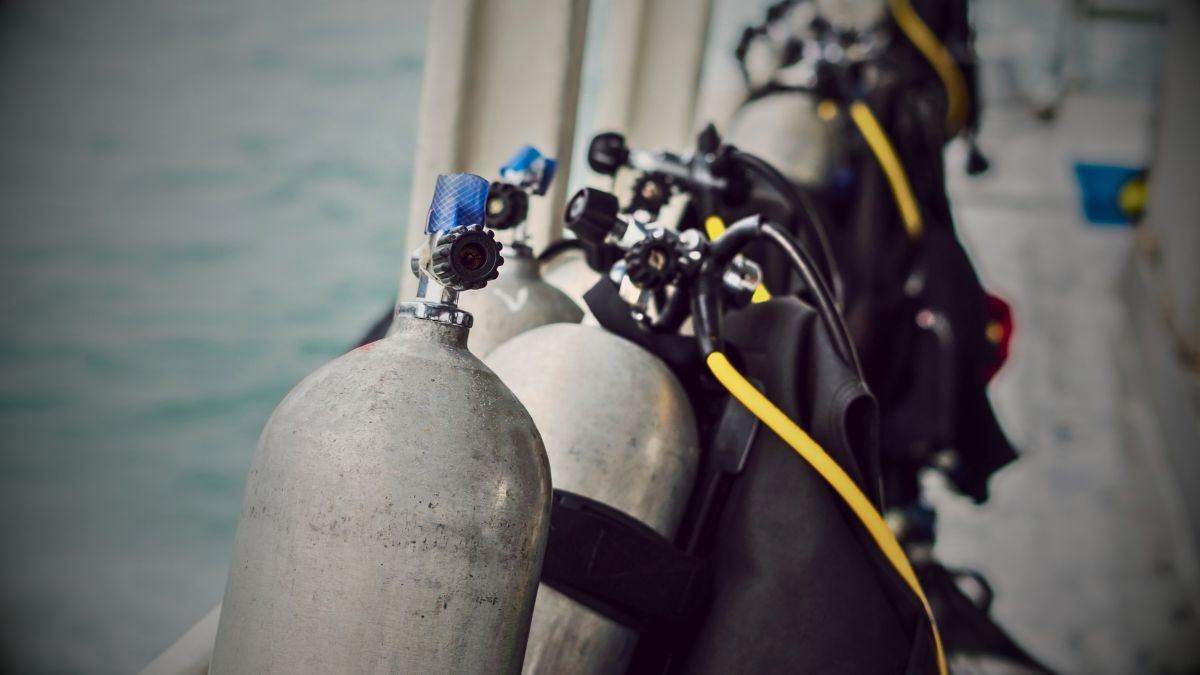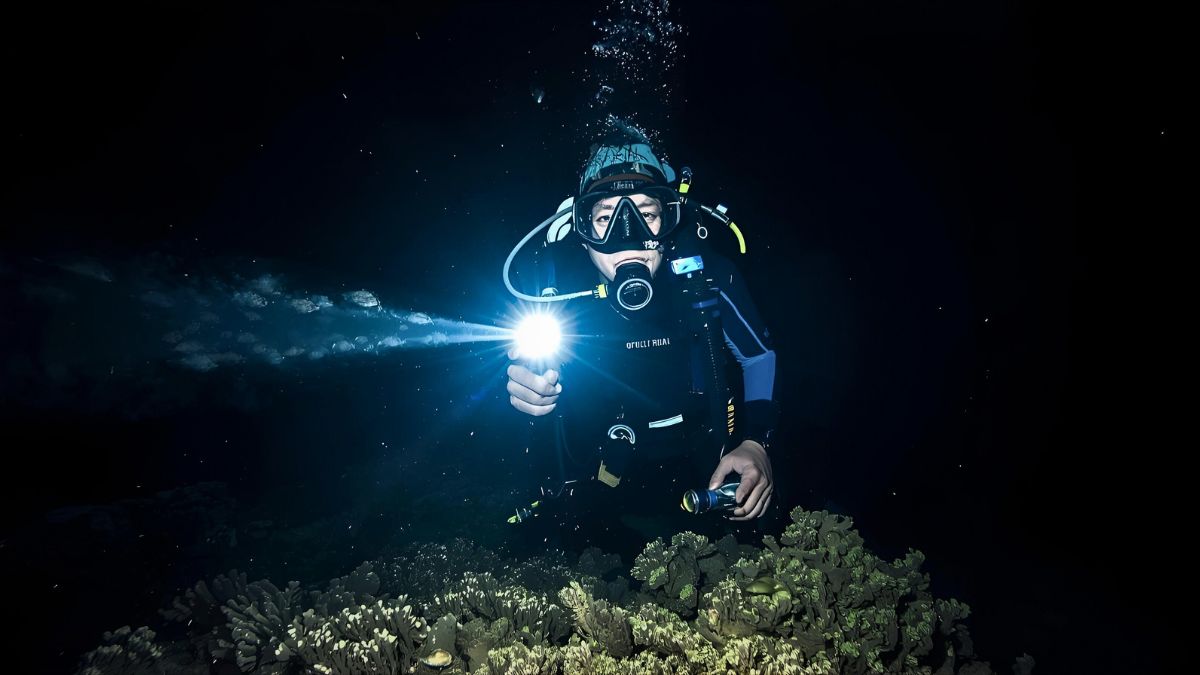
A scuba diving tank is the one piece of gear that makes everything else possible. No tank, no dive. It sounds obvious, but it’s surprising how little attention diving courses actually pay to the cylinder strapped to your back. We spend hours talking about buoyancy, hand signals, and how to clear a mask, and then breeze past the thing that literally keeps you alive underwater.
I’ve been teaching diving for many years. I’ve filled hundreds of tanks, explained their markings to confused students, and watched people pick a cylinder the way they pick a shopping cart, just grabbing the nearest one. This article is my attempt to fix that. By the end, you’ll know exactly what a scuba diving tank is, how it works, and how to choose and care for one.
Let’s get into it.
What Is a Scuba Diving Tank?
A scuba diving tank (also called a diving cylinder, scuba cylinder, or dive bottle) is a high-pressure container that holds compressed breathing gas. That gas is what you breathe underwater through your regulator.
The word SCUBA itself stands for Self-Contained Underwater Breathing Apparatus. The “self-contained” part is the key. The tank on your back carries everything you need to breathe. You’re not connected to a hose on the surface. You’re free to move, explore, and go wherever the dive takes you.
The concept is simple: compress a large volume of gas into a small, strong container, and then release it slowly and safely through a regulator as you breathe. The technology behind it, though, has evolved quite a bit since the first open-circuit scuba gear appeared in the 1940s.
Did you know? A standard 80 cubic foot scuba tank holds enough compressed air to fill an average phone booth. That air is packed down to around 3,000 PSI, roughly 200 bar, which is about 200 times normal atmospheric pressure.
What Are Scuba Tanks Made Of?
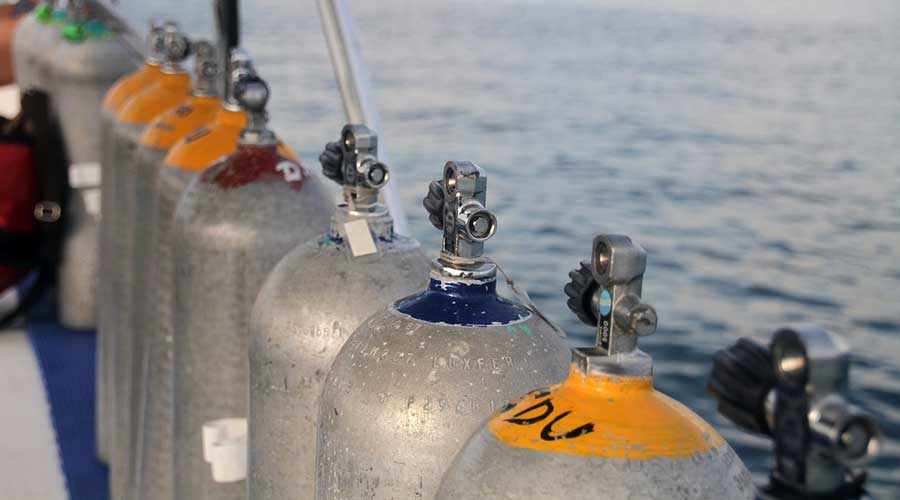
Walk into almost any dive center in the world, and you’ll find aluminum tanks. They’re the industry standard, especially for recreational diving. But aluminum isn’t the only option. Here’s what you need to know about the three main materials.
Aluminum Scuba Tanks
Most diving cylinders are made from an aluminum alloy called 6061-T6. This alloy contains aluminum, magnesium, and silicon, and it’s been the go-to material for dive cylinders for decades. It’s light enough to handle, resistant to corrosion in salt water, and affordable to produce, which is why dive centers love it.
Aluminum tanks do have one quirk worth knowing: their buoyancy changes during a dive. A full aluminum tank is slightly negatively buoyant (it sinks). As you use up the air, the tank becomes positively buoyant (it wants to float). By the end of a dive, an empty aluminum 80 can be around 4–5 pounds positive. That’s why you’ll often hear your instructor remind you to add a little extra lead when diving with aluminum.
Steel Scuba Tanks
Steel cylinders are the choice of many experienced and technical divers. They’re made from chrome-molybdenum steel alloy, which is extremely strong. Because steel is stronger than aluminum, manufacturers can use less material, which means a steel tank of the same capacity is actually smaller and often lighter than its aluminum equivalent. That surprises a lot of people.
Steel tanks also handle buoyancy better. They start the dive negatively buoyant and become neutral, not positive, as the air is consumed. This means you need less lead on your belt, which is a real advantage, especially in a drysuit.
The downside? Steel corrodes. Not just on the outside, but also from the inside if moisture gets in. A steel tank that isn’t cared for properly can rust from the inside out, and that’s a serious problem. Steel tanks also cost significantly more than aluminum ones, which is why dive centers almost always choose aluminum for their fleet.
Carbon Fiber Cylinders
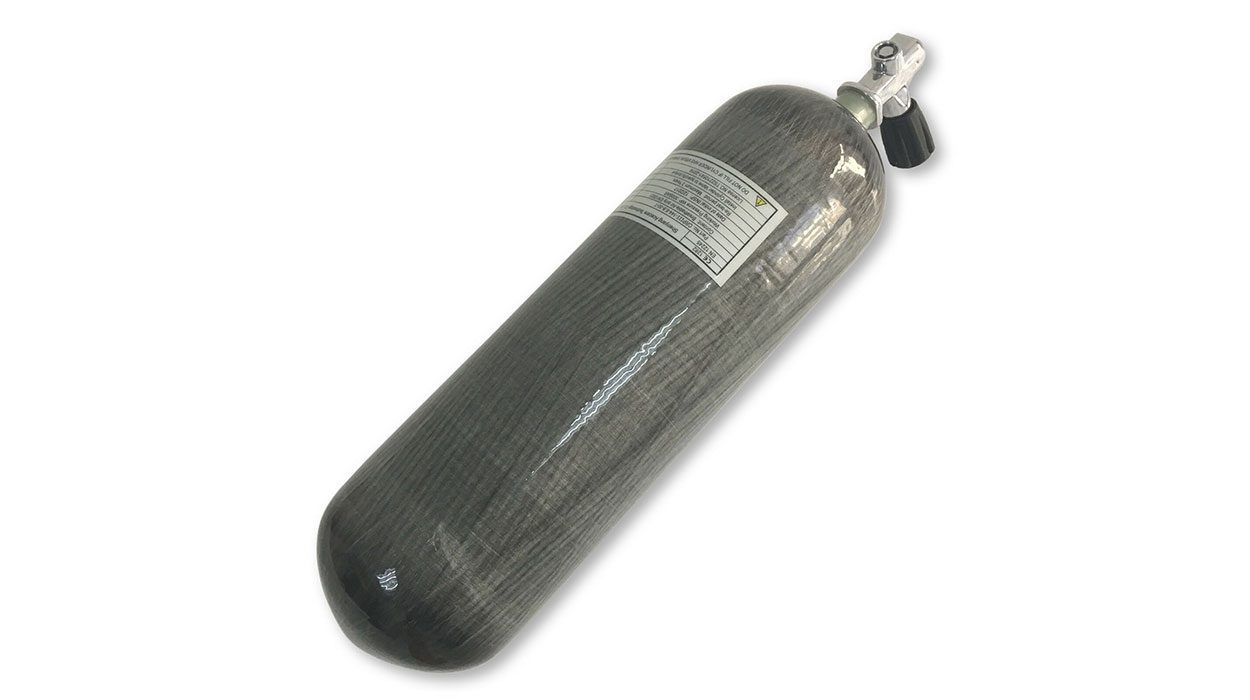
I’ll mention these mostly as a curiosity. Carbon fiber tanks exist, they’re extremely light, and they were originally designed for paintball before making their way into diving. They’re not widely used, and honestly, I’m cautious about them. Among the divers and instructors I know, there’s a shared skepticism about putting your life in the hands of a material that doesn’t behave like aluminum or steel under high pressure and saltwater exposure. If you’re considering one, do your research carefully.
Aluminum vs. Steel Scuba Tank: Which One Should You Choose?
Here’s a simple comparison to help you decide:
| Feature | Aluminum Tank | Steel Tank |
|---|---|---|
| Weight on land | Heavier for same capacity | Lighter for same capacity |
| Buoyancy (full) | Slightly negative | Negative |
| Buoyancy (empty) | Positive (floats) | Neutral |
| Lead needed | More | Less |
| Corrosion risk | Low (surface oxidation) | Higher (internal + external rust) |
| Durability | Good, softer metal | Excellent, dents less easily |
| Price | Lower | Higher |
| Best for | Recreational divers, warm water | Technical divers, drysuit diving |
For most recreational divers, aluminum is the practical choice. It’s what you’ll rent at dive centers everywhere. If you’re diving frequently, wearing a drysuit, or going into technical diving, steel is worth the investment.
Scuba Tank Sizes and Capacity
This is where things get a little confusing, because the diving world uses two different measurement systems depending on where you are.
In North America, tank capacity is measured in cubic feet (cu ft). In Europe and most of the rest of the world, it’s measured in liters (L), referring to the internal water volume of the cylinder. Both systems describe the same thing, just in different units.
Here’s a quick reference table of the most common scuba tank sizes:
| Tank Size (metric) | Tank Size (imperial) | Working Pressure | Gas Volume (approx.) | Common Use |
|---|---|---|---|---|
| 8 L | ~50 cu ft | 200 bar / 3000 PSI | 1,600 L of air | Children, shallow dives |
| 10 L | ~63 cu ft | 200 bar / 3000 PSI | 2,000 L of air | Smaller divers, short dives |
| 12 L | ~80 cu ft | 200 bar / 3000 PSI | 2,400 L of air | Most common recreational size |
| 15 L | ~100 cu ft | 232 bar / 3400 PSI | 3,480 L of air | Larger divers, longer dives |
| 18 L | ~130 cu ft | 232–300 bar | 4,000+ L of air | Technical diving |
The 12-liter (80 cu ft) cylinder is by far the most common in the world. It’s the tank you’ll strap on during almost every recreational dive course and guided dive trip.
Pony Bottles and Bailout Cylinders
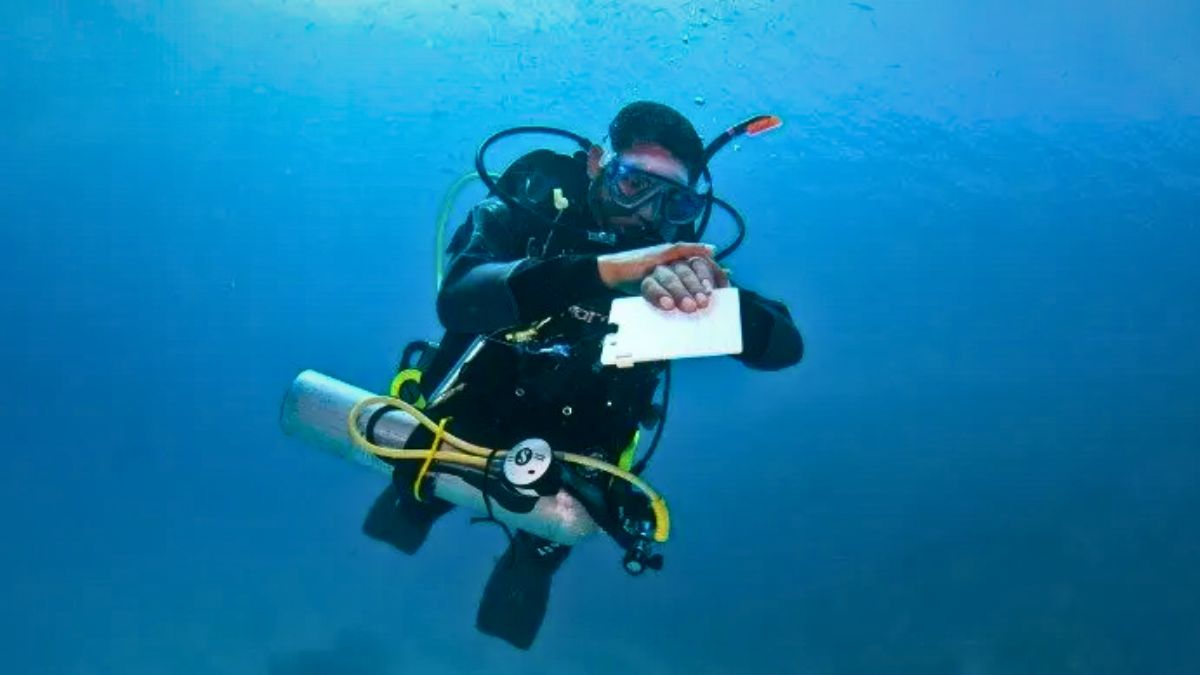
A pony bottle is a small secondary cylinder, typically between 1 and 4 liters (6 to 40 cu ft), that serves as an emergency air supply. It has its own regulator and pressure gauge, completely independent of your main tank.
If your main cylinder develops a problem mid-dive, the pony bottle gives you enough air to make a safe, controlled ascent. They’re popular among solo divers, technical divers, and instructors who want that extra safety margin. Think of it as a spare tire. You hope you never need it, but you’re very glad it’s there when you do.
Scuba Tank Pressure: PSI and Bar Explained
The pressure rating of a tank tells you how much gas it can hold safely. Higher pressure means more gas in the same-sized cylinder. There are two units used:
- bar: used in Europe and most of the world
- PSI (pounds per square inch): used in North America
The conversion is simple: 1 bar = approximately 14.5 PSI.
Most recreational scuba tanks operate at one of three working pressures:
- 200 bar (2,900 PSI): common in Europe, often used with 12 L cylinders
- 232 bar (3,350 PSI): very common globally, sometimes rounded to “230 bar”
- 300 bar (4,350 PSI): high-pressure tanks, more common in technical diving
Tanks are also classified as low pressure (LP) or high pressure (HP). LP tanks generally fill to around 200 to 232 bar, while HP tanks go up to 300 bar. The higher the pressure, the more gas fits inside, but the tank walls also need to be thicker and stronger to handle it safely.
Scuba Cylinder Valves: DIN vs. Yoke (K-Valve)
The valve is the connection point between the tank and your regulator. There are two main types, and which one you need depends on where you dive in the world.
Yoke Valve (K-Valve / A-Clamp)
The yoke valve (sometimes called a K-valve or A-clamp) is the standard in North America, the Caribbean, and many tropical dive destinations. The regulator clamps over the valve opening from the outside, and an O-ring creates the seal between them. It’s simple, quick to attach, and widely available.
The downside is that the O-ring sits on the outside of the connection, where it’s exposed to damage, dirt, and pinching. It’s generally rated to a maximum of 232 bar.

DIN Valve
DIN valves (short for Deutsche Industrie Norm) are the standard in Europe and increasingly popular worldwide. Instead of clamping over the valve, the regulator screws directly into it. The O-ring is captured inside the connection, which protects it from damage and creates a significantly more secure seal.
DIN valves are rated for either 232 bar or 300 bar, making them the preferred choice for high-pressure tanks and technical diving. Many experienced divers prefer DIN even for recreational diving because of the improved reliability.
A quick practical note: if you dive with your own regulator in places where tanks only have yoke valves, you can use a DIN-to-yoke adapter. Problem solved.
What Gas Is Inside a Scuba Tank?
Here’s a myth worth clearing up. Non-divers often call it an “oxygen tank.” That drives divers a little crazy, and for good reason: it’s almost never pure oxygen.
Standard recreational diving uses compressed air: the same air we breathe on the surface, compressed to fit inside the cylinder. It’s roughly 21% oxygen, 78% nitrogen, and small amounts of other gases. Breathing pure oxygen at depth would actually be toxic. At just 6 meters (20 feet), pure oxygen becomes dangerous.
Beyond compressed air, there are a few other breathing gases worth knowing about:
- Nitrox (Enriched Air / EANx): air with a higher oxygen content, typically 32% or 36%. Nitrox reduces nitrogen absorption, which means longer bottom times and shorter surface intervals. It’s widely available and has its own PADI certification. The tank is usually marked with a green and yellow “Enriched Air” sticker.
- Trimix: a mixture of oxygen, nitrogen, and helium, used in technical diving at depths where nitrogen narcosis becomes a problem. Helium is inert at conventional scuba depths, so replacing some nitrogen with helium keeps the diver clear-headed at depth.
- Pure oxygen: used in technical diving during decompression stops at very shallow depths (usually 6 meters / 20 feet or shallower), where breathing pure O2 speeds up the off-gassing of nitrogen from the body.
For recreational diving, you’ll almost always be breathing compressed air or nitrox.
Fun fact: Nitrox diving was once considered an “advanced” technique reserved for experienced divers. Today, the PADI Enriched Air Diver course is one of the most popular specialty certifications in the world, and nitrox tanks are available at most dive centers globally.
How Is a Diving Tank Built?
The anatomy of a scuba tank is simple. From top to bottom, every cylinder has four main parts:
- Neck [1]: the narrow top section where the valve is threaded in. The threads here are critical . Any damage to them is a serious problem.
- Cup / Shoulder [2]: the curved upper section just below the neck. This is where all the important markings are stamped.
- Shell [3]: the main cylindrical body of the tank that holds the gas.
- Bottom [4]: the base of the cylinder. Aluminum tanks usually have a rounded (domed) bottom and come with a rubber boot so they can stand upright. Steel tanks often have a flat or slightly concave bottom.
The valve screws into the neck and is sealed with an O-ring. The regulator attaches to the valve, reduces the high tank pressure to a breathable level, and delivers air to you on demand.

Markings on the Cylinder Shoulder
Every tank has a set of stamps on the shoulder (cup) that tell you everything important about it. Here’s what to look for:
- Material and manufacturing standard: for example, “AL” for aluminum or “FE” for steel, plus the relevant production standard (DOT, EN, CE, etc.)
- Working pressure: the maximum pressure the tank is rated for (e.g., 207 bar or 3,000 PSI)
- Water capacity: the internal volume in liters volume in liters (e.g., 12.0 L)
- Serial number: a unique identifier for the cylinder
- Manufacture date: month and year the tank was made
- Hydrostatic test date: the date of the last pressure test and the next one due
Before getting a tank filled, always glance at these markings. If the hydrostatic test is overdue, a responsible fill station will refuse to fill it.
How Much Does a Scuba Tank Weigh?
Weight varies by size and material, but here are some ballpark figures for the most common recreational tanks:
- Aluminum 80 (12 L): around 14 kg (31 lbs) when full
- Steel 12 L: around 13–14 kg (28–30 lbs) when full, but feels lighter in water due to better buoyancy
- Aluminum 63 (10 L): around 11 kg (24 lbs) when full
The tank feels heavier on land than in the water, obviously. But hauling gear from a boat or a car to the water is real work, and size matters if you’re a smaller diver or traveling long distances between the parking lot and the entry point.
How to Take Care of Your Scuba Diving Tank
A well-maintained diving cylinder can last decades. A neglected one can become dangerous. Here’s the short version of what proper care looks like.
- After every dive in salt water: rinse the tank and especially the valve with fresh water. Salt is corrosive, and it gets into every gap it can find. Don’t skip this step.
- Never leave a tank completely empty. An empty cylinder can allow moisture to enter, which leads to internal corrosion. Always keep at least 50 bar (around 700 PSI) in the tank. This is a rule I’m strict about with my own equipment, and I expect the same from anyone using tanks at our dive center.
- Avoid heat and direct sunlight. High temperatures raise the pressure inside the cylinder, which is both a safety issue and causes accelerated wear. Don’t leave tanks sitting in a hot car or direct sun.
- Handle with care. Dropping a tank on a boat deck or concrete can cause dents, cracks, or valve damage. Even small impacts can compromise structural integrity over time.
- Inspect the O-rings regularly. The O-ring at the valve is your first line of defense against air leaks. Check it before every dive. If it’s cracked, dry, or deformed, replace it.
How to Store Scuba Diving Cylinders
Storage is something a lot of divers don’t think about until they pull a tank out after several months and find a problem. Here’s how to do it right:
- Store tanks in a cool, dry, well-ventilated place, not in a hot garage, a damp basement, or outdoors where they’re exposed to weather.
- Keep tanks upright or on their side in a proper tank rack. Never leave them standing unsupported where they can fall over.
- Leave at least 50 bar of pressure inside, not zero and not fully pressurized.
- Before putting tanks into long-term storage, wash them thoroughly, inspect the valve, and check the current test dates.
Scuba Tank Inspections and Testing
Scuba cylinders are pressure vessels. They hold enormous amounts of energy, and they need to be inspected regularly to ensure they’re safe. There are two types of mandatory inspections.
Visual Inspection
A visual inspection (VI) is a non-destructive examination of the tank’s interior and exterior. An inspector removes the valve, looks inside with a light, and checks for corrosion, pitting, cracks, debris, and any signs of damage. The exterior is also checked for dents, gouges, heat damage, and compromised coatings.
In most countries, visual inspections are required annually. A current inspection sticker on the tank shows when the last inspection was done and when the next one is due. No sticker, no fill, at least at any responsible dive center or fill station.

Hydrostatic Testing
A hydrostatic test is a pressure test. The cylinder is filled with water and pressurized to 5/3 of its working pressure, well beyond what it would ever experience in normal use. Inspectors measure how much the cylinder expands under that pressure and whether it returns to its original shape. A tank that expands too much or doesn’t recover properly fails the test and must be removed from service.
Hydrostatic testing intervals vary by country:
- Every 5 years: UK, EU, and most of the world
- Every 2.5 years: some jurisdictions require this for older tanks
- Every 5 years: United States (DOT standard)
The test date is stamped into the shoulder of the cylinder. If you’re buying a used tank, this is one of the first things to check.
Did you know? A properly maintained aluminum scuba tank can remain in service for 20 years or more. Steel tanks, with good maintenance, can last even longer. The limiting factor is almost always corrosion or mechanical damage, not the material wearing out.
Can a Scuba Diving Cylinder Explode?
This is a question I get often, usually from new students who look nervously at the tank before their first dive.
The honest answer: yes, under extreme circumstances, a tank can fail catastrophically. But this is extraordinarily rare and almost always the result of severe neglect, improper filling, or significant external damage. A properly maintained cylinder that goes through regular inspections is extremely safe.
Modern scuba cylinders are designed with significant safety margins. They’re tested at pressures well above their working rating. Valves include burst discs, which are thin copper discs that rupture and vent the gas safely if pressure rises too high, preventing an actual explosion.
The practical risk for a recreational diver using a well-maintained tank from a reputable dive center is essentially zero. What you should be far more worried about is running out of air because you didn’t monitor your SPG.
Can I Travel with a Scuba Tank on a Plane?
Yes, but with strict conditions. The IATA (International Air Transport Association) rules are clear: you can transport a scuba cylinder as checked luggage, but only if it is completely empty and the valve is either removed or left fully open so airline security can verify there is no residual pressure inside.
A few practical tips:
- Remove the valve or leave it open and document that the tank is empty.
- Check your specific airline’s policy, as some carriers have additional restrictions.
- Most divers find it easier to rent tanks at their destination rather than traveling with their own.
- Regulators, on the other hand, travel just fine in carry-on or checked luggage.
Should You Buy a Used Scuba Tank?
This comes up a lot among divers who are building their own equipment collection. My answer: it depends, and you need to be careful.
A used tank can be a perfectly good purchase, if you do your homework. Before buying, check:
- The manufacture date. Older tanks may be approaching the end of their serviceable life
- The most recent hydrostatic test date and whether it’s current
- The visual inspection sticker: is it within the past 12 months?
- The exterior condition: any significant dents, deep scratches, or signs of heat damage are red flags
- Whether the valve functions smoothly and has an intact O-ring
If a seller won’t let you inspect the tank or can’t provide its service history, walk away. A used tank without documentation is not worth the risk.
Frequently Asked Questions
How much does a scuba diving tank cost?
A new aluminum 80 (12 L) cylinder typically costs between $150 and $300 USD, depending on the brand and region. Steel tanks are more expensive, often $300–$500 or more. Factor in the cost of a first visual inspection and any accessories (boot, handle, valve cap) when budgeting.
How do I know if a scuba tank is full?
Check the SPG (submersible pressure gauge) or the integrated pressure gauge on the fill station. A full tank should show its working pressure, typically 200, 232, or 300 bar, depending on the cylinder. Never guess; always verify before a dive.
What is a burst disc and why does it matter?
A burst disc is a thin copper disc built into the valve. If the tank is overfilled or exposed to extreme heat and the pressure rises dangerously high, the burst disc ruptures and vents the gas safely, preventing a catastrophic failure. It’s a one-time safety device. Once it blows, the valve needs to be serviced.
Can I use any regulator with any scuba tank?
Not quite. The valve type matters. If your regulator has a yoke (A-clamp) first stage, it only works with yoke valves. If it has a DIN first stage, it only works with DIN valves. Many regulators come with adapters, or you can buy one separately to switch between the two systems.
What is the difference between a scuba tank and an oxygen tank?
In everyday language, many non-divers call scuba cylinders “oxygen tanks.” This is inaccurate. Recreational scuba tanks contain compressed air (21% oxygen, 78% nitrogen) or enriched air nitrox, not pure oxygen. Breathing pure oxygen at depth is toxic and can cause serious injury or death.
Let’s Recap: Everything About Scuba Diving Tanks
A scuba diving tank is simple in concept and remarkably well-engineered in practice. It’s a high-pressure cylinder that stores your breathing gas, connects to your regulator via a valve, and makes every dive possible. Understanding what it’s made of, how it works, and how to take care of it makes you a better, safer, and more confident diver.
The short version: aluminum tanks are the practical workhorse for recreational diving. Steel tanks are preferred by experienced and technical divers. The 12-liter (80 cu ft) cylinder is the global standard. DIN valves are more secure; yoke valves are more widespread. Inspect your tanks annually, test them every five years, and never leave them completely empty.
If you’re thinking about buying your own equipment and not sure where to start, I’d suggest talking to your dive instructor or a trusted dive shop before making a decision. The right tank for you depends on where you dive, how often, and what your goals are.