The first time I used an underwater scooter during a cave dive in Mexico, I covered more distance in 20 minutes than I normally would in an entire dive. That experience changed how I think about underwater exploration.
An underwater scooter, also called a diver propulsion vehicle or DPV, seems like a luxury until you actually try one. After training hundreds of divers and logging thousands of dives across tropical reefs, cold European lakes, and flooded mines, I can tell you that DPVs open up possibilities that transform certain types of diving.
In this guide, I share everything you need to know about underwater scooters. From how they work and certification requirements, to choosing the right model and staying safe. Whether you are a curious recreational diver or considering technical applications, this guide will help you decide if DPV diving fits your goals.
What Is an Underwater Scooter?
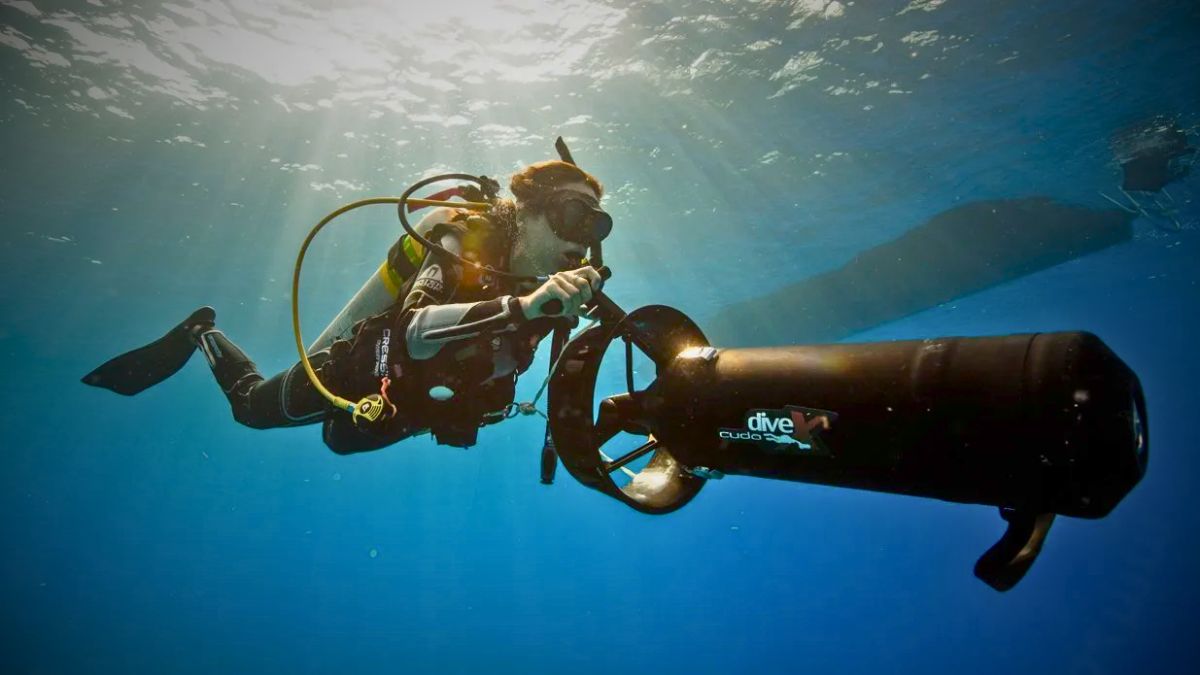
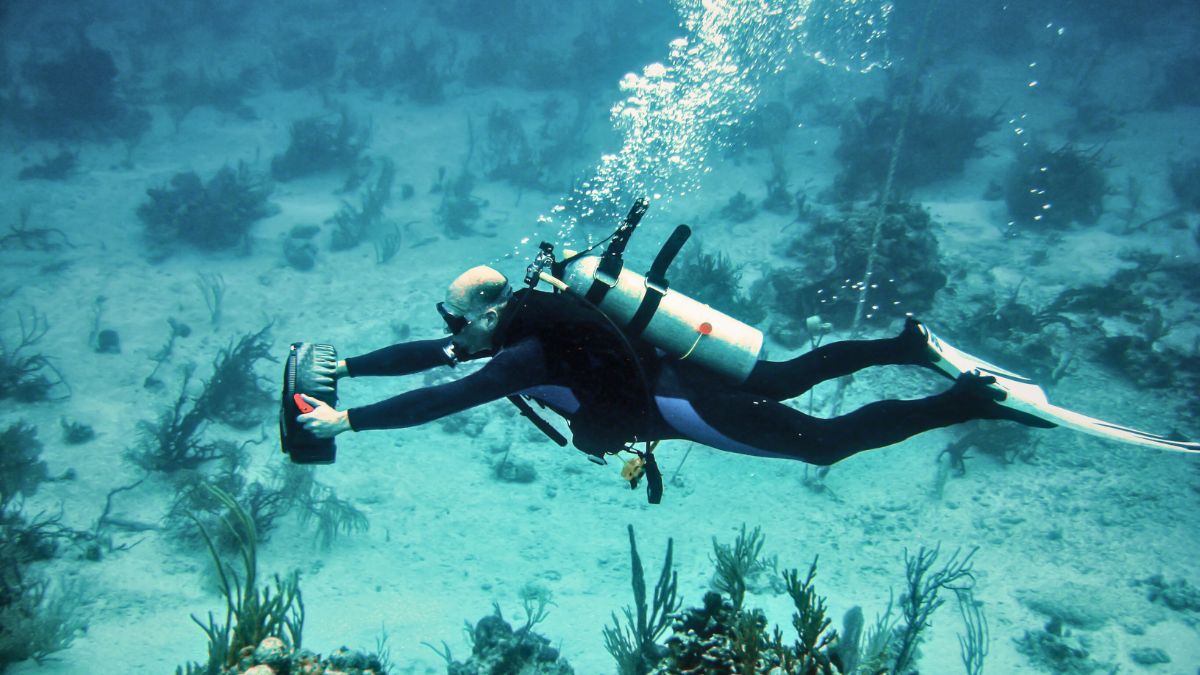
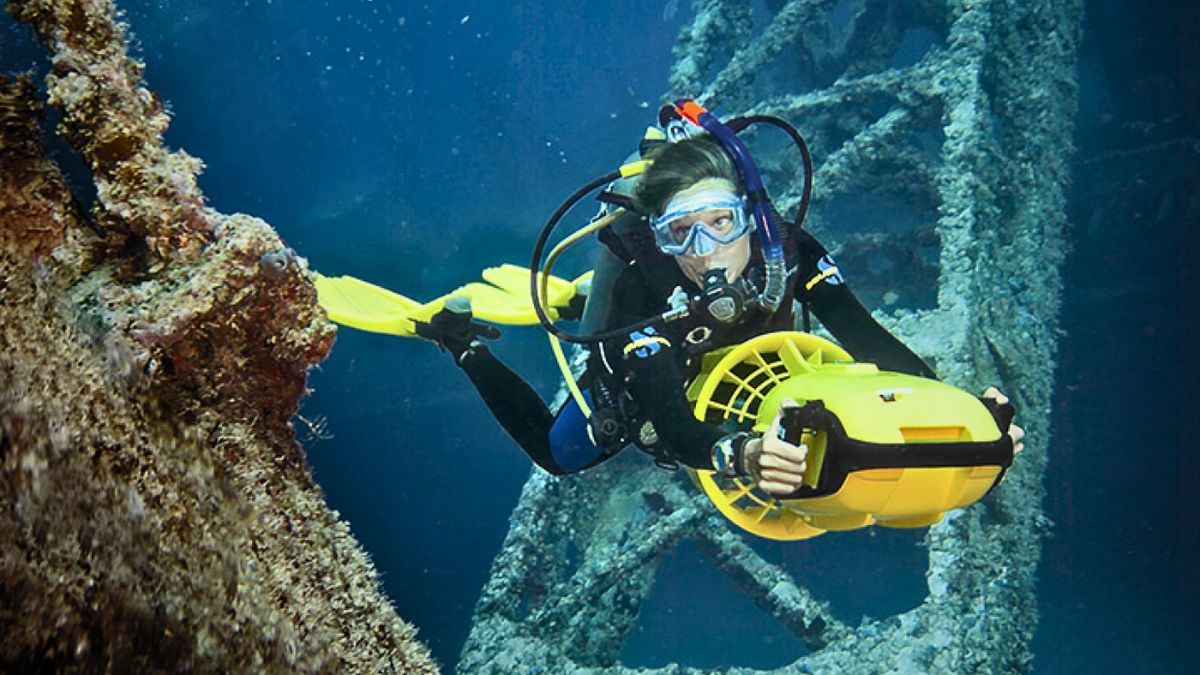
An underwater scooter is a battery-powered device that propels divers through the water without constant finning. You hold onto it, press a trigger, and the motorized propeller pulls you forward.
These devices go by several names. The diving industry calls them diver propulsion vehicles or DPVs. Recreational users often say sea scooter or dive scooter. Military forces use swimmer delivery vehicle (SDV) for larger versions designed to transport combat divers.
The purpose remains consistent across all names. DPVs extend your underwater range, reduce physical exertion, and let you see more during a single dive.
How Does a Diver Propulsion Vehicle Work?
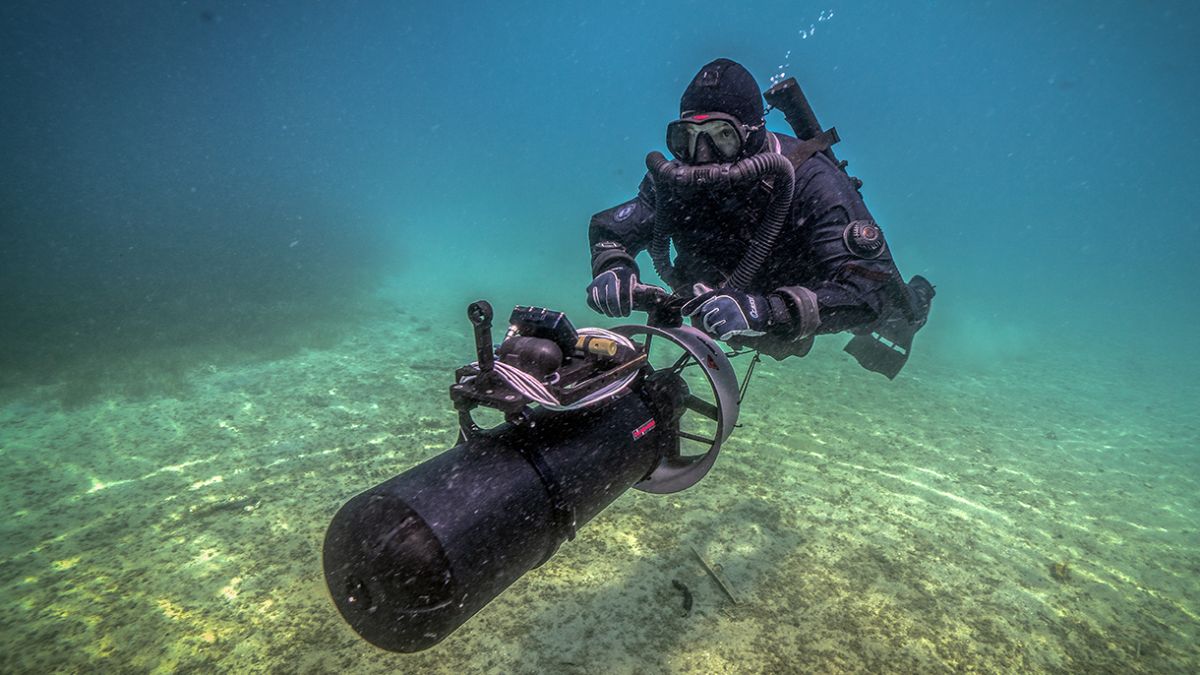
The mechanics are straightforward. Inside a pressure-resistant, watertight casing sits an electric motor powered by rechargeable batteries. This motor drives a propeller, creating thrust that pulls you through the water.
Most recreational underwater scooters feature two handles on either side. You grip these handles and control direction by tilting the scooter up, down, left, or right. A trigger on one handle activates the motor.
The design includes important safety features. The propeller needs protection so it cannot injure divers or marine life. The scooter should not start accidentally. It must remain close to neutrally buoyant so it does not sink or rocket upward if released.
What Are the Different Names for Underwater Scooters?
When researching DPVs, you will encounter various terms:
- DPV (Diver Propulsion Vehicle) standard industry term used by PADI, SSI, and other training agencies.
- Underwater scooter and sea scooter are common consumer terms, especially for recreational models.
- Scuba scooter or dive scooter emphasizes the connection to scuba diving.
- Swimmer Delivery Vehicle (SDV) refers to larger military versions.
For practical purposes, these terms are interchangeable when discussing recreational diving equipment.
Why Do Divers Use Underwater Scooters?
The appeal goes beyond moving faster underwater. Having used DPVs in environments ranging from warm Costa Rican waters to cold lakes and tight cave passages, I have seen firsthand how they change diving possibilities.
What Are the Main Advantages of Diving with a DPV?
- Extended Range: Without a scooter, your range depends on swimming distance before air runs low. With a DPV, you reach sites impossible to access by finning.
- Reduced Air Consumption: Swimming burns through breathing gas faster. When a scooter handles propulsion, breathing rates drop. Many divers report using 20-30% less air on DPV dives.
- Less Physical Fatigue: Long surface swims exhaust you before the dive begins. A DPV eliminates that problem.
- Access to Challenging Sites: Some dive sites feature strong currents or require long transits. A DPV makes these locations accessible.
- Pure Fun: Gliding through water at speed with marine life passing by is thrilling. The fun factor alone makes DPV diving worth trying.
Did you know? During World War II, Italian frogmen used early diver propulsion vehicles called “Maiale” to sink over 100,000 tons of Allied shipping in the Mediterranean. These human torpedoes were the ancestors of today’s recreational underwater scooters.
When Is an Underwater Scooter Most Useful?
- Shore Dives with Long Surface Swims: Many shore sites require swimming hundreds of meters before descending. A scooter handles this quickly.
- Wreck Exploration: Large shipwrecks can be impossible to tour in a single dive when swimming. A DPV lets you see the entire perimeter.
- Current Diving: Fighting current exhausts your air and energy. A scooter lets you move upstream when needed.
- Cave and Cavern Diving: As a technical diver with cave experience, I can confirm that DPVs are essential for serious cave penetration where long distances require motorized propulsion.
- Underwater Photography: Smooth, steady movement creates better footage than jerky finning motion.
A Brief History of Diver Propulsion Vehicles
The story begins during World War II. The Italian Navy developed “Siluro a Lenta Corsa” (slow-running torpedo), nicknamed “Maiale” by operators. These manned torpedoes carried two frogmen to enemy harbors to attach explosives to ships.
The British developed their own “Chariots” after Italian operatives successfully attacked British battleships in Alexandria harbor in 1941.
After the war, commercial diving operations adopted motorized propulsion for inspections and construction. By the 1970s and 1980s, recreational models began appearing.
The real transformation came with lithium-ion batteries in the 2000s and 2010s. Modern batteries pack more power into smaller packages. Today, you can buy a capable recreational DPV that fits in carry-on luggage.
Who Can Use an Underwater Scooter?
One question I hear frequently from divers I train is whether special certification is required. The answer has nuance.
Do You Need Certification to Dive with a DPV?
No specific certification is legally required. However, most dive operators only allow DPV use by divers holding at least PADI Open Water or equivalent.
The practical requirement is competent diving with solid fundamentals. Buoyancy control becomes critical because a DPV can mask poor buoyancy while moving. When you stop, problems become immediately apparent.
From my experience training hundreds of divers, I recommend having at least 25 logged dives before attempting DPV diving. This ensures automatic buoyancy adjustments and situational awareness are developed.
For divers under 18, minimum age is typically 12 years with appropriate supervision.
What Is the PADI Diver Propulsion Vehicle Course?
While not mandatory, taking a DPV specialty course is highly recommended. As a 5-time PADI Elite Instructor, I have taught this specialty many times and seen how proper training prevents problems.
PADI DPV Course Prerequisites
At least 12 years old with PADI Open Water certification or equivalent.
Course Structure
Knowledge development plus two open water training dives.
What You Learn
Pre-dive equipment checks and maintenance. Proper entry and exit techniques. Descents, ascents, and depth control. Maneuvering skills and buddy procedures. Handling problems like entanglement or battery failure. Planning DPV dives including gas management.
Certification Benefits
The first dive can count toward Advanced Open Water. The specialty counts toward Master Scuba Diver rating.
The course typically takes one to two days. The investment in training pays off in safety and confidence.
How to Choose the Right Underwater Scooter
Selecting the right DPV requires matching features to your needs.
What Depth Rating Do You Need?
Match capability to your diving activities. Recreational depths (18-30 meters) work fine with 40-meter rated scooters. Technical divers need units rated for maximum planned depth plus safety margin.
How Important Is Battery Life?
For typical recreational diving, 45-60 minutes provides plenty of capacity. Longer penetration dives or cave exploration require 90+ minute capacity or swappable batteries.
Lithium-ion batteries offer better power-to-weight ratios and are often airline-approved for carry-on transport.
Did you know? Most recreational underwater scooters reach 3-5 km/h (about 2-3 mph). That is roughly 2-3 times faster than typical swimming speed. Professional DPVs can exceed 8 km/h.
Should You Consider Weight and Portability?
If you travel frequently, a lightweight scooter under 5 kg that fits in carry-on luggage offers convenience. Local divers can accommodate heavier, more powerful units.
What Buoyancy Characteristics Should You Look For?
- Neutrally Buoyant: Stays at whatever depth you leave it. Most versatile for scuba.
- Positively Buoyant: Floats toward surface. Ideal for snorkeling.
- Negatively Buoyant: Sinks slowly. Preferred by some technical divers.
For general recreational use, neutral or slightly positive buoyancy works best.
How Much Do Underwater Scooters Cost?
- Entry Level ($300-$600): Basic scooters for snorkeling and shallow diving.
- Mid-Range ($600-$1,200): Quality recreational DPVs. The sweet spot for most divers.
- Professional ($1,500-$3,500+): Technical-grade units for demanding applications.
Buy the best quality within your actual needs. A $700 mid-range scooter serves most recreational divers better than a $300 entry model or an expensive $2,500 unit you will never fully utilize.
Safety Considerations for DPV Diving
Operating a scooter adds complexity and potential hazards. Understanding risks is essential.
What Are the Main Risks of Diving with an Underwater Scooter?
- Rapid Ascent or Descent: A DPV can change depth quickly. Pointing upward at speed risks decompression sickness or lung injury.
- Buoyancy Masking: While moving, thrust compensates for improper buoyancy. Stop suddenly and you may sink or shoot upward.
- Entanglement Hazards: Kelp, fishing line, and guidelines can catch on scooters or wrap around propellers.
- Battery Failure: Running out of power far from your exit creates serious problems.
- Reduced Situational Awareness: Moving faster means less time to observe and react.
- Cold Exposure: Without swimming exertion, your body cools faster. Constant water flow accelerates heat loss.
How Do You Prevent Problems While Using a DPV?
- Pre-Dive Checks: Verify battery charge, test motor function, check seals. Catch problems on the surface.
- Conservative Speed: Use lowest effective speed. Slower gives more reaction time and extends battery.
- Continuous Depth Monitoring: Watch your computer constantly. Make small corrections early.
- Maintain Buddy Contact: Agree on signals and procedures beforehand. Check on your buddy frequently.
- Reserve Planning: Treat battery like air supply. Plan to return with reserve power. Rule of thirds: one-third out, one-third back, one-third reserve.
Why Is Buoyancy Control So Important with a DPV?
This deserves emphasis because it causes many DPV incidents. I have seen this problem repeatedly during my years of technical diving and instruction.
When swimming normally, buoyancy state is constantly apparent. A DPV masks these cues. The thrust keeps you at depth regardless of actual buoyancy.
Release the trigger and reality reasserts. Suddenly you sink or float. If deep, surprise positive buoyancy can trigger uncontrolled ascent.
Solution: periodic buoyancy checks. Release the trigger and verify stability. Make BCD adjustments as needed.
Popular Underwater Scooter Brands
The market offers numerous DPV options across all price points. Here are established brands worth researching:
- LEFEET: Known for modular designs. S1 Pro and P1 models offer good value for recreational divers with airline-safe batteries.
- Sublue: Range from entry-level to capable recreational units. Popular for balance of features and pricing.
- Yamaha: One of the original recreational sea scooter brands. Reliable entry-level options.
- SUEX: Italian manufacturer producing high-end technical diving DPVs. Favorites among cave divers.
- Dive Xtras: American company specializing in technical diving scooters.
- Bonex: German engineering focused on technical and cave diving. Premium quality.
Research current reviews before purchasing. Match the scooter’s capabilities to your actual diving needs rather than chasing unnecessary features.
Frequently Asked Questions
Can You Use an Underwater Scooter for Snorkeling?
Yes. Look for models with positive buoyancy or removable floats. Many entry-level sea scooters target snorkelers specifically.
How Fast Do Underwater Scooters Go?
Recreational models reach 3-5 km/h. Professional DPVs exceed 8 km/h. This is 2-4 times normal swimming speed.
Can Children Use Underwater Scooters?
For scuba DPV use, minimum age is 12 with junior certification. For snorkeling, youth-friendly models work for younger children with adult supervision.
Do Underwater Scooters Disturb Marine Life?
Motors produce noise that can startle fish. Use lower speeds near wildlife and avoid chasing animals. Responsible use minimizes impact.
Can You Take an Underwater Scooter on an Airplane?
Many modern scooters have airline-compliant lithium batteries for carry-on. Verify current requirements with your specific airline before traveling.
How Long Does It Take to Learn to Use a DPV?
Basic operation is intuitive. Most divers feel comfortable within a single dive. The PADI DPV specialty course spans two dives and provides a solid foundation for safe technique.
Underwater Scooter Guide – Final Thoughts
An underwater scooter transforms diving experiences. Covering more ground, conserving energy, and accessing distant sites makes every dive more rewarding.
From my 15 years of diving instruction across tropical reefs, European lakes, and technical cave environments, I can say that DPVs genuinely enhance certain types of diving. The technology has matured to where quality DPVs are affordable, reliable, and easy to transport.
My recommendation: if you have solid diving fundamentals and at least 25 dives logged, try a DPV on your next trip. Many operators offer rentals. Take the PADI DPV specialty course if available.
Remember that a scooter enhances diving but does not replace good practices. Maintain buoyancy skills, monitor depth, stay aware of your buddy, and respect the environment. With proper technique, DPV diving delivers some of the most enjoyable underwater experiences possible.
Sources and References
- PADI – Diver Propulsion Vehicle Course
- DAN (Divers Alert Network) – DPV Diving Safety Guidelines
- Wikipedia – Diver Propulsion Vehicle