As a diving instructor, I have seen thousands of reactions underwater. I have seen adrenaline junkies high-fiving after seeing sharks. I have seen couples holding hands on a reef. But nothing compares to the look in the eyes of an 8-year-old taking their first breath underwater.
It is pure magic. Their eyes go wide. They realize that they are flying. For a child, the underwater world is not just a sport; it is Narnia. It is a superpower.
But as a parent, your reaction is likely different. You are probably thinking: “Is this safe? Is my child too young? What if they panic?”
These are valid questions. In fact, if you didn’t ask them, I would be worried. Taking a child scuba diving requires a different approach than teaching an adult. It requires patience, specialized gear, and the right environment. Here is everything you need to know about introducing your kids to the ocean, from a professional standpoint.
The Big Question: Is It Safe?
Let’s address the elephant in the room immediately. Is scuba diving safe for children?
Statistically, scuba diving has a very good safety record, comparable to swimming or bowling. However, diving does carry inherent risks that require maturity to manage. The biggest medical concern for children is the ears.
The Eustachian Tubes
Children have smaller, flatter Eustachian tubes than adults. This can sometimes make equalizing pressure (popping the ears) more difficult. Before signing up for a course, ensure your child can equalize their ears on an airplane or in a swimming pool. If they have a cold or congestion, diving is absolutely forbidden.
The Golden Rule of Kids Diving
The child must want to dive. This sounds obvious, but I have seen many parents pushing their children into diving because the parents love it. This never works. If the child is hesitant, scared, or doing it just to please you, it becomes unsafe. Panic happens when a diver is uncomfortable. The motivation must come from them.
Age Limits Explained: What Can They Do and When?
PADI (Professional Association of Diving Instructors) has strict age limits based on physical and mental development. Here is the breakdown.
Age 8-9: PADI Bubblemaker & Seal Team
At this age, children cannot go into the open ocean deep water.
- Depth Limit: Max 2 meters (6 feet)
- Environment: Swimming pool or “confined water” (a calm, shallow bay like a natural pool).
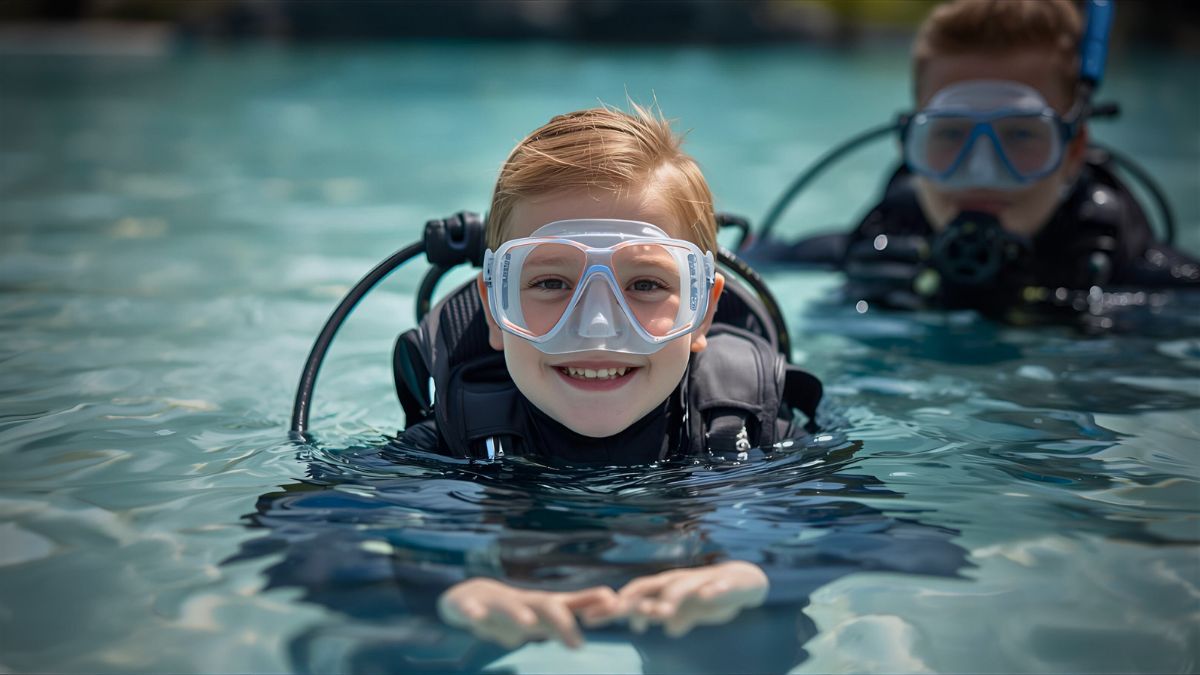
- The Goal: It is about blowing bubbles, playing games underwater, and getting used to the equipment. It is 100% fun and 0% stress.
Age 10-11: PADI Junior Open Water Diver
This is the real deal. They earn a full certification card, but with restrictions.
- Depth Limit: Max 12 meters (40 feet)
- Requirement: They must dive with a PADI Professional or a certified parent/guardian at all times. They cannot dive alone with another child.
Age 12-14: Junior Open Water Diver (Upgraded)
At 12, the depth limit increases.
- Depth Limit: Max 18 meters (60 feet)
- Requirement: They must dive with a certified adult.
Note: At age 15, the “Junior” certification automatically upgrades to a standard Open Water Diver certification. No extra exam is needed.
Maturity Check: Is YOUR Child Ready?
Age is just a number. I have met 10-year-olds who are more focused and responsible than some 40-year-old CEOs. I have also met 12-year-olds who are not ready.
Before booking a course, ask yourself these questions honestly:
- Attention Span: Can your child listen to a 15-minute briefing without wandering off? Diving involves physics and safety rules. They need to listen.
- Swimming Ability: Are they comfortable in deep water? Can they tread water? If they are scared of swimming, they are not ready for diving.
- Problem Solving: If their mask fills with water, will they panic and bolt to the surface, or will they remember the skill to clear it?
- Reading Level: The PADI manual is designed for approx. 10-year-old reading levels. They need to understand concepts like pressure and air volume.
Gear Matters: Why “Adult XS” is Not Enough
This is a major differentiator between a generic dive shop and a kid-friendly dive center.
Most dive shops just put small adults’ gear on kids. This is a mistake.
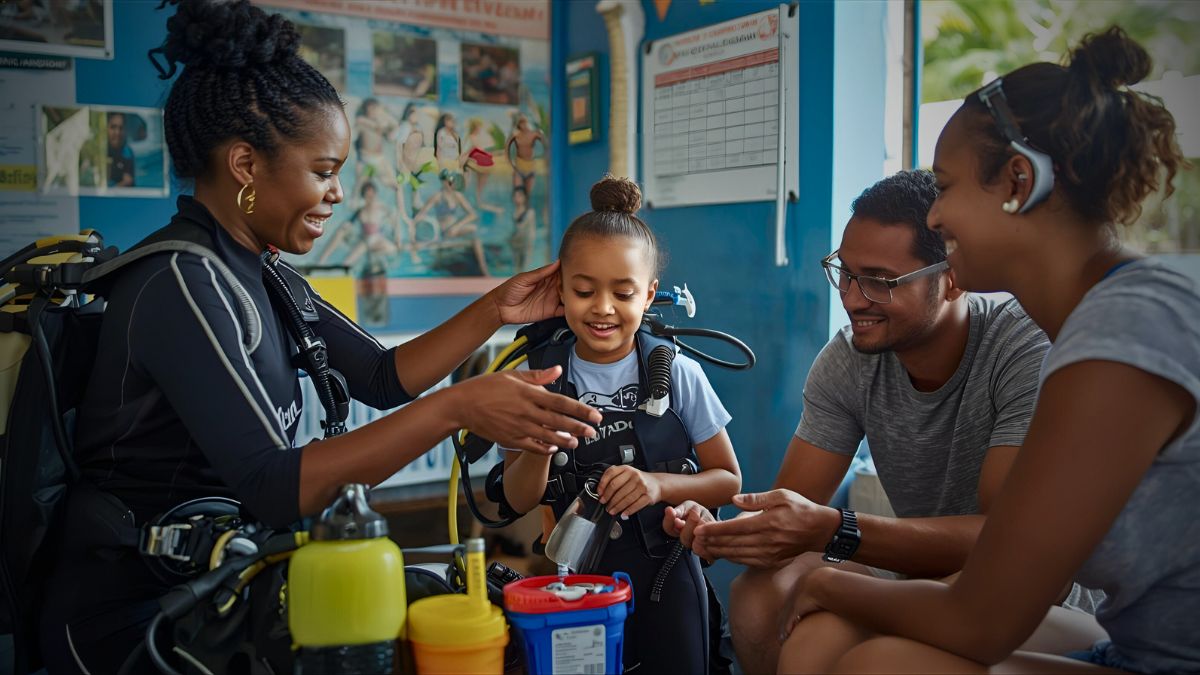
Before you book, ask the dive shop if they have specific equipment for children. Here is what you should look for:
1. Smaller Tanks (7-Liter / 50 cu ft)
A standard adult air tank weighs about 14-15 kg (30+ lbs). It is heavy and long. If you put this on a 10-year-old, it will hit the back of their legs and throw off their balance. A good dive center will offer 7-liter tanks (or “pony” tanks). These are shorter, lighter, and hold plenty of air for a child, who naturally consumes less than an adult.
2. Junior Mouthpieces
Adult regulators have large mouthpieces. For a child, holding this in their mouth for 40 minutes leads to jaw fatigue and discomfort. A “Junior” mouthpiece is smaller and softer, making breathing natural and easy.
3. Appropriate BCD Sizes
The Buoyancy Control Device (jacket) must fit snugly to keep the diver safe on the surface. If the shop only has an “Adult Small,” and it rides up around your child’s ears when inflated, it is too big. Look for shops that stock XXXS or specific Junior BCDs.
Why Costa Rica is the Perfect Classroom
If you are planning a family diving trip, choosing the right destination is critical. You want a place that is exciting enough to keep them interested, but safe enough to learn.
Costa Rica offers an ideal balance for young divers for several reasons:
- Warm Water: This is the most important factor. Children lose body heat faster than adults. In cold water, a child will get miserable quickly and want to quit. Costa Rica’s Pacific coast offers warm tropical waters (26°C – 29°C), meaning kids can dive comfortably in light wetsuits without shivering.
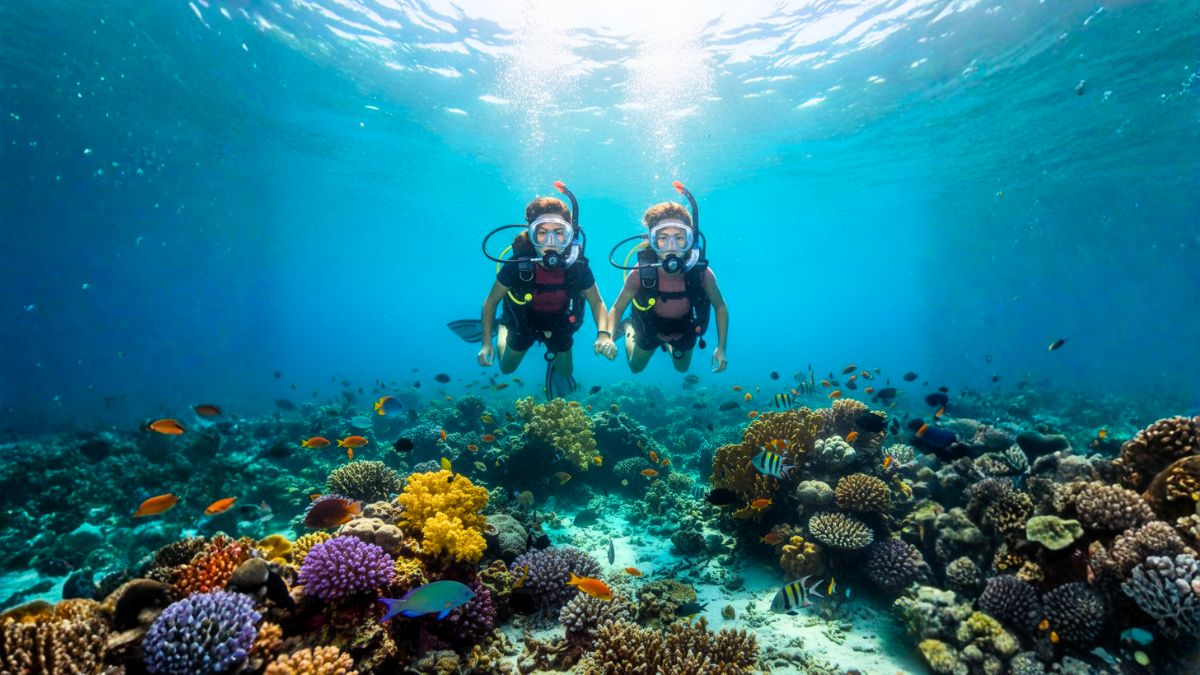
- Exciting Marine Life: Learning to dive in a tiled swimming pool is boring. Learning to dive in Costa Rica means they might see a sea turtle, a pufferfish, or a starfish on their very first dive. This instant reward hooks them on the sport for life.
- Protected Bays: While parts of the Pacific have currents, Costa Rica has many protected bays and shallow reefs (like in the Marino Ballena National Park or parts of Guanacaste) that are perfect “natural swimming pools.” These areas offer real ocean conditions without the stress of big waves.
The Benefits: Beyond the Vacation
Why should you encourage your child to dive? It is expensive and requires effort. But the payoff is huge.
1. Applied Physics and Math
Suddenly, math makes sense. They learn about pressure, volume, and air consumption. It is hands-on science education.
2. Responsibility (The Buddy System)
Diving teaches you that you are responsible for someone else’s life. Checking your buddy’s air, staying close, and communicating without words builds incredible maturity.
3. Environmental Stewardship
A child who sees a turtle in the wild or a piece of plastic on a reef changes forever. They become ocean advocates. They stop using plastic straws without you telling them. They understand the ecosystem because they have been part of it.
4. Digital Detox
You cannot check TikTok at 10 meters depth. It is one of the few activities where you have 100% of your child’s attention.
Comparison Table: Bubblemaker vs. Junior Open Water
Confused about which program to book? Here is the quick comparison.
| Feature | PADI Bubblemaker | PADI Junior Open Water |
|---|---|---|
| Minimum Age | 8 Years Old | 10 Years Old |
| Max Depth | 2 meters (6 feet) | 12 meters (40 feet) |
| Duration | 2 – 3 Hours | 3 – 4 Days |
| Result | Experience only (no card) | Full Certification Card (Lifetime) |
| Theory | Minimal (Briefing) | Full Course (eLearning + Exam) |
Frequently Asked Questions
Does my child need to be a strong swimmer?
For Bubblemaker, they just need to be comfortable in the water. For the Junior Open Water course, yes. They must be able to swim 200 meters (any stroke, no time limit) and float/tread water for 10 minutes. This ensures they can handle themselves on the surface.
What if my child gets scared and wants to go up?
This is normal. Our instructors are trained to handle anxiety. We stay in shallow water where they can simply stand up if they are uncomfortable. We never force a descent. If a child wants to stop, we stop. The goal is a positive experience, not a completed checklist.
Is scuba diving expensive for kids?
The course price is the same as for adults because the training, equipment usage, and certification fees are identical. In fact, teaching children often requires smaller ratios (more instructors per student), so it is a high-value service.
Can the whole family dive together?
Yes! If parents are certified divers and the child takes the course, the final two training dives can often be done together with the parents tagging along (staying at the child’s depth limit). It is a fantastic family bonding experience.
What about sharks? Will they be scared?
Children are often less scared of sharks than adults because they haven’t seen “Jaws.” In Uvita, the sharks we see (White-tips) are sleepy and passive. We introduce marine life as friends, not monsters. Most kids find it “cool” rather than scary.
Scuba Diving for Kids: An Investment in Confidence
Teaching a child to dive is giving them a key to the other 70% of the planet. It builds confidence that translates to school, sports, and social life. When a child realizes they can breathe underwater and hover weightless, they realize they can do anything.
If you are ready to start this adventure, trust the experts who know kids. Contact Costa Rica Divers and let’s get your little ones blowing bubbles safely.
Sources and References
- PADI (Professional Association of Diving Instructors) – Information on Bubblemaker and Seal Team.
- DAN (Divers Alert Network) – Medical guidelines regarding children and scuba diving physiology.
- KidsHealth – Articles on swimming safety and ear care for children in water sports.