When I first heard about scuba diving in Maldives, I thought it was one of those overrated destinations that got hyped up because of luxury resorts and honeymoon marketing. Then I did my first liveaboard through the Male atolls, and I understood what all the fuss was about.
Swimming alongside 15 manta rays at a cleaning station while grey reef sharks cruise past in crystal-clear water changes your perspective pretty quickly. The Maldives isn’t just about postcard-perfect beaches and overwater bungalows. Beneath the surface, this chain of 26 atolls in the Indian Ocean offers some of the most thrilling scuba diving on the planet.
In this guide, I’ll walk you through everything you need to know about scuba diving in Maldives. The best dive sites, when to go, whether you should choose a liveaboard or stay at a resort, what marine life you can realistically expect to see, and the honest truth about costs.
By the end, you’ll know if this destination belongs on your diving bucket list.
Why Is Scuba Diving in Maldives So Special?
The Maldives has earned its reputation as one of the world’s premier dive destinations, but it’s not for the reasons most people assume. Yes, the visibility is incredible and the water is bathwater-warm, but what really sets this place apart is the sheer diversity and abundance of pelagic life.
This isn’t a destination where you spend your time admiring colorful coral gardens (though there are some). The Maldives is where you come for big animals and heart-pumping drift dives through channels packed with sharks, rays, and massive schools of fish.
The geography plays a huge role in why the diving here is so good. The Maldives consists of 26 natural atolls, essentially rings of coral reef surrounding lagoons spread across about 35,000 square miles of the Indian Ocean.
These atolls create a unique ecosystem where nutrient-rich currents flow through channels (called “kandus” locally) and around submerged pinnacles (called “thilas”), attracting everything from tiny nudibranchs to 40-foot whale sharks.
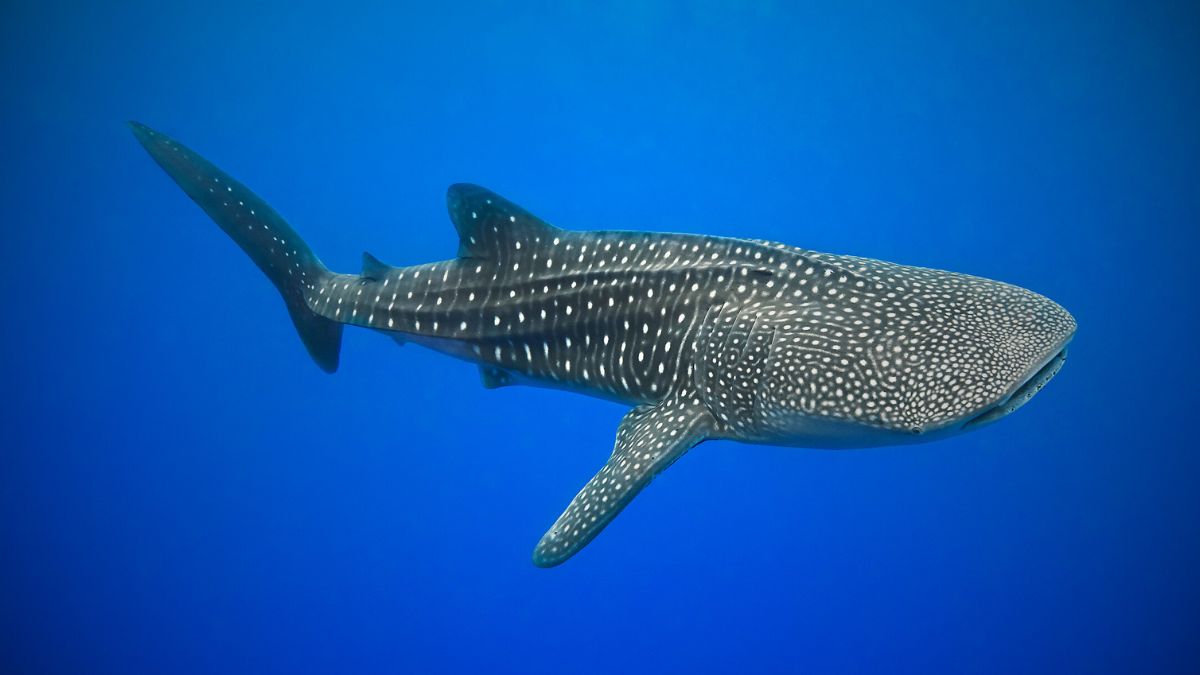
Did you know? The Maldives whale shark population is about 95% juvenile males. Scientists have identified over 200 individual whale sharks through photo identification, and they’re still studying why these young males congregate here year-round.
What Marine Life Can You See While Diving in Maldives?
Let me start with what brings most divers to the Maldives: manta rays and whale sharks. The Maldives has the largest population of reef manta rays in the world, somewhere between 5,000 and 7,000 individuals.
You’ll find cleaning stations throughout the atolls where these graceful giants come to get parasites removed by cleaner fish. I’ve had dives where I’ve seen 15+ mantas circling overhead, and it never gets old.
Whale sharks are another major draw. South Ari Atoll is famous for year-round whale shark encounters, which is almost unheard of in the diving world. Most places have seasonal whale shark migrations, but the Maldives seems to have a resident population that sticks around. Scientists are still trying to figure out why, but as a diver, I’m not complaining.
Marine Life Diversity in the Maldives
But the marine life diversity goes way beyond mantas and whale sharks. On any given dive, you might encounter grey reef sharks, white-tip reef sharks, nurse sharks patrolling the reef, and if you’re lucky, hammerhead sharks at specific sites.
Fuvahmulah Island in the deep south has become famous for guaranteed tiger shark encounters, it’s one of the few places on Earth where you can reliably dive with these impressive predators.
Eagle rays are everywhere. I’m talking about squadrons of them gliding through the blue on almost every channel dive. You’ll also see Napoleon wrasse, massive schools of barracuda and tuna, giant trevally hunting in packs, and thousands of smaller reef fish creating living walls of color.
For macro enthusiasts, the Maldives might not be your first choice, but there’s still plenty to see if you look closely. Frogfish hide among the coral, ghost pipefish drift in seagrass beds, and you’ll find some spectacular nudibranch species if you take the time to search.
Night diving brings out a completely different cast of characters hunting white-tip sharks, moray eels on the prowl, and Spanish dancers putting on their neon displays.
What makes the geography of the Maldives unique?
The Maldives’ geography creates diving conditions you won’t find anywhere else. The atolls are actually the exposed tops of an ancient volcanic mountain range, with the peaks barely breaking the ocean surface while the sides plunge down into deep blue water. This creates the perfect setup for current-driven diving.
The two main dive environment types you’ll encounter are thilas and kandus. A thila is a submerged pinnacle or reef that rises up from the depths but doesn’t quite reach the surface. These act like magnets for marine life.
Fish congregate on the pinnacles to feed and get cleaned, while predators circle in the blue waiting for an opportunity. Some of the best dives in Maldives, like Maaya Thila and Kandooma Thila are these underwater mountains covered in soft corals and surrounded by circling sharks.
One of the best dives in the Maldives
Kandus are channels where the ocean meets the atoll lagoons. When the tide rushes in or out through these narrow passages, it creates powerful currents that can exceed three knots. This might sound intimidating, but it’s exactly what brings in the big animals.
You typically do these as drift dives, drop down at the beginning of the channel, hook in or find a coral outcrop to hide behind, watch the show as sharks, rays, and massive schools of fish cruise past, then let the current sweep you into the calmer lagoon waters.
The visibility in the Maldives is consistently excellent, typically ranging from 20 to 40 meters (65 to 130 feet). During the northeast monsoon season (December through April), it can exceed 40 meters on the best days. That kind of clarity makes for spectacular wide-angle photography and gives you plenty of time to see approaching marine life.
Where Are the Best Dive Sites in Maldives?
With hundreds of documented dive sites across 26 atolls, you could spend years diving the Maldives and still not see everything. Most liveaboards follow a classic route through the central atolls, the “Male loop” that covers North and South Male Atoll, Ari Atoll, and sometimes Vaavu Atoll. This week-long itinerary hits many of the country’s most famous sites and gives you a solid overview of what Maldives diving is all about.
Let me walk you through the highlights of each major diving region.
What Can You Dive in North and South Male Atolls?
The Male atolls are where most diving trips begin and end, thanks to their proximity to the capital city and Velana International Airport. Don’t let the “close to civilization” part fool you, these atolls host some world-class dive sites.
Kandooma Thila in South Male Atoll
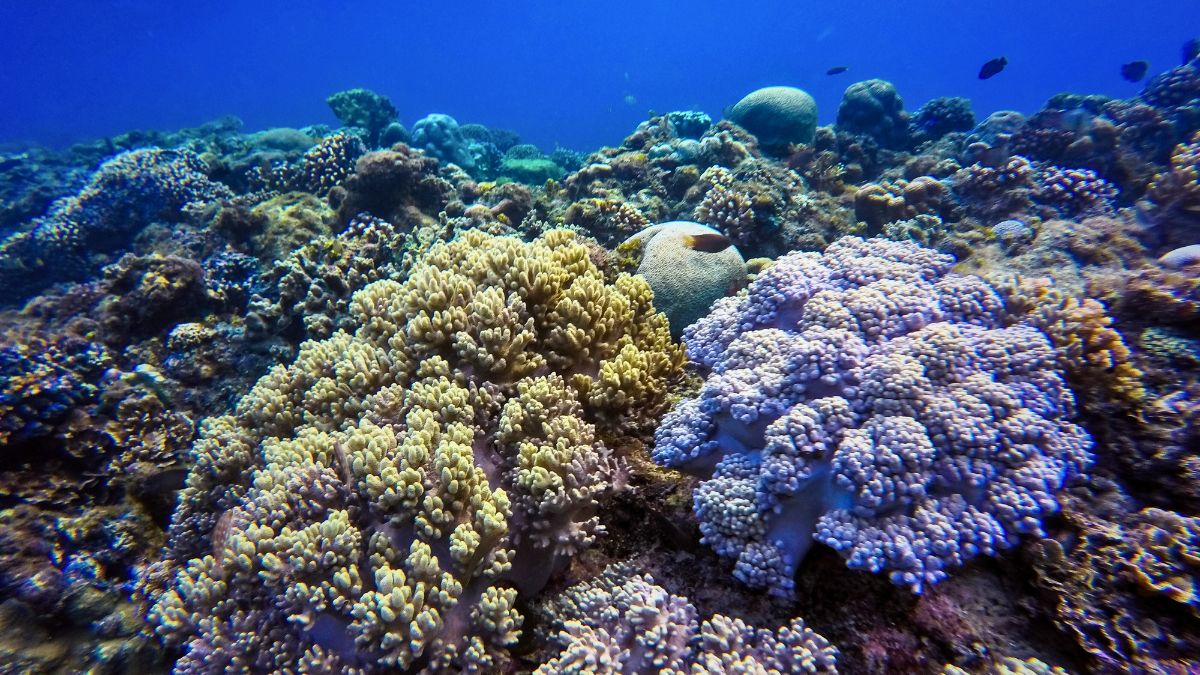
Kandooma Thila in South Male Atoll is often rated as one of the best dive sites in the entire country. This 300-meter-long pinnacle is covered in gorgeous soft corals and has dramatic topography with overhangs and swim-throughs.
The western side is called “Jack Corner” for good reason you’ll see massive schools of trevally, barracuda, and groupers hunting here. Eagle rays and grey reef sharks are regular visitors, and you’ll often spot green turtles during your safety stop in the shallows.
Banana Reef in North Male
Banana Reef in North Male is one of the Maldives’ oldest protected dive sites and gets its name from its distinctive crescent shape. The reef is packed with caves, overhangs, and coral formations where huge moray eels make their homes. It’s a relatively easy dive that’s perfect for getting accustomed to Maldivian conditions on your first day.
The Maldives Victory wreck
The Maldives Victory wreck sits in North Male Atoll at depths ranging from 12 to 35 meters. This 110-meter cargo ship sank in 1981, and it’s become an artificial reef covered in soft corals and sponges.
The wreck itself is impressive, but what really makes this dive special is the incredible concentration of macro life. Needlefish hover in formation above the structure, nudibranch snails decorate every surface, and pufferfish patrol the surrounding reef.
If you’re interested in learning more about wreck diving, this is a great site to start with.
Why Is Ari Atoll Famous for Diving?
If someone asks me where to go for the absolute best scuba diving in Maldives, I usually point them toward Ari Atoll. This is where everything comes together, world-class dive sites, year-round whale sharks, manta cleaning stations, and some of the most impressive shark action in the country.
Maaya Thila is legendary among Maldives divers. By day, this pinnacle starting at 30 meters depth is already spectacular, with soft corals, gorgonians, and resident reef fish creating a colorful scene. But the night dives here are what built the site’s reputation.
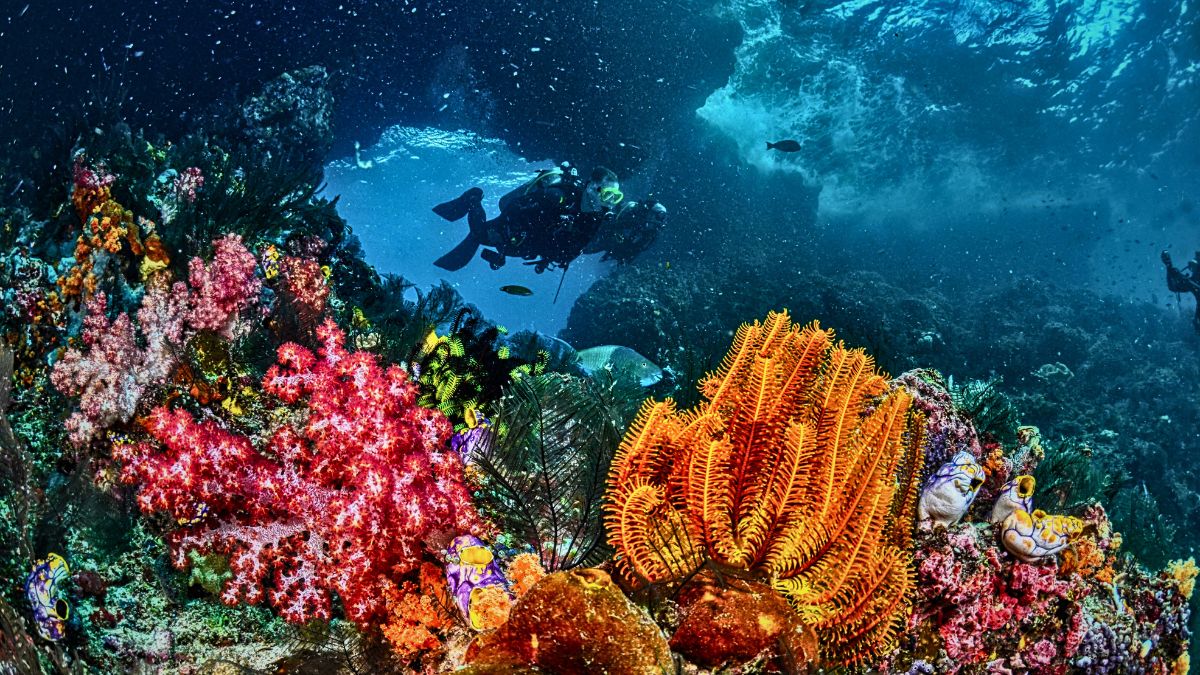
After sunset, white-tip reef sharks come out to hunt, and you’ll see more shark activity than almost anywhere else in the Maldives. Grey reef sharks patrol the edges, massive barracuda hover in the beam of your dive light, and the entire reef comes alive with nocturnal hunters.
Unforgettable diving experiences in the Maldives
I’ll never forget my first night dive at Maaya Thila. Within five minutes of descending, I counted seven white-tip sharks actively hunting. One passed less than two meters from my mask, completely focused on tracking something in the reef crevices. It’s one of those experiences that reminds you why you got into diving in the first place.
South Ari Atoll is the whale shark capital of the Maldives. The village of Dhigurah has become the base for whale shark research, with the British NGO Maldives Whale Shark Research Programme studying the resident population. You can encounter these gentle giants year-round here, though sightings peak during the southwest monsoon season (May through November).
The best part? You don’t even need to scuba dive, most whale shark encounters happen while snorkeling at the surface, which lets you stay with them longer without worrying about air consumption or depth limits.
Kudarah Thila
Kudarah Thila is another Ari Atoll highlight, protected as a marine reserve. The dive starts with swimming through a beautiful arch covered in corals, bring your dive light to really see the colors in the crevices. The pinnacle is home to massive schools of snappers, fusiliers, and anthias, plus you’ll regularly see turtles and groupers. Strong currents are common here, so this is better suited for experienced divers who are comfortable with drift diving.
What Makes Vaavu Atoll Special?
Vaavu Atoll sits between Male and Ari, and while it’s smaller and less visited than its famous neighbors, it offers some unique diving experiences. The atoll has the largest barrier reef in the Maldives, stretching about 50 kilometers.
Fotteyo Kandu is arguably one of the best channel dives in the entire Maldives. The topography here is spectacular – caves, overhangs, and swim-throughs decorated with yellow soft corals and black coral bushes. Potato groupers, schools of snappers, titan triggerfish, tuna, and barracuda all frequent this channel.
Grey reef sharks and white-tip sharks are common sightings, and you’ll often see stingrays and eagle rays cruising through. The currents can be strong, so this is definitely a dive for those comfortable with challenging conditions.
Alimathaa offers one of the Maldives’ most unique diving experiences: night dives with nurse sharks. The nearby resort feeds fish at a cleaning station, which has trained a population of nurse sharks to gather here after dark. You’ll see dozens of them, with some individuals reaching three meters in length.
It’s a bit controversial from a marine conservation standpoint, but the visual spectacle of being surrounded by these normally docile sharks is undeniably impressive.
Should You Visit Baa Atoll?
Baa Atoll earned UNESCO Biosphere Reserve status in 2011, recognizing its exceptional marine biodiversity. The entire atoll is worth exploring, but one site stands above all others: Hanifaru Bay.
Between May and November, something magical happens at Hanifaru Bay. Plankton blooms attract both manta rays and whale sharks in numbers that can only be described as biblical.
During peak aggregation events, you might see 100+ manta rays feeding in synchronized ballet, their white bellies flashing as they barrel roll through the plankton-rich water. Whale sharks join the feast, their massive mouths gaping as they filter feed alongside the mantas.
Fun fact: Hanifaru Bay is only about 1,300 feet long and 650 feet wide – roughly the size of two football fields. Despite its small size, it hosts one of the largest manta ray feeding aggregations documented anywhere on Earth.
There’s a catch, though, scuba diving is prohibited at Hanifaru Bay to protect this sensitive ecosystem. You can only snorkel here, and access is carefully regulated through licensed operators.
Honestly, snorkeling is better anyway for this experience. You can stay at the surface with the feeding animals for extended periods without worrying about bottom time or decompression obligations.
What About the Deep South?
The southern Maldives atolls are remote, harder to access, and less frequently visited than the central regions. But if you’re looking for adventure and some of the most exciting shark diving on the planet, this is where you want to be.
Fuvahmulah Island has become famous in recent years for one specific dive site: Tiger Zoo. This is one of the only places on Earth where you can virtually guarantee tiger shark encounters.
The island has a deep cleaning station that attracts these magnificent predators, along with thresher sharks and huge oceanic manta rays. Some divers call this area the “Maldivian Galapagos” because of the incredible year-round pelagic action.
The deep south itineraries typically run from February through April when weather conditions allow safe travel. These trips are more expensive and require more experience, but the payoff is access to sites that most divers will never see. If you’re a serious shark enthusiast with advanced diving skills, put this on your bucket list.
Liveaboard vs. Land-Based Diving – Which Is Better?
One of the biggest decisions you’ll make when planning a Maldives diving trip is whether to go with a liveaboard or stay at a land-based resort or guesthouse. Both options have their advantages, and the right choice depends on your priorities, budget, and diving experience.
What Are the Advantages of Liveaboard Diving?
After doing both styles of diving in the Maldives, I’m firmly in the liveaboard camp for this destination. Here’s why.
Access to remote sites is the biggest advantage. Many of the best dive sites in Maldives are too far from inhabited islands for day boat trips. A liveaboard can cruise to northern atolls, southern atolls, and everywhere in between, following the best conditions and marine life activity. You’re not limited to whatever happens to be within speedboat range of your resort.
Diving liveaboard in the Maldives
The classic Male loop itinerary that most liveaboards follow covers four major atolls in seven days, hitting highlights like Maaya Thila, Kandooma Thila, Fotteyo Kandu, and multiple manta cleaning stations. You’d need to stay at three or four different resorts to access all these areas otherwise.
Liveaboards also maximize your diving time. Most boats offer four dives per day (three day dives plus a night dive), which adds up to 28 dives in a week. Compare that to land-based diving where you’re typically limited to two or three dives per day, and you’re looking at significantly more underwater time for your investment.
Cost-effectiveness is another factor that surprises people. A week on a Maldives liveaboard typically ranges from $1,500 to $3,500 depending on the boat and season. That includes accommodation, all meals, diving, tanks, weights, and transfers to and from the airport.
When you calculate the per-dive cost, it’s often cheaper than resort diving, especially at the luxury resorts where individual dives can cost $80-100 each.
The community atmosphere on a liveaboard is special too. You’re spending a week with a small group of fellow diving enthusiasts, sharing meals between dives and swapping stories about what you saw underwater. Some of my best diving friendships started on liveaboards.
When Should You Choose Land-Based Diving?
That said, liveaboards aren’t for everyone, and land-based diving has its own advantages.
If you’re a newer diver who’s still building experience, land-based diving gives you more flexibility. You can do one or two dives per day when you feel comfortable, take days off if you’re tired, and not feel pressured to keep up with an aggressive dive schedule. Many resort dive operations cater specifically to beginners with easier house reef dives and guided tours.
Non-diving companions are another consideration. If you’re traveling with a partner who doesn’t dive or who wants some non-diving activities, a resort or local island gives them things to do while you’re underwater. Liveaboards are 100% focused on diving, which can be boring for non-divers.
Budget travelers should look into local island guesthouses. The Maldives opened up previously restricted local islands to tourism in recent years, and you can now find basic accommodation for $50-100 per night.
Local dive shops on islands like Maafushi, Rasdhoo, and Dhigurah offer diving at much lower prices than luxury resorts, though you’ll be limited to dive sites within day boat range.
House reef access is a unique advantage of resort diving. Some Maldives resorts have spectacular house reefs where you can do unlimited shore diving right from the beach. If you’re into underwater photography and want to spend hours getting the perfect shot without worrying about boat schedules, this can be ideal.
When Is the Best Time for Scuba Diving in Maldives?
The Maldives has two main seasons driven by monsoon patterns, and each offers different conditions and marine life opportunities. The good news is you can dive year-round here, there’s no true “bad” season, just trade-offs depending on what you want to see.
What Is the Northeast Monsoon Season Like? (December–April)
December through April is considered peak season for scuba diving in Maldives, and for good reason. The northeast monsoon brings calm seas, minimal rainfall, and the best visibility of the year, often exceeding 30-40 meters on good days.
The weather during this period is consistently excellent. You’ll have blue skies most days, gentle winds, and flat seas that make boat transfers comfortable. Water temperature stays warm at 27-29°C (81-84°F), so a 3mm wetsuit is plenty.
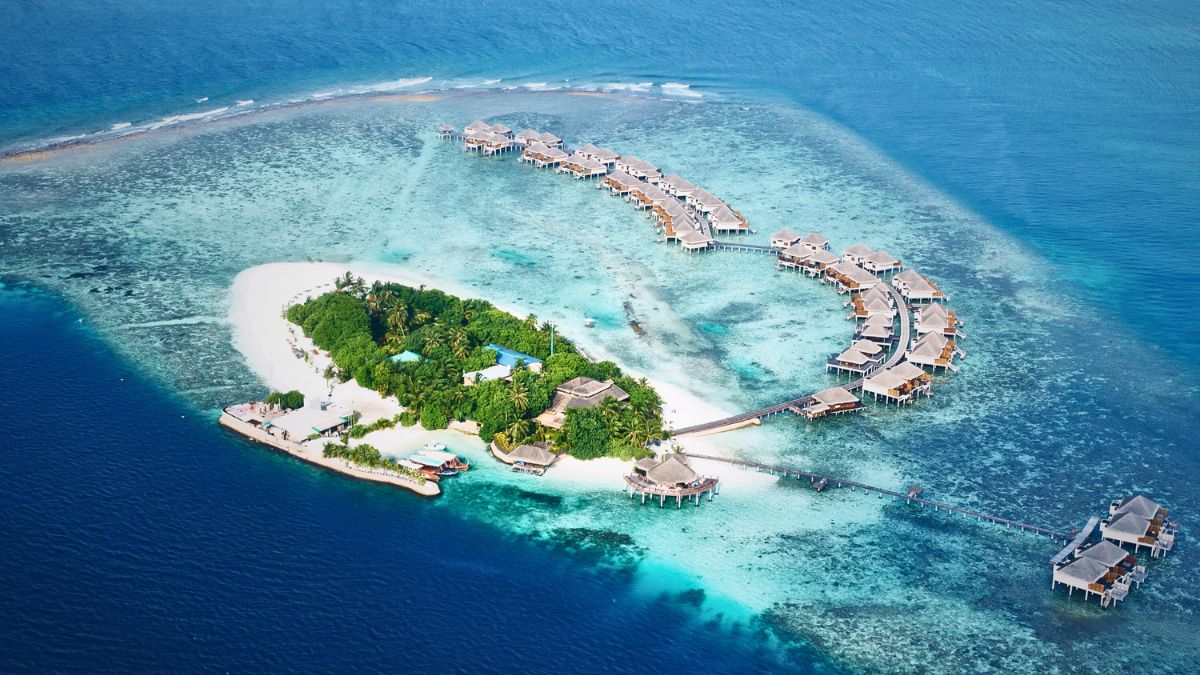
For underwater photographers, this is your season. The crystal-clear visibility and abundant natural light create perfect conditions for wide-angle photography. If you’re planning to shoot those dramatic blue-water scenes with sharks or mantas, you want to be here between February and April.
The trade-off? This is peak tourist season, so expect higher prices for everything. Liveaboards can be booked months in advance, and popular dive sites can get crowded with multiple boats. You’re also less likely to see the massive manta and whale shark aggregations that happen during the opposite monsoon.
Should You Dive During Southwest Monsoon? (May–November)
The southwest monsoon season from May through November gets less hype, but it’s actually my preferred time for scuba diving in Maldives, especially if big animal encounters are your priority.
This is the feeding season for manta rays and whale sharks. Increased plankton in the water column attracts these filter feeders in huge numbers, particularly at Hanifaru Bay where the famous aggregation events happen from June through October, peaking in August and September.
Visibility does decrease slightly during this season, you’re looking at 20-30 meters instead of 30-40 meters, but that’s because of the plankton bloom that’s attracting all those mantas and whale sharks. It’s a trade-off I’m happy to make.
What is the weather like in the Maldives?
The weather is more variable during southwest monsoon. You’ll get some rain, particularly in June and July, and seas can be rougher with stronger winds. Most of these rain showers are brief tropical downpours that pass quickly, not all-day soakers.
June and July specifically are considered transition months between monsoons and can have unpredictable conditions, I generally advise avoiding these two months if possible.
Here’s what nobody tells you: liveaboard prices drop significantly during southwest monsoon, often by 20-30%. You’ll also encounter fewer crowds, both on boats and at dive sites.
If you don’t mind trading some visibility for better marine life odds and significant cost savings, May and August through November are excellent times to visit.
How Do You Get to Maldives for Diving?
Getting to the Maldives requires some planning, but the logistics are straightforward once you understand the basic routing and transfer options.
How Do You Reach Male?
All international flights arrive at Velana International Airport (MLE) in Male, the capital. The airport is actually located on Hulhule Island, connected to Male by a short bridge.
From the United States, you’re looking at one or two stops. Common routing options include:
- Via Middle East: Dubai (Emirates) or Doha (Qatar Airways)
- Via Asia: Singapore, Kuala Lumpur, or Bangkok
- Via Europe: London, Frankfurt, or Istanbul
Flight time from the US East Coast is typically 24-30 hours total including connections. From Europe, it’s shorter at 10-14 hours depending on your departure city.
Liveboard on the Maldives
Most liveaboards require you to arrive the day before your cruise starts, which means an overnight stay in Male. The capital city doesn’t have much to offer tourists, it’s crowded, hot, and there aren’t many sights. I usually book a simple hotel near the airport with air conditioning and use it as a place to sleep off jet lag before boarding the boat the next morning.
Visa on arrival is free for all nationalities and valid for 30 days, which makes entry procedures quick and easy.
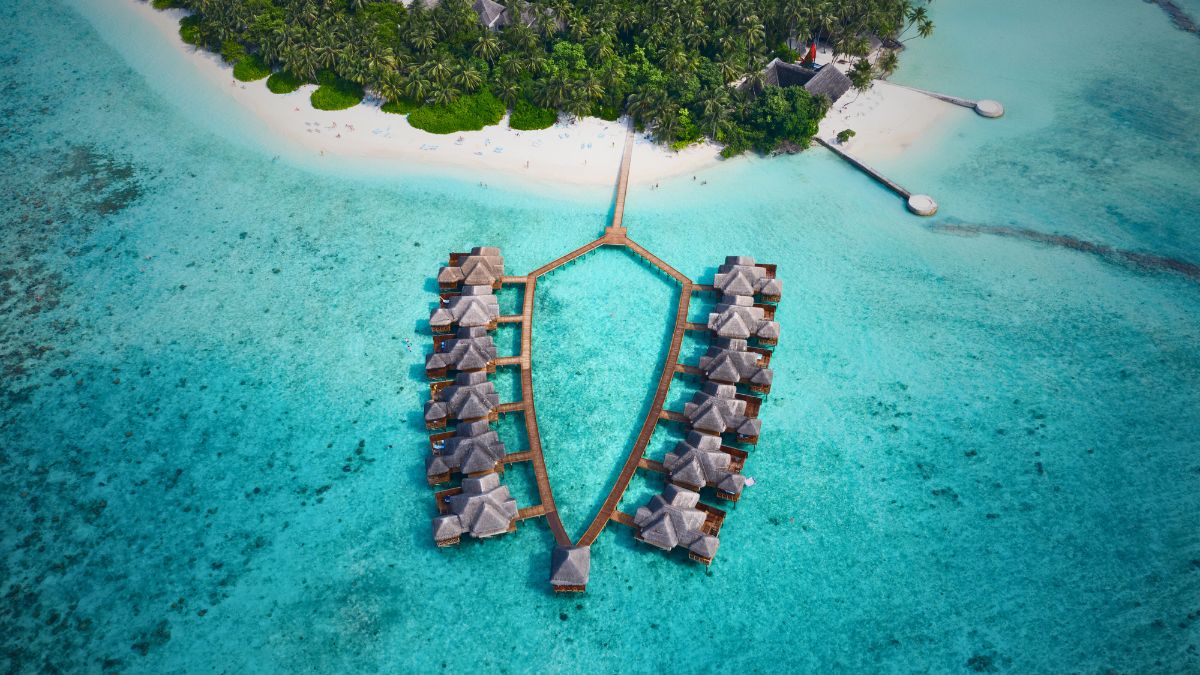
How Do You Transfer to Dive Sites?
If you’re joining a liveaboard, the boat company handles all transfers. Most boats pick you up directly from the airport or from a nearby hotel and bring you to the vessel. At the end of your trip, they’ll drop you back at the airport or your hotel.
For land-based diving, transfer options depend on where you’re staying:
Speedboat transfers work for resorts and islands within about 100 kilometers of Male. These high-speed boats are bouncy and can be rough if seas are choppy, but they’re the most economical option for nearby islands. Expect to pay $50-200 per person each way depending on distance.
Seaplane transfers are the classic Maldives experience
Scenic flights over the atolls in a Twin Otter floatplane. The views are spectacular, but they’re expensive ($300-500+ per person each way) and only operate during daylight hours. If your international flight arrives late evening, you’ll need to overnight in Male.
Domestic flights serve more remote atolls including the deep south. These scheduled flights on small aircraft are cheaper than seaplanes but still add significant cost to your trip. You’ll need to transfer from the domestic terminal at Male airport, and then typically take a speedboat from the domestic airport to your final island.
Is Scuba Diving in Maldives Expensive?
Let’s address the elephant in the room: yes, the Maldives has a reputation for being expensive, but the reality is more nuanced. Your costs depend heavily on the type of trip you choose.
Liveaboard diving offers the best value for serious divers. Budget boats start around $1,500-2,000 per person for a week, mid-range boats run $2,000-2,800, and luxury liveaboards can exceed $3,500. These prices typically include accommodation, all meals, unlimited diving, tanks, weights, and airport transfers.
Nitrox is often included or available for a small additional fee. When you break it down per dive, you’re looking at $50-100 per dive. Reasonable for a world-class dive destination.
You get what you pay for
Luxury resort diving is where costs skyrocket. Five-star Maldives resorts charge $300-1,000+ per night for accommodation alone. Individual dives cost $60-100 each, and you’ll pay separately for meals, drinks, and transfers. A week of diving at a luxury resort can easily cost $3,000-5,000 per person not including flights, making it one of the most expensive diving options worldwide.
Local island guesthouses are the budget traveler’s secret weapon. Basic accommodation on inhabited local islands like Maafushi, Rasdhoo, or Dhigurah costs $50-150 per night. Local dive shops charge $30-60 per dive. Meals at local restaurants are $5-15.
Can you dive in the Maldives on a budget?
You can do a week of budget Maldives diving for $800-1,200 total excluding flights. The trade-offs are more basic amenities, limited dive site access, and alcohol restrictions (local islands don’t permit alcohol sales).
Additional costs to factor in:
- Reef and environmental taxes: $6-10 per person per day
- Tips for liveaboard crew: 10% of trip cost is standard
- Dive insurance: Required by most operators ($50-150 depending on coverage)
- Equipment rental if needed: $20-30 per day
- Underwater photo/video services: Varies widely
Compared to other top dive destinations, the Maldives sits in the upper-middle range. It’s more expensive than Southeast Asia but comparable to the Red Sea, Galapagos, or Cocos Island when you factor in the quality of diving and marine life encounters.
Sources and References
This article draws on personal diving experience and information from the following authoritative sources:
- PADI – certification standards and dive site information
- Maldives Whale Shark Research Programme – Whale sharkdata
- UNESCO – Baa Atoll Biosphere Reserve and marine protected area
- Divers Alert Network (DAN) – Dive safety recommendations